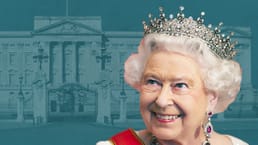

tags but the first line: "Queen Elizabeth II is not like you and me.
" seems missing opening. Possibly it's part of a paragraph. We'll preserve as is but translate text. Also there are self-closing
tags. We'll keep them. We need to translate each textual content, preserving HTML entities like ’ etc. Should we keep them? The original uses HTML entities for apostrophes etc. We'll translate but keep entities for apostrophes etc. For German, we can keep same entities for apostrophe. For quotes, they use “ and ” for left/right double quotes. We'll keep them. Let's translate each sentence: 1. "Queen Elizabeth II is not like you and me." -> "Königin Elisabeth II ist nicht wie du und ich." 2. Next: "It’s true that her role as the British head of state is largely ceremonial, and the Monarch no longer holds any serious power from day to day." -> "Es ist wahr, dass ihre Rolle als britisches Staatsoberhaupt weitgehend zeremoniell ist und die Monarchin keinen ernsthaften täglichen Einfluss mehr ausübt." 3. "The historic “prerogative powers” of the Sovereign have been devolved largely to government ministers." -> "Die historischen „Prerogativbefugnisse“ des Souveräns wurden weitgehend an Regierungsminister delegiert." 4. "Technically, all unmarked swans in open water belong to the Queen, though the Crown “exercises her ownership” only “on certain stretches of the Thames and its surrounding tributaries,” according to the official website of the Royal Family." -> "Technisch gesehen gehören alle nicht gekennzeichneten Schwäne im offenen Wasser der Königin, obwohl die Krone ihr Eigentum nur „auf bestimmten Abschnitten der Themse und deren umliegenden Nebenflüssen“ ausübt, so die offizielle Website der königlichen Familie." 5. "“The swans are also given a health check and ringed with individual identification numbers by The Queen’s Swan Warden, a Professor of Ornithology at the University of Oxford’s Department of Zoology,” according to the Royal Family website." -> "„Den Schwänen wird außerdem ein Gesundheitscheck verabreicht und sie werden vom Schwanenwart der Königin, einem Professor für Ornithologie an der Abteilung für Zoologie der Universität Oxford, mit individuellen Identifikationsnummern versehen“, so die Website der königlichen Familie." 6. "The Queen still technically owns all the sturgeons, whales, and dolphins in the waters around the UK, in a rule that dates back to a statute from 1324, during the reign of King Edward II, according to Time." -> "Die Königin besitzt technisch immer noch alle Störe, Wale und Delfine in den Gewässern rund um das Vereinigte Königreich, gemäß einer Regel, die auf ein Gesetz von 1324 zurückgeht, aus der Regierungszeit von König Eduard II, so Time." 7. "Driving licenses are issued in the Queen’s name, yet she is the only person in the United Kingdom who doesn’t legally need a license to drive or a number plate on her cars, according to Time." -> "Führerscheine werden im Namen der Königin ausgestellt, doch sie ist die einzige Person im Vereinigten Königreich, die gesetzlich keinen Führerschein zum Fahren oder ein Kennzeichen an ihren Autos benötigt, so Time." 8. "Unlike other members of the Royal family, the Queen does not require a passport, as they are issued in her name." -> "Im Gegensatz zu anderen Mitgliedern der königlichen Familie benötigt die Königin keinen Reisepass, da diese in ihrem Namen ausgestellt werden." 9. "The Queen’s official birthday is celebrated on a Saturday in June, though her actual birthday is on April 21." -> "Der offizielle Geburtstag der Königin wird an einem Samstag im Juni gefeiert, obwohl ihr tatsächlicher Geburtstag am 21. April ist." 10. "“Official celebrations to mark a sovereign’s birthday have often been held on a day other than the actual birthday, particularly when the actual birthday has not been in the summer,” according to the Royal Mint." -> "„Offizielle Feierlichkeiten zum Geburtstag eines Souveräns wurden oft an einem anderen Tag als dem eigentlichen Geburtstag abgehalten, insbesondere wenn der eigentliche Geburtstag nicht im Sommer liegt“, so die Royal Mint." 11. "The Queen has her own personal poet." -> "Die Königin hat ihren eigenen persönlichen Dichter." 12. "The Queen’s consent is necessary to turn any bill into an actual law." -> "Die Zustimmung der Königin ist erforderlich, um einen Gesetzentwurf in ein tatsächliches Gesetz zu verwandeln." 13. "Once a proposed law has passed both houses of Parliament, it makes its way to the Palace for approval, which is called “Royal Assent.” The most recent British Monarch to refuse to provide Royal Assent was Queen Anne, back in 1708." -> "Sobald ein Gesetzentwurf beide Häuser des Parlaments passiert hat, gelangt er zum Palast zur Genehmigung, die „Königliche Zustimmung“ genannt wird. Die letzte britische Monarchin, die die Königliche Zustimmung verweigerte, war Königin Anna im Jahr 1708." 14. "Royal Assent is different than “Queen’s consent,” in which the Queen must consent to any law being debated in Parliament that affects the Monarchy’s interests (such as reforming the prerogative or tax laws that might affect the Duchy of Cornwall, for example)." -> "Die Königliche Zustimmung unterscheidet sich von der „Königlichen Zustimmung“, bei der die Königin jeder im Parlament debattierten Gesetzgebung zustimmen muss, die die Interessen der Monarchie betrifft (zum Beispiel die Reform von Prerogativ- oder Steuergesetzen, die das Herzogtum Cornwall betreffen könnten)." But note the phrase "Queen’s consent" appears twice; we need to translate accordingly: maybe "Königliche Zustimmung" for both but differentiate? In English they differentiate "Royal Assent" vs "Queen's consent". In German we could use "Königliche Zustimmung" for Royal Assent and "Königinnenkonsens" or "Königinnenzustimmung". Let's translate as "Königliche Zustimmung" for Royal Assent and "Königinnenzustimmung" for Queen's consent. Let's adjust. Thus sentence: "Royal Assent is different than “Queen’s consent,” ..." -> "Die Königliche Zustimmung unterscheidet sich von der „Königinnenzustimmung“, bei der die Königin jeder im Parlament debattierten Gesetzgebung zustimmen muss, die die Interessen der Monarchie betrifft (zum Beispiel die Reform von Prerogativ- oder Steuergesetzen, die das Herzogtum Cornwall betreffen könnten)." 15. "Queen’s consent is exercised only on the advice of ministers, but its existence provides the government with a tool for blocking debate on certain subjects if bills are tabled by backbench rebels or the opposition." -> "Die Königinnenzustimmung wird nur auf Anraten von Ministern ausgeübt, aber ihre Existenz gibt der Regierung ein Mittel, um Debatten über bestimmte Themen zu blockieren, wenn Gesetzentwürfe von rückwärtigen Rebellen oder der Opposition eingebracht werden." Now we need to embed these translations into the HTML structure, preserving tags. Original snippet: Queen Elizabeth II is not like you and me. It’s true that her role as the British head of state is largely ceremonial, and the Monarch no longer holds any serious power from day to day. The historic “prerogative powers” of the Sovereign have been devolved largely to government ministers. Technically, all unmarked swans in open water belong to the Queen, though the Crown “exercises her ownership” only “on certain stretches of the Thames and its surrounding tributaries,” according to the official website of the Royal Family. “The swans are also given a health check and ringed with individual identification numbers by The Queen’s Swan Warden, a Professor of Ornithology at the University of Oxford’s Department of Zoology,” according to the Royal Family website. The Queen still technically owns all the sturgeons, whales, and dolphins in the waters around the UK, in a rule that dates back to a statute from 1324, during the reign of King Edward II, according to Time. Driving licenses are issued in the Queen’s name, yet she is the only person in the United Kingdom who doesn’t legally need a license to drive or a number plate on her cars, according to Time. Unlike other members of the Royal family, the Queen does not require a passport, as they are issued in her name. The Queen’s official birthday is celebrated on a Saturday in June, though her actual birthday is on April 21. “Official celebrations to mark a sovereign’s birthday have often been held on a day other than the actual birthday, particularly when the actual birthday has not been in the summer,” according to the Royal Mint. The Queen has her own personal poet. The Queen’s consent is necessary to turn any bill into an actual law. Once a proposed law has passed both houses of Parliament, it makes its way to the Palace for approval, which is called “Royal Assent.” The most recent British Monarch to refuse to provide Royal Assent was Queen Anne, back in 1708. Royal Assent is different than “Queen’s consent,” in which the Queen must consent to any law being debated in Parliament that affects the Monarchy’s interests (such as reforming the prerogative or tax laws that might affect the Duchy of Cornwall, for example). Queen’s consent is exercised only on the advice of ministers, but its existence provides the government with a tool for blocking debate on certain subjects if bills are tabled by backbench rebels or the opposition. We need to keep self-closing tags and the first line missing opening. We'll just replace text before
. Thus final HTML: Queen Elizabeth II is not like you and me. It’s true ... -> replace with German translation but keep entity for apostrophe. We need to keep ’ etc. So for German translation we need to include same entities for apostrophe. Eg "Es ist wahr, dass ihre Rolle ..." no apostrophe. For "Königinnenzustimmung" etc. We need to keep “ and ” for quotes. So when we translate quoted text, we keep those entities. Let's construct each line. Line1: "Queen Elizabeth II is not like you and me." -> "Königin Elisabeth II ist nicht wie du und ich." Line2: "It’s true that her role as the British head of state is largely ceremonial, and the Monarch no longer holds any serious power from day to day." -> "Es ist wahr, dass ihre Rolle als britisches Staatsoberhaupt weitgehend zeremoniell ist und die Monarchin keinen ernsthaften täglichen Einfluss mehr ausübt." Line3: "The historic “prerogative powers” of the Sovereign have been devolved largely to government ministers." -> "Die historischen “Prerogativbefugnisse” des Souveräns wurden weitgehend an Regierungsminister delegiert." Line4: "Technically, all unmarked swans in open water belong to the Queen, though the Crown “exercises her ownership” only “on certain stretches of the Thames and its surrounding tributaries,” according to the official website of the Royal Family." -> "Technisch gesehen gehören alle nicht gekennzeichneten Schwäne im offenen Wasser der Königin, obwohl die Krone ihr Eigentum nur “auf bestimmten Abschnitten der Themse und deren umliegenden Nebenflüssen” ausübt, so die offizielle Website der königlichen Familie." Note: keep quotes around the phrase, using “ and ”. Line5: "“The swans are also given a health check and ringed with individual identification numbers by The Queen’s Swan Warden, a Professor of Ornithology at the University of Oxford’s Department of Zoology,” according to the Royal Family website." -> "“Den Schwänen wird außerdem ein Gesundheitscheck verabreicht und sie werden vom Schwanenwart der Königin, einem Professor für Ornithologie an der Abteilung für Zoologie der Universität Oxford, mit individuellen Identifikationsnummern versehen”, so die Website der königlichen Familie." Need to keep ’ for apostrophe in "Queen’s". In German we can keep the same entity but translate. Use "der Königin". So we replace "Queen’s" with "der Königin". Keep apostrophe entity? Not needed. We'll just write "der Königin". Keep other entities. Line6: "The Queen still technically owns all the sturgeons, whales, and dolphins in the waters around the UK, in a rule that dates back to a statute from 1324, during the reign of King Edward II, according to Time." -> "Die Königin besitzt technisch immer noch alle Störe, Wale und Delfine in den Gewässern rund um das Vereinigte Königreich, gemäß einer Regel, die auf ein Gesetz von 1324 zurückgeht, aus der Regierungszeit von König Eduard II, so Time." Line7: "Driving licenses are issued in the Queen’s name, yet she is the only person in the United Kingdom who doesn’t legally need a license to drive or a number plate on her cars, according to Time." -> "Führerscheine werden im Namen der Königin ausgestellt, doch sie ist die einzige Person im Vereinigten Königreich, die gesetzlich keinen Führerschein zum Fahren oder ein Kennzeichen an ihren Autos benötigt, so Time." Line8: "Unlike other members of the Royal family, the Queen does not require a passport, as they are issued in her name." -> "Im Gegensatz zu anderen Mitgliedern der königlichen Familie benötigt die Königin keinen Reisepass, da diese in ihrem Namen ausgestellt werden." Line9: "The Queen’s official birthday is celebrated on a Saturday in June, though her actual birthday is on April 21." -> "Der offizielle Geburtstag der Königin wird an einem Samstag im Juni gefeiert, obwohl ihr tatsächlicher Geburtstag am 21. April ist." Line10: "“Official celebrations to mark a sovereign’s birthday have often been held on a day other than the actual birthday, particularly when the actual birthday has not been in the summer,” according to the Royal Mint." -> "“Offizielle Feierlichkeiten zum Geburtstag eines Souveräns wurden oft an einem anderen Tag als dem eigentlichen Geburtstag abgehalten, insbesondere wenn der eigentliche Geburtstag nicht im Sommer liegt”, so die Royal Mint." Note: keep ’ inside quote? The original had sovereign’s. We translate "Souveräns". No apostrophe needed. Keep quotes. Line11: "The Queen has her own personal poet." -> "Die Königin hat ihren eigenen persönlichen Dichter." Line12: "The Queen’s consent is necessary to turn any bill into an actual law." -> "Die Zustimmung der Königin ist erforderlich, um einen Gesetzentwurf in ein tatsächliches Gesetz zu verwandeln." Line13: "Once a proposed law has passed both houses of Parliament, it makes its way to the Palace for approval, which is called “Royal Assent.” The most recent British Monarch to refuse to provide Royal Assent was Queen Anne, back in 1708." -> "Sobald ein Gesetzentwurf beide Häuser des Parlaments passiert hat, gelangt er zum Palast zur Genehmigung, die “Königliche Zustimmung” genannt wird. Die letzte britische Monarchin, die die Königliche Zustimmung verweigerte, war Königin Anna im Jahr 1708." Line14: "Royal Assent is different than “Queen’s consent,” in which the Queen must consent to any law being debated in Parliament that affects the Monarchy’s interests (such ...)." -> "Die Königliche Zustimmung unterscheidet sich von der “Königinnenzustimmung”, bei der die Königin jeder im Parlament debattierten Gesetzgebung zustimmen muss, die die Interessen der Monarchie betrifft (zum Beispiel die Reform von Prerogativ- oder Steuergesetzen, die das Herzogtum Cornwall betreffen könnten)." Need to keep “ and ” around "Königinnenzustimmung". Also keep ’ inside original? The phrase "Queen’s consent" had apostrophe entity. We'll replace with "Königinnenzustimmung" without apostrophe. So we can keep the quotes. Line15: "Queen’s consent is exercised only on the advice of ministers, but its existence provides the government with a tool for blocking debate on certain subjects if bills are tabled by backbench rebels or the opposition." -> "Die Königinnenzustimmung wird nur auf Anraten von Ministern ausgeübt, aber ihre Existenz gibt der Regierung ein Mittel, um Debatten über bestimmte Themen zu blockieren, wenn Gesetzentwürfe vonEs wurde mindestens 39 Mal ausgeübt, laut Dokumenten, die nach dem Freedom of Information Act veröffentlicht wurden, einschließlich “eines Falls, in dem die Königin 1999 das Military Actions Against Iraq Bill vollständig ablehnte, ein Gesetzentwurf eines privaten Abgeordneten, der die Befugnis, Militärschläge gegen den Irak zu autorisieren, vom Monarchen auf das Parlament übertragen wollte,” berichtete The Guardian im Jahr 2013. Die Königin hat die Befugnis, Lords zu ernennen, die dann im Parlament, dem Oberhaus im britischen Gesetzgebungssystem, sitzen können. Die Königin hat die Befugnis, Regierungen zu bilden. Die Königin hatte früher die Befugnis, das Parlament aufzulösen und eine Parlamentswahl auszurufen, aber das Fixed-Term Parliaments Act beendete dies 2011. Jedes Jahr eröffnet sie das Parlament mit der Königinnenrede, in der die Pläne der Regierung dargelegt werden. Wie die Lords werden sie von der Königin ernannt – und sie rüstet sie persönlich zum Ritter. Während die überwiegende Mehrheit der prätorativen Befugnisse der Königin an ihre Minister delegiert ist, gibt es eine Ausnahme, die ihr erlaubt, selbst Macht auszuüben. Die Königin hat die Möglichkeit, die gesamte australische Regierung zu entlassen. Als Staatsoberhaupt in Australien hat die Königin bestimmte Befugnisse gegenüber der Regierung. Königin Elisabeth II. ist das Oberhaupt der Church of England, der staatlichen Religion Großbritanniens, die erstmals im 16. Jahrhundert nach der Abspaltung von König Heinrich VIII. von der katholischen Kirche in Rom gegründet wurde. Maundy Money ist eine besondere Art von Silbermünze, die die Königin jedes Jahr zu Ostern in einer speziellen Zeremonie in einer britischen Kathedrale an Rentner verteilt. “Obwohl nach britischem Recht keine zivil- oder strafrechtlichen Verfahren gegen den Souverän als Person eingeleitet werden können, achtet die Königin darauf, dass alle ihre Aktivitäten in ihrer persönlichen Eigenschaft streng im Einklang mit dem Gesetz durchgeführt werden,” heißt es auf der offiziellen Website der Monarchie. Die Königin hat das Recht, konsultiert zu werden, zu ermutigen und ihre Minister zu warnen. Unter der Annahme, dass keine “schwere verfassungsrechtliche Krise” vorliegt, soll der Beitrag der Königin zum Gesetzgebungsprozess in der Praxis auf das Recht “zu konsultieren, zu ermutigen und zu warnen” ihrer Minister beschränkt sein – Ratschläge, die in Treffen mit dem Premierminister übermittelt werden. John Kirkhope, ein Anwalt, der erfolgreich dafür kämpfte, die Details der “Königlichen Zustimmung” öffentlich zu machen, stellte Business Insider eine Liste einiger der seltsameren Rechte zur Verfügung, die die Königin noch besitzt.