We need to translate the HTML content from English to Italian, preserving tags. Return only the translated HTML. Ensure we keep all tags, attributes, etc. Translate text content. Let's go paragraph by paragraph. Original:

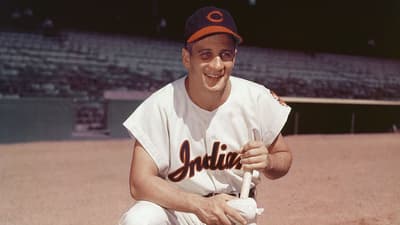
Albert Leonard Rosen, nicknamed Flip and The Hebrew Hammer, was a right-handed slugger and third baseman for the Cleveland Indians of Major League Baseball for ten seasons in the 1940s and 1950s. Did Al Rosen Have a Temper? 

Translate: "Albert Leonard Rosen, soprannominato Flip e The Hebrew Hammer, era un battitore destro e terzino per i Cleveland Indians della Major League Baseball per dieci stagioni negli anni '40 e '50. Al Rosen aveva il carattere?" Something like that. Keep style. Second paragraph:

Al Rosen, a baseball player, was an amateur boxer who challenged anyone who insulted his heritage or used anti-Semitic slurs in a fight. His stated preference for dealing with anti-Semitism was to flatten them.

Translate. Third:

One of the Top Indians

=> "Uno dei migliori Indiani" Next paragraph: "Hitting home runs is one of baseball’s most productive acts. A home run counts as a hit, a run, and a run batted in, as well as improving your slugging percentage. Al Rosen was a legendary home run hitter for the Cleveland Indians." Translate. Next: "Rosen was a great hitter and third baseman named to the All-Star team four years in a row from 1952 to 1955." Translate. Next: "Rosen was born to Louis and Rose Rosen in Spartanburg, South Carolina. Rosen’s father left the family shortly after, and when he was 18 months old, his mother and grandmother relocated the family to Miami, Florida." Translate. Next: "Rosen had asthma as a child, prompting his family to relocate south. His two favorite baseball players as a kid were Lou Gehrig and Hank Greenberg. He attended Riverside Elementary School, Ada Merritt Junior High School, and Miami Senior High School for a year before enrolling on a boxing scholarship at Florida Military Academy in St. Petersburg, Florida." Translate. Next: "After graduating from Florida Military Academy, Rosen attended the University of Florida in Gainesville. After a semester, he left to play minor league baseball in North Carolina. (Source: The New Your Times)" Translate, keep link text maybe "The New Your Times" but maybe translate? Usually keep original. Could translate "The New Your Times" but it's a proper name; keep as is. Next heading:

The Tough Hebrew

=> "L'Ebreo Duro" Next paragraph: "Rosen was Jewish. He was tough, an amateur boxer, and had a reputation for standing up to anyone who dared to disparage his heritage. While some reports have him saying that as a minor leaguer, he wished his name was less Jewish, he is later said to have wished it was more Jewish, something like Rosenstein." Translate. Next: "When Ed Sullivan, a Catholic with a Jewish wife, suggested Rosen might be Catholic, pointing to his habit of drawing a “cross” in the dirt with his bat, Rosen replied that the mark was an x and that he wished his name was more Jewish so he wouldn’t be mistaken for Catholic." Translate. Next: "A White Sox opponent called him a Jew bastard. Sox pitcher Saul Rogovin, who is Jewish, recalled an enraged Rosen storming into the dugout and challenging the son of a bitch to a fight. The player retreated." Translate. Make sure to keep HTML tags:

, , , ,

etc. We need to keep style attributes unchanged. Let's produce final HTML. Check each tag. Paragraph 1:

Albert Leonard Rosen, nicknamed Flip and The Hebrew Hammer, was a right-handed slugger and third baseman for the Cleveland Indians of Major League Baseball for ten seasons in the 1940s and 1950s. Did Al Rosen Have a Temper? 

Translate text inside spans and after. Italian: "Albert Leonard Rosen, soprannominato " Flip " e " The Hebrew Hammer ", era un battitore destro e terzino per i Cleveland Indians della Major League Baseball per dieci stagioni negli anni '40 e '50. Al Rosen aveva il carattere?" Keep spaces. Thus:

Albert Leonard Rosen, soprannominato Flip e The Hebrew Hammer, era un battitore destro e terzino per i Cleveland Indians della Major League Baseball per dieci stagioni negli anni ’40 e ’50. Al Rosen aveva il carattere?

Note: Use ’ typographic? Keep as plain apostrophe. Second paragraph:

Al Rosen, a baseball player, was an amateur boxer who challenged anyone who insulted his heritage or used anti-Semitic slurs in a fight. His stated preference for dealing with anti-Semitism was to flatten them.

Italian: "Al Rosen, un giocatore di baseball, era un pugile dilettante che sfidava chiunque insultasse la sua eredità o usasse insulti antisemiti in un combattimento. La sua preferenza dichiarata per affrontare l'antisemitismo era di schiacciarli." Thus:

Al Rosen, un giocatore di baseball, era un pugile dilettante che sfidava chiunque insultasse la sua eredità o usasse insulti antisemiti in un combattimento. La sua preferenza dichiarata per affrontare l'antisemitismo era di schiacciarli.

Third heading:

One of the Top Indians

Translate to "Uno dei migliori Indiani". Keep strong.

Uno dei migliori Indiani

Paragraph about home runs:

Hitting home runs is one of baseball’s most productive acts. A home run counts as a hit, a run, and a run batted in, as well as improving your slugging percentage. Al Rosen was a legendary home run hitter for the Cleveland Indians.

Translate: "Colpire fuoricampo è una delle azioni più produttive del baseball. Un fuoricampo conta come un colpo, una corsa e una RBI, oltre a migliorare la tua percentuale di slugging. Al Rosen era un leggendario battitore di fuoricampo per i Cleveland Indians." Preserve ’ which is apostrophe. We'll keep as is but translate. Thus:

Colpire fuoricampo è una delle azioni più produttive del baseball. Un fuoricampo conta come un colpo, una corsa e una RBI, oltre a migliorare la tua percentuale di slugging. Al Rosen era un leggendario battitore di fuoricampo per i Cleveland Indians.

Next paragraph:

Rosen was a great hitter and third baseman named to the All-Star team four years in a row from 1952 to 1955.

Translate: "Rosen era un grande battitore e terzino nominato nella squadra All-Star per quattro anni consecutivi dal 1952 al 1955." Thus:

Rosen era un grande battitore e terzino nominato nella squadra All-Star per quattro anni consecutivi dal 1952 al 1955.

Next:

Rosen was born to Louis and Rose Rosen in Spartanburg, South Carolina. Rosen’s father left the family shortly after, and when he was 18 months old, his mother and grandmother relocated the family to Miami, Florida.

Translate: "Rosen nacque da Louis e Rose Rosen a Spartanburg, South Carolina. Il padre di Rosen lasciò la famiglia poco dopo, e quando aveva 18 mesi, sua madre e sua nonna trasferirono la famiglia a Miami, Florida." Thus:

Rosen nacque da Louis e Rose Rosen a Spartanburg, South Carolina. Il padre di Rosen lasciò la famiglia poco dopo, e quando aveva 18 mesi, sua madre e sua nonna trasferirono la famiglia a Miami, Florida.

Next:

Rosen had asthma as a child, prompting his family to relocate south. His two favorite baseball players as a kid were Lou Gehrig and Hank Greenberg. He attended Riverside Elementary School, Ada Merritt Junior High School, and Miami Senior High School for a year before enrolling on a boxing scholarship at Florida Military Academy in St. Petersburg, Florida.

Translate: "Rosen aveva l'asma da bambino, spingendo la sua famiglia a trasferirsi a sud. I suoi due giocatori di baseball preferiti da piccolo erano Lou Gehrig e Hank Greenberg. Frequentò la Riverside Elementary School, la Ada Merritt Junior High School e la Miami Senior High School per un anno prima di iscriversi con una borsa di studio per il pugilato alla Florida Military Academy a St. Petersburg, Florida." Thus:

Rosen aveva l'asma da bambino, spingendo la sua famiglia a trasferirsi a sud. I suoi due giocatori di baseball preferiti da piccolo erano Lou Gehrig e Hank Greenberg. Frequentò la Riverside Elementary School, la Ada Merritt Junior High School e la Miami Senior High School per un anno prima di iscriversi con una borsa di studio per il pugilato alla Florida Military Academy a St. Petersburg, Florida.

Next:

After graduating from Florida Military Academy, Rosen attended the University of Florida in Gainesville. After a semester, he left to play minor league baseball in North Carolina. (Source: The New Your Times)

Translate: "Dopo la laurea alla Florida Military Academy, Rosen frequentò l'Università della Florida a Gainesville. Dopo un semestre, lasciò per giocare a baseball delle leghe minori in North Carolina. (Fonte: The New Your Times)" Thus:

Dopo la laurea alla Florida Military Academy, Rosen frequentò l'Università della Florida a Gainesville. Dopo un semestre, lasciò per giocare a baseball delle leghe minori in North Carolina. (Fonte: The New Your Times)

Heading:

The Tough Hebrew

Translate: "L'Ebreo Duro"

L'Ebreo Duro

Paragraph:

Rosen was Jewish. He was tough, an amateur boxer, and had a reputation for standing up to anyone who dared to disparage his heritage. While some reports have him saying that as a minor leaguer, he wished his name was less Jewish, he is later said to have wished it was more Jewish, something like Rosenstein.

Translate: "Rosen era ebreo. Era duro, un pugile dilettante, e aveva la reputazione di difendere chiunque osasse denigrare la sua eredità. Sebbene alcuni rapporti lo citino dicendo che da giocatore delle leghe minori desiderava che il suo nome fosse meno ebraico, più tardi si dice che desiderava che fosse più ebraico, qualcosa come Rosenstein." Thus:

Rosen era ebreo. Era duro, un pugile dilettante, e aveva la reputazione di difendere chiunque osasse denigrare la sua eredità. Sebbene alcuni rapporti lo citino dicendo che da giocatore delle leghe minori desiderava che il suo nome fosse meno ebraico, più tardi si dice che desiderava che fosse più ebraico, qualcosa come Rosenstein.

Next:

When Ed Sullivan, a Catholic with a Jewish wife, suggested Rosen might be Catholic, pointing to his habit of drawing a “cross” in the dirt with his bat, Rosen replied that the mark was an x and that he wished his name was more Jewish so he wouldn’t be mistaken for Catholic.

Translate: "Quando Ed Sullivan, un cattolico con moglie ebrea, suggerì che Rosen potesse essere cattolico, indicando la sua abitudine di disegnare una “croce” nella terra con la mazza, Rosen rispose che il segno era una x e che desiderava che il suo nome fosse più ebraico così non sarebbe stato scambiato per cattolico." Thus:

Quando Ed Sullivan, un cattolico con moglie ebrea, suggerì che Rosen potesse essere cattolico, indicando la sua abitudine di disegnare una “croce” nella terra con la mazza, Rosen rispose che il segno era una x e che desiderava che il suo nome fosse più ebraico così non sarebbe stato scambiato per cattolico.

Next:

A White Sox opponent called him a Jew bastard. Sox pitcher Saul Rogovin, who is Jewish, recalled an enraged Rosen storming into the dugout and challenging the son of a bitch to a fight. The player retreated.

Translate: "Un avversario dei White Sox lo chiamò figlio di ebreo bastardo. Il lanciatore dei Sox Saul Rogovin, che è ebreo, ricordò un Rosen infuriato che si precipitò nella panchina e sfidò il figlio di una puttana a un combattimento. Il giocatore si ritirò." But need to keep the phrase "Jew bastard" maybe translate as "ebreo bastardo". Keep emphasis. Thus:

Un avversario dei White Sox lo chiamò ebreo bastardo. Il lanciatore dei Sox Saul Rogovin, che è ebreo, ricordò un Rosen infuriato che si precipitò nella panchina e sfidò il figlio di una puttana a un combattimento. Il giocatore si ritirò.

Check HTML tags: all good. Now produce final answer with only HTML.

Rosen sfidò un altro avversario che aveva insultato la sua religione a un combattimento sotto gli spalti. Quando il riserva dei Red Sox Matt Batts chiamò Rosen con epiteti antisemiti durante una partita, Rosen chiese tempo e lasciò la sua posizione in campo per affrontare Batts.

Secondo Hank Greenberg, Rosen voleva andare tra gli spalti e uccidere i tifosi che gli lanciavano insulti antisemiti.
Ebrei e Baseball: Una Storia d'Amore Americana, un documentario del 2010, ha presentato Rosen, che è sincero su come ha affrontato l'antisemitismo:

C’è un momento in cui devi far sapere che basta, è abbastanza; li schiacci.

Al Rosen, Giocatore di Baseball

(Fonte: The New York Times)

Immagine da ESPN