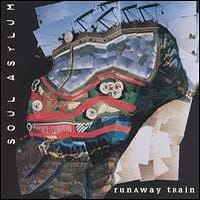
Soul Asylum’s smash hit Runaway Train was popularly known for featuring images of 36 missing children. Soul Asylum lead singer Dave Pirner stated that the song was not composed with missing children in mind. They created the piece while suffering from a deep, dark depression. But despite this, the music video helped locate 26 of the 36 missing children.
Translate: "Soul Asylum's smash hit Runaway Train was popularly known for featuring images of 36 missing children. Soul Asylum lead singer Dave Pirner stated that the song was not composed with missing children in mind. They created the piece while suffering from a deep, dark depression. But despite this, the music video helped locate 26 of the 36 missing children." Italian: "Il grande successo di Soul Asylum, Runaway Train, era noto soprattutto per includere immagini di 36 bambini scomparsi. Il cantante principale dei Soul Asylum, Dave Pirner, ha dichiarato che la canzone non è stata composta pensando ai bambini scomparsi. Hanno creato il brano mentre soffrivano di una profonda e oscura depressione. Tuttavia, il video musicale ha aiutato a localizzare 26 dei 36 bambini scomparsi." Need to keep tags:... etc. The structure: first span with text "Soul Asylum’s smash hit ". Then Runaway Train. Then another span with rest.
We need to translate each piece accordingly.
First span: "Soul Asylum’s smash hit " -> "Il grande successo di Soul Asylum ". Keep apostrophe entity? Use ’ maybe keep as is? The original uses ’ for apostrophe. We can keep same entity or replace with proper apostrophe. Probably keep same entity for consistency. So "Soul Asylum’s smash hit " -> "Il grande successo di Soul Asylum ". No apostrophe needed. Could be "Il grande successo di Soul Asylum ". Good.
Second span inside i: "Runaway Train". Keep same.
Third span: rest of sentence. Translate.
Let's produce:
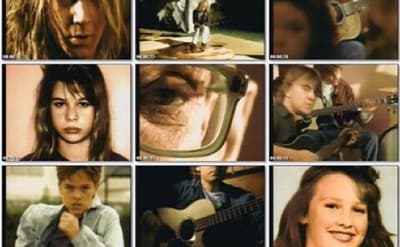
Il grande successo di Soul Asylum Runaway Train era noto soprattutto per includere immagini di 36 bambini scomparsi. Il cantante principale dei Soul Asylum, Dave Pirner, ha dichiarato che la canzone non è stata composta pensando ai bambini scomparsi. Hanno creato il brano mentre soffrivano di una profonda e oscura depressione. Tuttavia, il video musicale ha aiutato a localizzare 26 dei 36 bambini scomparsi. 26 of the 36 missing children in Soul Asylum’s original music video for “Runaway Train” have been found. Aundria Bowman’s remains were most recently identified in 2020. Around 31 years after, she was reported missing. 26 dei 36 bambini scomparsi nel video musicale originale di Soul Asylum’s per “Runaway Train” sono stati trovati. I resti di Aundria Bowman’s sono stati identificati più recentemente nel 2020. Circa 31 anni dopo, è stata segnalata come scomparsa. 26 dei 36 bambini scomparsi nel video musicale originale di Soul Asylum’s per “Runaway Train” sono stati trovati. I resti di Aundria Bowman’s sono stati identificati più recentemente nel 2020. Circa 31 anni dopo, è stata segnalata come scomparsa. According to music videos’ director Tony Kaye, twenty-six missing children were located after appearing in the video. Guitarist Dan Murphy claimed in a Pasadena Weekly interview from 2006 that some of the cases depicted in the video had tragic outcomes. Secondo il regista dei video musicali Tony Kaye, ventisei bambini scomparsi sono stati localizzati dopo essere apparsi nel video. Il chitarrista Dan Murphy ha affermato in un'intervista al Pasadena Weekly del 2006 che alcuni dei casi rappresentati nel video avevano esiti tragici. Some weren’t the best scenarios. I met a fireman on the East Coast whose daughter was at the end of the video, and he’d been in a bitter custody battle with his wife over her. Alcuni non erano gli scenari migliori. Ho incontrato un pompiere sulla Costa Est la cui figlia era alla fine del video, e lui era stato in una aspra battaglia per la custodia con sua moglie su di lei. Turns out, the girl had not left home; her mother killed her and buried it in the backyard. Si è scoperto che la ragazza non aveva lasciato casa; sua madre l'ha uccisa e seppellita nel giardino sul retro. Vicky Hamilton and Dinah McNicol, who both vanished in 1991, appeared in the UK. version of the video. At a Margate residence, their bodies were discovered in 2007. Since then, Peter Tobin has been found guilty of both murders. Vicky Hamilton e Dinah McNicol, scomparse entrambe nel 1991, sono apparse nella versione britannica del video. In una residenza di Margate, i loro corpi sono stati scoperti nel 2007. Da allora, Peter Tobin è stato dichiarato colpevole di entrambi gli omicidi. Mark Bartley, a runaway who vanished in 1992, was also depicted in the UK version. A man who knew Bartley was residing in the tenant’s house below them but was unaware of his missing status recognized him in the film. Bartley and the man he shared an apartment with had left when the police showed up. Mark Bartley, un fuggitivo scomparso nel 1992, è stato anche rappresentato nella versione britannica. Un uomo che conosceva Bartley viveva nella casa del locatario sotto di loro ma non era a conoscenza del suo stato di scomparso e lo riconobbe nel film. Bartley e l'uomo con cui condivideva l'appartamento se ne erano andati quando è arrivata la polizia. The US video’s featured actor, Curtis Huntzinger, was discovered dead in 2008. Aundria Bowman was also featured in the US film. His murderer, Stephen Daniel Hash, pleaded guilty to manslaughter and received an 11-year term at Folsom State Prison in 2009. L'attore protagonista del video statunitense, Curtis Huntzinger, è stato trovato morto nel 2008. Aundria Bowman è stata anche presente nel film statunitense. Il suo assassino, Stephen Daniel Hash, ha dichiarato colpevolezza per omicidio colposo e ha ricevuto una condanna di 11 anni presso il Folsom State Prison nel 2009. Christopher M. Kerze, Martha W. Dunn, Andrea D. Durham, Wilda M. Benoit, Byron E. Page, Kimberly S. Doss, Duane E. Fochtman, John F. Lango, and Patrick S. Betz were also in the video but were still unaccounted for as of February 2021. (Source: People Magazine) Christopher M. Kerze, Martha W. Dunn, Andrea D. Durham, Wilda M. Benoit, Byron E. Page, Kimberly S. Doss, Duane E. Fochtman, John F. Lango e Patrick S. Betz erano anche nel video ma erano ancora dispersi a febbraio 2021. (Fonte: People Magazine) Tony Kaye è stato il regista del video musicale della canzone, che ha ottenuto molta trasmissione su MTV e VH1. Nel febbraio 2010 è apparso su YouTube. A gennaio 2022, il video aveva ricevuto oltre 171 milioni di visualizzazioni. Il video è stato prodotto in diverse versioni. In contrasto con la versione del Regno Unito, che si apre con 100.000 giovani sono persi per le strade della Gran Bretagna, la versione americana del video sfuma su uno schermo nero con un ampio testo bianco a blocchi che recita: Ci sono oltre un milione di giovani persi per le strade d'America. Vari spezzoni di bambini che corrono o sembrano essere stati abusati sono presentati durante il video della canzone. Immagini di bambini scomparsi compaiono sullo schermo durante i ritornelli. Il loro nome completo e l'anno in cui erano persi dal… apparivano sullo schermo in lettere maiuscole in grassetto dopo che ogni immagine era mostrata. I bambini mostrati variavano a seconda della zona di trasmissione, utilizzando bambini scomparsi di quella regione. C'erano tre versioni originali del video negli Stati Uniti, con 36 bambini scomparsi esposti. (Fonte: Soul Asylum’s YouTube)The Resolved Cases from the “Runaway Train” Music Video
Translate: "I casi risolti dal video musicale “Runaway Train”". Keep the “ and ” for quotes. So:
I casi risolti dal video musicale “Runaway Train”
Next paragraph:
Translate the quote: "Alcuni non erano gli scenari migliori. Ho incontrato un pompiere sulla Costa Est la cui figlia era alla fine del video, e lui era stato in una aspra battaglia per la custodia con sua moglie su di lei."
Need to keep apostrophe entity for weren’t and he’d. So we translate but keep the entity? The original uses "weren’t" and "he’d". In Italian, we can translate "non erano" and "era stato". No need for apostrophe. But we could keep the entity for the apostrophe in "weren't". However translation changes words, so we don't need that entity. It's fine.
Thus:
Note translate "Guitarist" to "chitarrista". Keep capital? We'll use lower case.
Next paragraph:
Il video musicale di Runaway Train