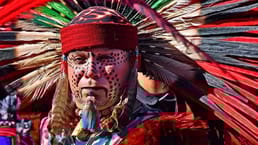
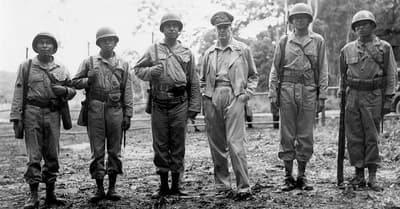
Native Americans, also known as American Indians, First Americans, Indigenous Americans, and other terms, are the Indigenous peoples of the United States, including Hawaii and territories of the United States at times, and are limited to the mainland at others. There are 574 federally recognized tribes in the United States, with roughly half associated with Indian reservations. Native Americans are Indigenous tribes from the contiguous United States and Alaska Natives. But did you know what was the role ...
We need to translate to Italian. Let's translate piece by piece. "Native Americans, also known as " => "I nativi americani, noti anche come " Then the italic span: "American Indians, First Americans, Indigenous Americans" => "Indiani americani, primi americani, americani indigeni" Then continue: ", and other terms, are the Indigenous peoples of the United States, including Hawaii and territories of the United States at times, and are limited to the mainland at others." => ", e altri termini, sono i popoli indigeni degli Stati Uniti, includendo le Hawaii e i territori degli Stati Uniti a volte, e limitati alla terraferma in altri casi." "There are 574 federally recognized tribes in the United States, with roughly half associated with Indian reservations." => "Ci sono 574 tribù riconosciute a livello federale negli Stati Uniti, con circa la metà associate a riserve indiane." Then italic: "Native Americans" => "I nativi americani" Continue: " are Indigenous tribes from the contiguous United States and Alaska Natives. But did you know what was the role of native Americans during the Second World War?" => " sono tribù indigene degli Stati Uniti contigui e dei nativi dell'Alaska. Ma sapevi qual era il ruolo dei nativi americani durante la Seconda Guerra Mondiale?" Now second paragraph:About 20% of the Six Nations tribes’ population fought in WW2. German codebreakers were baffled by the Cho... etc.
Translate: "Circa il 20% della popolazione delle tribù delle Sei Nazioni combatté nella Seconda Guerra Mondiale. I crittografi tedeschi furono sconcertati dalla lingua choctaw, e gli Irochesi, che avevano dichiarato ufficialmente guerra alla Germania durante la Prima Guerra Mondiale e non avevano mai fatto pace, dichiararono nuovamente guerra alla Germania durante la Seconda Guerra Mondiale." Make sure to keep HTML tags: ... Third:Native American Collaboration with the United States
Translate: "Collaborazione dei Nativi Americani con gli Stati Uniti" Now paragraph: "Following the Japanese attack on Pearl Harbor, many Native Americans joined the armed forces or went to work in the war plants. According to one survey, most Native Americans in the service enlisted voluntarily by 1942." Translate: "Dopo l'attacco giapponese a Pearl Harbor, molti nativi americani si arruolarono nelle forze armate o andarono a lavorare negli impianti bellici. Secondo un sondaggio, la maggior parte dei nativi americani al servizio si arruolò volontariamente entro il 1942." Next paragraph: "The Iroquois Confederacy declared war on Germany in 1917. They had not made peace by the start of WWII and were more than ready to fight. Other tribes were also prepared. Some were willing to stand in the rain for hours in order to sign their draft cards. Others arrived armed with rifles, ready to fight. It is estimated that one-quarter of the Mescalero Apaches voluntarily enlisted. This was true for many of the remaining tribes across the country. These Native Americans were willing to put aside their previous disappointments and resentments. They understood the significance of defending one's territory." Translate: "La Confederazione Irochese dichiarò guerra alla Germania nel 1917. Non avevano fatto pace all'inizio della Seconda Guerra Mondiale ed erano più che pronti a combattere. Altre tribù erano anch'esse preparate. Alcuni erano disposti a stare sotto la pioggia per ore per firmare le loro tessere di leva. Altri arrivarono armati di fucili, pronti a combattere. Si stima che un quarto dei Mescalero Apache si arruolò volontariamente. Questo valeva per molte delle tribù rimanenti in tutto il paese. Questi nativi americani erano disposti a mettere da parte le loro delusioni e risentimenti precedenti. Capivano l'importanza di difendere il proprio territorio." Next paragraph: "By the middle of 1942, the annual enlistment rate for Native Americans was around 7,500. The yearly average had risen to 22,000 by the beginning of 1945. Selective Service reported in 1942 that 99 percent of all eligible Native Americans, healthy males between the ages of 21 and 44, had registered for the draft. Approximately 5,000 Indians were in the Service on the day of the attack on Pearl Harbor. By the end of the war, the number had risen to over 44,000 both on and off-reservation. This accounted for more than ten percent of the Indian population during the war. (Source: Armed Forces Museum)" Translate: "Entro la metà del 1942, il tasso di arruolamento annuale per i nativi americani era di circa 7.500. La media annua era salita a 22.000 all'inizio del 1945. Il Servizio Selettivo riportò nel 1942 che il 99 percento di tutti i nativi americani idonei, maschi sani tra i 21 e i 44 anni, si erano registrati per la leva. Circa 5.000 indiani erano al servizio nel giorno dell'attacco a Pearl Harbor. Alla fine della guerra, il numero era salito a oltre 44.000 sia dentro che fuori le riserve. Questo rappresentava più del dieci percento della popolazione indiana durante la guerra. (Fonte: Armed Forces Museum)" Make sure to preserve etc. In original there were some after last paragraph. We can keep them or not; but keep as is maybe. Check for any HTML entities: ’ is apostrophe. We'll keep as is? In translation we can keep same entity. The original had "Six Nations tribes’ population". We'll translate but keep entity for apostrophe? We'll replace with appropriate apostrophe in Italian: "tribù delle Sei Nazioni". Could keep entity but not needed. We'll just write normal apostrophe. Make sure to keep tags:, etc. Keep style attributes.
We need to preserve the same structure: first with spans and i tags. We'll replace text inside each.
Let's reconstruct first paragraph with same tags.
Original first paragraph:
Native Americans, also known as American Indians, First Americans, Indigenous Americans, and other terms, are the Indigenous peoples of the United States, including Hawaii and territories of the United States at times, and are limited to the mainland at others. There are 574 federally recognized tribes in the United States, with roughly half associated with Indian reservations. Native Americans are Indigenous tribes from the contiguous United States and Alaska Natives. But did you know what was the role of native Americans during the Second World War? About 20% of the Six Nations tribes’ population fought in WW2. German codebreakers were baffled by the Choctaw language, and the Iroquois, who had officially declared war on Germany during WW1 and never made peace, officially declared war on Germany again during WW2. Following the Japanese attack on Pearl Harbor, many Native Americans joined the armed forces or went to work in the war plants. According to one survey, most Native Americans in the service enlisted voluntarily by 1942. The Iroquois Confederacy declared war on Germany in 1917. They had not made peace by the start of WWII and were more than ready to fight. Other tribes were also prepared. Some were willing to stand in the rain for hours in order to sign their draft cards. Others arrived armed with rifles, ready to fight. It is estimated that one-quarter of the Mescalero Apaches voluntarily enlisted. This was true for many of the remaining tribes across the country. These Native Americans were willing to put aside their previous disappointments and resentments. They understood the significance of defending one’s territory. By the middle of 1942, the annual enlistment rate for Native Americans was around 7,500. The yearly average had risen to 22,000 by the beginning of 1945. Selective Service reported in 1942 that 99 percent of all eligible Native Americans, healthy males between the ages of 21 and 44, had registered for the draft. Approximately 5,000 Indians were in the Service on the day of the attack on Pearl Harbor. By the end of the war, the number had risen to over 44,000 both on and off-reservation. This accounted for more than ten percent of the Indian population during the war. (Source: Armed Forces Museum) Dopo la guerra, molti nativi americani rimasero nella corrente principale, invece di tornare alla riserva. Abbandonare la loro cultura tradizionale non significava rifiutare il loro patrimonio. Al contrario, cominciarono a identificarsi e a far fronte alle differenze che vedevano tra loro e l'uomo bianco. Invece, altri scelsero di tornare alle loro riserve nonostante avessero imparato a fare gli aggiustamenti necessari per vivere nell'America bianca. Nonostante un tenore di vita più elevato e più opportunità di lavoro e di istruzione, questi indiani rifiutarono di rinunciare alla sicurezza della riserva. I nativi americani hanno svolto un ruolo eccezionale nella vittoria degli Stati Uniti nella Seconda Guerra Mondiale, nonostante le sfide che hanno affrontato sia come individui sia come gruppo. Hanno lasciato il conforto della loro unica casa e si sono recati in luoghi lontani e strani dove le persone non comprendevano le loro tradizioni. Hanno dovuto rinunciare alle loro danze e rituali e imparare a lavorare sotto un uomo bianco. Nonostante ciò, i nativi americani hanno imparato ad adattarsi ai vari ruoli della Seconda Guerra Mondiale e, di conseguenza, sono passati dall'essere Indiani d'America a diventare Indiani Americani. (Fonte: Armed Forces Museum) Native American Collaboration with the United States
Translate: "Collaborazione dei Nativi Americani con gli Stati Uniti"
Now subsequent paragraphs.
Paragraph 4:
Cosa è successo dopo la guerra?