キュレネのエラトステネスは学識のある人物で、アレクサンドリア図書館の総司書にまで上り詰めました。彼の業績は現在の地理学に相当し、今日でも使われている用語のいくつかを導入しました。しかし、彼が地球の周囲を測定したことをご存知ですか?
紀元前276年、ギリシャの数学者で天文学者であるエラトステネスは、二つの地点で太陽の影の角度を利用して地球の周囲を測定しました。彼はそれを39,375キロメートルと算出し、これは40,076キロメートルより1.4%少ない値です。
エラトステネスとは?
Eratosthenes, the son of Aglaos, was born in Cyrene in 276 BC. Cyrene, which is now part of Libya, was founded by Greeks centuries ago and became the capital of Pentapolis. It was a country composed of five cities: Cyrene, Arsinoe, Berenice, Ptolemais, と Apollonia.
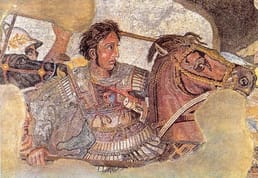
Alexander the Great conquered Cyrene in 332 BC, and after his death in 323 BC, one of his generals, Ptolemy I Soter, founded the Ptolemaic Kingdom. The economy thrived under Ptolemaic rule, thanks largely to the export of horses and silphium, a plant used for rich seasoning and medicine.
Cyrene grew into a place of cultivation, where knowledge flourished. Eratosthenes, like any other young Greek at the time, would have attended the local gymnasium to learn physical skills and social discourse, as well as reading, writing, arithmetic, poetry, and music.
Eratosthenes moved to Athens to further his education. Zeno of Citium, the founder of Stoicism, taught him in philosophical lectures on living a virtuous life there. He then studied under Aristo of Chios, who led a more cynical school of philosophy. He also studied under Arcesilaus of Pitane, the head of the Platonic Academy. His interest in Plato led him to write his first scholarly work, Platonikos, which investigated the mathematical foundations of Plato’s philosophies.
Eratosthenes was a man of many perspectives. He studied poetry under Callimachus. He composed two poems: Hermes in hexameters, which depicted the god’s life story, and Erigone in elegiacs, which described the suicide of the Athenian maiden Erigone. He wrote Chronographies, a text that depicted important dates scientifically, beginning with the Trojan War. This work was highly regarded for its precision. (Source: Britannica)
エラトステネスの地球の周囲測定法
The measurement of the Earth’s circumference is the most famous of Eratosthenes’ work, who estimated that the meridian has a length of 252,000 stadia, with an error on the true value ranging between 2.4 and +0.8 percent.
In his book On the Measure of the Earth, which has not been preserved, Eratosthenes described his arc measurement technique. However, a simplified version of the method, as described by Cleomedes, has been preserved.
The simplified approach involves calculating the distance between two towns along the same meridian, as well as the difference in angles cast by the sun on a vertical rod in each city at noon on the summer solstice. Alexandria and Syene were the two cities selected, and the distance between them was estimated by experienced bematists.
The circumference of the Earth is calculated by dividing the distance between the two cities by the difference in shadow angles represented as a fraction of a turn. (Source: Khan Academy)