, , tags etc. Also keep the superscript numbers. The content includes citations [1][2] etc. Should keep them as is. Translate the text inside tags, but not the tags themselves. Also keep the superscript tags with numbers unchanged.
We need to translate each paragraph.
Paragraph 1:
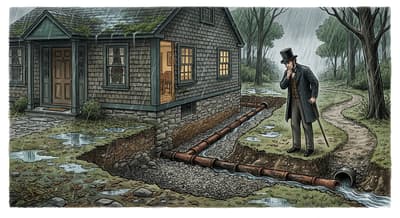
"French drain sounds like something imported from Europe. It is not. The term comes from Henry Flagg French, a Massachusetts lawyer, judge, and agricultural writer who helped popularize the drainage method in the 19th century.[1][2]
"
Translate: "French drain はヨーロッパから輸入されたもののように聞こえるが、そうではない。その語は19世紀に排水方法を普及させたマサチューセッツ州の弁護士・判事・農業作家であるヘンリー・フラッグ・フレンチに由来する。[1][2]"
Make sure to keep French drain unchanged? The term "French drain" is English phrase; maybe keep as is, but could translate? The instruction: translate content, keep tags intact. The text inside is "French drain". Should we translate that? Probably keep as is because it's a term. Could also translate to "フレンチドレイン". But better to keep original term? The original English phrase is a proper noun; Japanese may use "フレンチドレイン". But the instruction: translate content. So we should translate the phrase inside . Let's translate to "フレンチドレイン". So フレンチドレイン. Good.
Paragraph 2:
"That is already ...
"
Translate accordingly.
Let's translate each paragraph fully.
Paragraph 2:
"That is already a solid trivia fact. The better part is why his name stuck. French was not trying to brand a stylish bit of home improvement. He was fixated on a much muddier problem: land that stayed stubbornly wet. In 1859 he published Farm Drainage, a practical guide to moving water out of soil so fields would stop acting like swamps.[1][2]"
Translate:
"それだけでも十分な豆知識だ。さらに興味深いのは、なぜ彼の名前が残ったかという点だ。フレンチはおしゃれな住宅改修をブランド化しようとしていたわけではない。彼が取り組んだのははるかに泥臭い問題、すなわち頑固に湿った土地だった。1859年に彼はFarm Drainage(『農業排水』)を出版し、土壌から水を排除して畑が沼のようになるのを防ぐ実用的なガイドを提供した。[1][2]"
But need to translate Farm Drainage maybe keep as is? Could keep English title. We'll keep as is.
Paragraph 3:
"The idea was simple and effective. Dig a sloped trench. Fill it with gravel or stone. Sometimes add sections of tile pipe with small gaps so groundwater can seep in and flow away downhill.[1] Modern versions use perforated plastic pipe and filter fabric, but the basic logic is the same: give trapped water an easy exit.[1][3]"
Translate:
"この考えはシンプルで効果的だった。傾斜した溝を掘り、そこに砂利や石を入れる。時には小さな隙間のあるタイルパイプを加えて、地下水が浸透し下流へ流れ出せるようにすることもある。[1] 現代のバージョンでは穿孔されたプラスチックパイプとフィルターファブリックが使用されるが、基本的な論理は同じで、閉じ込められた水に容易な出口を提供することだ。[1][3]"
Paragraph 4:
"One small historical detail makes the whole thing click. When older sources mention drain tiles, they mean literal clay or terracotta drainage tiles, not kitchen or bathroom tile.[1][3] That is also why terms like “weeping tile” sound strange now. The pipe “weeps” water in, then quietly carries it away."
Translate:
"小さな歴史的細部が全体像をはっきりさせる。古い資料で排水tiles(タイル)と言及される場合、それは文字通りの粘土やテラコッタ製の排水タイルを指し、キッチンや浴室のタイルではない。[1][3] そのため「ウィーピングタイル」のような用語が現在では奇妙に聞こえるのだ。パイプは水を「泣き出す」ように吸い込み、静かに運び去る。"
Paragraph 5:
"French did not invent drainage itself. Farmers had been cutting ditches and draining soggy ground for centuries.[1][3] What he did was study existing methods, describe them clearly, and help spread them in the United States after studying European drainage practices in the 1850s.[1][2] In other words, he did not invent the problem or even the basic fix. He helped standardize and popularize it so thoroughly that the method started traveling under his name."
Translate:
"フレンチは排水そのものを発明したわけではない。農家は何世紀も前から溝を掘り、湿った土地の排水を行ってきた。[1][3] 彼が行ったのは、既存の方法を研究し、明確に記述し、1850年代にヨーロッパの排水技術を調査した後、米国でそれらを広めたことだ。[1][2] 言い換えれば、問題や基本的な解決策を発明したわけではなく、標準化と普及を徹底的に行い、その手法が彼の名前で呼ばれるようになったのである。"
Paragraph 6:
"That matters because drainage is one of those invisible technologies you only notice when it fails. Systems like these protect foundations, reduce standing water, improve farmland, and keep basements from turning into indoor ponds.[1][3] A French drain is not glamorous. It is just gravel, a trench, gravity, and a much better morning after heavy rain."
Translate:
"これは重要だ。排水は目に見えない技術の一つで、故障したときに初めてその存在に気付く。こうしたシステムは基礎を保護し、たまり水を減らし、農地を改善し、地下室が室内の池になるのを防ぐ。[1][3] フレンチドレインは華やかなものではない。砂利と溝、重力、そして豪雨後のはるかに良い朝を提供するだけだ。"
Paragraph 7:
"So the next time someone says they need a French drain, you can give them the real story. It is not French in the national sense. It is French in the same way a sandwich can be named after a person: Henry French, the 19th-century New Englander whose name got attached to one of the simplest useful ideas in drainage.[1][2]"
Translate:
"だから次に誰かがフレンチドレインが必要だと言ったときは、本当の話を伝えられるだろう。それは国籍としてのフランスではなく、サンドイッチが人物にちなんで名付けられるのと同じようにフレンチという名前が付いたものだ。19世紀のニューイングランド出身のヘンリー・フレンチが、排水における最もシンプルで有用なアイデアの一つに自らの名前を結びつけたのである。[1][2]"
Now ensure all tags intact: each paragraph ...
. Inside we have tags and tags. Ensure we keep them.
Check each paragraph for correct opening/closing tags.
Paragraph 1: フレンチドレイン はヨーロッパから輸入されたもののように聞こえるが、そうではない。その語は19世紀に排水方法を普及させたマサチューセッツ州の弁護士・判事・農業作家であるヘンリー・フラッグ・フレンチに由来する。[1][2]
Paragraph 2: それだけでも十分な豆知識だ。さらに興味深いのは、なぜ彼の名前が残ったかという点だ。フレンチはおしゃれな住宅改修をブランド化しようとしていたわけではない。彼が取り組んだのははるかに泥臭い問題、すなわち頑固に湿った土地だった。1859年に彼はFarm Drainage(『農業排水』)を出版し、土壌から水を排除して畑が沼のようになるのを防ぐ実用的なガイドを提供した。[1][2]
Paragraph 3: この考えはシンプルで効果的だった。傾斜した溝を掘り、そこに砂利や石を入れる。時には小さな隙間のあるタイルパイプを加えて、地下水が浸透し下流へ流れ出せるようにすることもある。[1] 現代のバージョンでは穿孔されたプラスチックパイプとフィルターファブリックが使用されるが、基本的な論理は同じで、閉じ込められた水に容易な出口を提供することだ。[1][3]
Paragraph 4: 小さな歴史的細部が全体像をはっきりさせる。古い資料で排水tiles(タイル)と言及される場合、それは文字通りの粘土やテラコッタ製の排水タイルを指し、キッチンや浴室のタイルではない。[1][3] そのため「ウィーピングタイル」のような用語が現在では奇妙に聞こえるのだ。パイプは水を「泣き出す」ように吸い込み、静かに運び去る。
Paragraph 5: フレンチは排水そのものを発明したわけではない。農家は何世紀も前から溝を掘り、湿った土地の排水を行ってきた。[1][3] 彼が行ったのは、既存の方法を研究し、明確に記述し、1850年代にヨーロッパの排水技術を調査した後、米国でそれらを広めたことだ。[1][2] 言い換えれば、問題や基本的な解決策を発明したわけではなく、標準化と普及を徹底的に行い、その手法が彼の名前で呼ばれるようになったのである。
Paragraph 6: これは重要だ。排水は目に見えない技術の一つで、故障したときに初めてその存在に気付く。こうしたシステムは基礎を保護し、たまり水を減らし、農地を改善し、地下室が室内の池になるのを防ぐ。[1][3] フレンチドレインは華やかなものではない。砂利と溝、重力、そして豪雨後のはるかに良い朝を提供するだけだ。
Paragraph 7: だから次に誰かがフレンチドレインが必要だと言ったときは、本当の話を伝えられるだろう。それは国籍としてのフランスではなく、サンドイッチが人物にちなんで名付けられるのと同じようにフレンチという名前が付いたものだ。19世紀のニューイングランド出身のヘンリー・フレンチが、排水における最もシンプルで有用なアイデアの一つに自らの名前を結びつけたのである。[1][2]
Check for any missing tags: All good.
Now output only the HTML.
出典
- フレンチドレイン - Wikipedia
- ヘンリー・フラッグ・フレンチ - Wikipedia
- 排水 - Britannica