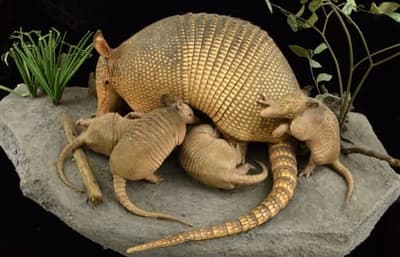
Armadillos are placental mammals under the order Cingulata. They are known for the bony plates that cover their entire body which serve as their first line of defense against predators. While there are different subspecies of this mammal, the nine-banded armadillo has a unique birthing pattern. Why do they give birth by 4s?
Translate: "Armadillos are placental mammals under the order Cingulata." -> "犰狳是胎盘哺乳动物,属于目 Cingulata。" Keep style. "They are known for the bony plates that cover their entire body which serve as their first line of defense against predators." -> "它们以覆盖全身的骨质板而闻名,这些骨板是对捕食者的第一道防线。" "While there are different subspecies of this mammal, the nine-banded armadillo has a unique birthing pattern." -> "虽然这种哺乳动物有不同的亚种,但九带犰狳具有独特的出生模式。" "Why do they give birth by 4s?" -> "它们为何以四胞胎的方式分娩?" Make sure punctuation Chinese style? Use Chinese punctuation? Usually keep period as "。" but we can keep original punctuation but translate. Use Chinese punctuation. Now second paragraph:Nine-banded armadillos consistently give birth to quadruplets. This is because a single egg splits into four identical embryos after getting fertilized.
Translate: "九带犰狳始终产下四胞胎。这是因为受精后的单个卵会分裂成四个相同的胚胎。" Keep tags. Third:What is an Armadillo?
Translate heading: "什么是犰狳?" Fourth paragraph:Armadillos are yellowish-brown animals with strongly curved claws and basic peglike teeth that lack enamel. They also come in a variety of sizes. In the United States, the most common subspecies is the nine-banded armadillo which is about 76 cm long.
Translate: "犰狳是黄棕色的动物,拥有强弯的爪子和缺乏牙釉质的基本钉状牙齿。它们的体型也各不相同。在美国,最常见的亚种是约76厘米长的九带犰狳。" Keep . Fifth paragraph:They are armored animals found mainly in the tropical and subtropical regions of Central and South America. Most of the 20 species can be found in open areas such as meadows, but several can also be found in woodlands. In most armadillos, the carapace is a collection of plates covering much of the body, including the head, legs, and tail. Except for one species, the carapace is almost hairless.
Translate: "它们是有盔甲的动物,主要分布在中美洲和南美洲的热带和亚热带地区。20种犰狳中大多数可在草甸等开阔地区找到,但也有几种生活在林地。大多数犰狳的背甲是一系列覆盖身体大部分,包括头部、四肢和尾巴的板块。除一种外,背甲几乎没有毛发。" Keep. Sixth paragraph:The carapace is made up of bony transverse bars covered in skin-derived solid scales. The number of movable bands in their armor gives the three-, six-, and nine-banded armadillos their names. The nine-banded armadillo is the only species found in the United States.
Translate: "背甲由覆盖有皮肤来源的坚硬鳞片的骨质横条组成。盔甲中可移动的带数赋予了三带、六带和九带犰狳其名称。九带犰狳是唯一在美国发现的物种。" Keep. Seventh paragraph:Since its discovery in Texas in the 1800s, its distribution has expanded into numerous southern states. In some areas, eight-banded individuals of this species are prevalent. The pichi or Zaedyus pichiy, a frequent resident of Argentine Patagonia, and the bigger hairy armadillo the Chaetophractus villosus, which goes far into southern Chile. (Source: Britannica)
Translate: "自19世纪在德克萨斯州被发现以来,它的分布已扩展到许多南部州。在某些地区,这种动物的八带个体很常见。pichi(Zaedyus pichiy),是阿根廷巴塔哥尼亚的常见居民;以及更大的毛犰狳 Chaetophractus villosus,其分布延伸至智利南部。(来源:Britannica) " Need to keep tags. Eighth heading:More on the Nine-banded Armadillo or Dasypus novemcinctus
Translate: "关于九带犰狳或 Dasypus novemcinctus 的更多信息" Ninth paragraph:The Dasypus novemcinctus is the only vertebrate that consistently produces identical quadruplets. When a female’s egg is fertilized, it divides into four genetically identical embryos that share one placenta. It’s unclear how and why this unusual pattern developed and continues to exist.
Translate: "Dasypus novemcinctus 是唯一能够始终产生相同四胞胎的脊椎动物。当雌性的卵受精后,它会分裂成四个基因相同的胚胎,共用一个胎盘。目前尚不清楚这种异常模式是如何以及为何形成并持续存在的。" Note: need to keep HTML entities like ’ become apostrophe? In original they used ’ for apostrophe. We can keep as ’ or keep entity. Probably keep as ’ (Unicode). But we can keep the entity as ’? Safer to keep the same entity? The instruction: keep tags intact, but text can be changed. Entities are part of text. We can replace with proper punctuation. Use ’. Tenth paragraph:We normally think of genetic diversity as a benefit for creatures that have numerous births.
Translate: "我们通常认为遗传多样性对多胎生的生物有利。" Eleventh paragraph:The nine-banded armadillo, however, defies this by creating clones.
Translate: "然而,九带犰狳通过产生克隆体来违背这一点。" Twelfth paragraph:Aside from generating milk for her young, the nine-banded armadillo mother is not particularly attentive, and the male is much less so. However, supplying adequate nutrients for her young to develop and prosper may be her most important responsibility.
Translate: "除了为幼崽分泌乳汁外,九带犰狳母亲并不特别细心,雄性更是如此。然而,为幼崽提供足够的营养以使其成长繁荣可能是她最重要的职责。" Now ensure all HTML tags remain same, including style attributes. Keep and other entities. Let's construct final HTML. Check each paragraph for tags. Paragraph 1:... etc. Need to keep same structure: ... Cingulata... 犰狳是胎盘哺乳动物,属于目 Cingulata。它们以覆盖全身的骨质板而闻名,这些骨板是对捕食者的第一道防线。虽然这种哺乳动物有不同的亚种,但九带犰狳具有独特的出生模式。它们为何以四胞胎的方式分娩? ... 九带犰狳始终产下四胞胎。这是因为受精后的单个卵会分裂成四个相同的胚胎。 犰狳是黄棕色的动物,拥有强弯的爪子和缺乏牙釉质的基本钉状牙齿。它们的体型也各不相同。在美国,最常见的亚种是约76厘米长的九带犰狳。 它们是有盔甲的动物,主要分布在中美洲和南美洲的热带和亚热带地区。20种犰狳中大多数可在草甸等开阔地区找到,但也有几种生活在林地。大多数犰狳的背甲是一系列覆盖身体大部分,包括头部、四肢和尾巴的板块。除一种外,背甲几乎没有毛发。 背甲由覆盖有皮肤来源的坚硬鳞片的骨质横条组成。盔甲中可移动的带数赋予了三带、六带和九带犰狳其名称。九带犰狳是唯一在美国发现的物种。 自19世纪在德克萨斯州被发现以来,它的分布已扩展到许多南部州。在某些地区,这种动物的八带个体很常见。pichi或Zaedyus pichiy,是阿根廷巴塔哥尼亚的常见居民;以及更大的毛犰狳 Chaetophractus villosus,其分布延伸至智利南部。(来源:Britannica) 自19世纪在德克萨斯州被发现以来,它的分布已扩展到许多南部州。在某些地区,这种动物的八带个体很常见。pichi或 Zaedyus pichiy,是阿根廷巴塔哥尼亚的常见居民;以及更大的毛犰狳 Chaetophractus villosus,其分布延伸至智利南部。(来源:Britannica) Dasypus novemcinctus 是唯一能够始终产生相同四胞胎的脊椎动物。当雌性的卵受精后,它会分裂成四个基因相同的胚胎,共用一个胎盘。目前尚不清楚这种异常模式是如何以及为何形成并持续存在的。 我们通常认为遗传多样性对多胎生的生物有利。 然而,九带犰狳通过产生克隆体来违背这一点。 除了为幼崽分泌乳汁外,九带犰狳母亲并不特别细心,雄性更是如此。然而,为幼崽提供足够的营养以使其成长繁荣可能是她最重要的职责。 建造骨质甲壳需要额外的营养,尤其是钙和磷。虽然骨板的骨化在子宫内就开始了,但可以想象,拥有一层薄而柔韧的甲壳(即尚未完全形成的甲壳),并不会让产下四只幼崽变得更困难。幸运的是,甲壳的大部分发育发生在出生后。 犰狳母亲主要通过摄取缺钙的昆虫性食物来实现这一点。犰狳的代谢率也比大多数动物慢。尽管存在这些明显的劣势,出生时仅重100克的幼崽仍能快速生长,并在两个月大时就能自行觅食。 犰狳母亲为她的四只相同后代完成这一切的能力,同她拥有四只相同幼崽的事实一样令人费解。(来源:卡内基自然历史博物馆)What is an Armadillo?
Translate:
什么是犰狳?
Paragraph 4:
关于九带犰狳或 Dasypus novemcinctus 的更多信息
Note: original had trailing non-breaking space after novemcinctus. Keep it: Dasypus novemcinctus (includes a space). We'll keep.
Paragraph 9: