Jackie Kennedy did not want to stand in a crowd and publicly revisit the White House as if history were tidy. Not eight years after Dallas. Not for the unveiling of portraits that would fix her husband, and herself, in official memory while the wound still felt personal. So she stayed away from the ceremony.
And then something unusual happened. President Richard Nixon and First Lady Pat Nixon offered something quieter: a private visit, with no press spectacle and no public procession, just Jacqueline Kennedy and her children returning to the White House on their own terms. It would be her only visit back.[1]
The House She Had Already Lost Once
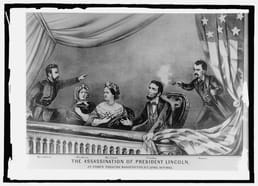
To understand why that visit mattered, you have to start with how abruptly the White House stopped being home. On November 22, 1963, John F. Kennedy was assassinated in Dallas. A state funeral followed almost immediately. The country mourned a president. Jackie Kennedy mourned a husband. Her children had lost their father. And the White House, which had been the center of a young family’s public life, suddenly became a place they had to leave behind.[1]
They left on December 6, just two weeks after the assassination, making way for Lyndon Johnson and his family.[1] That speed matters. There was no long emotional unwinding, no gentle transition. One era ended in gunfire, and another began before the first family had really had time to absorb what had happened.
For Jackie, the White House was never just an address. She had poured herself into its restoration, helping recast it as a place of American history rather than merely a presidential residence.[1] So when she left, she was not just leaving the site of her husband’s presidency. She was leaving a project she had helped define.
The Portraits Were Supposed to Be Public
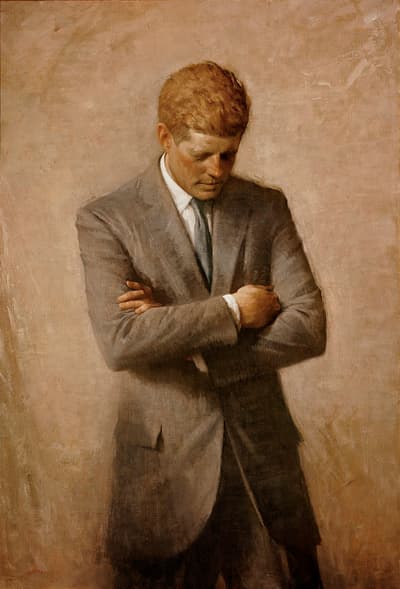
Years later came the formal unveiling of the official White House portraits of John and Jacqueline Kennedy, painted by Aaron Shikler. These were not ordinary likenesses. They were part of the machinery by which a presidency turns living people into national memory.[1]
Jackie had strong views about that process. Shikler later said he wanted future generations to understand Kennedy not simply as “handsome Jack,” but as something larger, a metaphor for America at a crossroads.[1] That line reveals the tension at the center of portraiture. A portrait is never just about appearance. It is about interpretation. It tells future viewers what kind of person they are supposed to think they are seeing.
But Jackie did not attend the public unveiling. That absence said something by itself. Public commemoration can look graceful from the outside and still feel unbearable to the people most intimately bound to the loss. The ceremony could turn memory into pageantry. She appears to have wanted something else.
The Nixons Chose Privacy Over Spectacle
This is where the story takes its unexpected turn. Rather than insisting on protocol and publicity, the Nixons accommodated her. Richard and Pat Nixon agreed to a private viewing of the portraits for Jackie and her children.[1] By the standards of political Washington, it was a strikingly human gesture.
Because what Jackie needed was not another ceremony. She needed a controlled return, a way to enter the building without surrendering herself to it. A way to see what had been made of memory without doing so beneath the gaze of the nation.
And so the visit was arranged in secret. No crowds. No public drama. Just a former first lady, her children, and the house they had once inhabited at the center of American life.
Why the Visit Was So Powerful
There is something almost unbearably poignant about the idea of that walk through the White House. By then, the house was no longer hers in any formal sense. Administrations had moved on. Politics had moved on. The country had moved on, at least outwardly. But grief does not obey the timetable of institutions.
Private return visits to meaningful places are never really about geography. They are about time. You go back not simply to see the rooms, but to confront the versions of yourself that once lived inside them. For Jackie Kennedy, every room would have carried overlaps: state dinners and nursery life, restoration triumphs and widowhood, public performance and private devastation.
That is what makes this visit so striking. It was not a restoration of the past. It was an encounter with the fact that the past could not be restored.
The Only Time She Came Back
The White House Historical Association notes that Jacqueline Kennedy returned to the White House only once after leaving in December 1963, and this was that visit.[1] Just once. That detail gives the episode its emotional shape.
It means this was not the beginning of a new relationship with the place. It was not one stop in a series of reconciliations. It was the exception, a single passage back through a house that had once been home and had then become inseparable from national trauma.
And perhaps that is why the story lingers. Public history usually emphasizes ceremonies, speeches, unveilings, moments staged for the camera. But some of the most revealing historical moments happen in deliberate privacy: a widow declining the public ritual, a sitting president and first lady making room for grief, a mother bringing her children back once, and only once, to see the house where everything changed.
More Than a Courtesy
The Nixons’ gesture was courteous, certainly. But it was also something more perceptive than courtesy. It recognized that official memory and personal memory are not the same thing. The state can unveil a portrait on schedule. A family cannot be expected to mourn on schedule.
That is the quiet intelligence of the episode. Jackie Kennedy did not refuse remembrance. She refused its public choreography. And in allowing her a private return, the Nixons made space for a truth Washington often prefers to smooth over: history may be formal, but loss is intimate.
So the most meaningful White House portrait visit of Jackie Kennedy’s life was not the public unveiling she skipped. It was the hidden one that followed, the secret tour through rooms already turning into history. It was her only return, and perhaps because it happened in private, it was the only kind she could bear.[1]