On the morning of 7 July 1960, eight-year-old Graeme Thorne left the two-bedroom ground-floor flat he shared with his parents and three-year-old sister Belinda in Edward Street, Bondi, and walked to the corner of Wellington and O'Brien Streets. Family friend Phyllis Smith collected him there most mornings and took him to school along with her own two sons. When she arrived, Graeme was not waiting [1].
Freda Thorne had kissed her son goodbye minutes earlier. Smith drove to the flat to check whether the boy had gone home, and when he had not, Freda telephoned police [1]. Bazil Thorne, Graeme's father, had won £100,000 in the Opera House Lottery the previous month, and winners in that period became overnight celebrities who received extensive media coverage [1]. Lotteries in Australia are licensed at state or territory level [3].
At about 9:40 that morning the telephone rang at the flat. A man told Freda he had her boy and demanded £25,000 before 5pm, warning that otherwise he would feed the child to the sharks [1]. Sergeant Larry O'Shea, who was with Freda when the call came, took the receiver and posed as Bazil Thorne, telling the caller he did not have that kind of money. O'Shea did not know about the lottery win [1].
The kidnapper rang again about ten minutes later and told the family to put the money into two paper bags. He hung up and never called back [1]. Around 40 investigators searched the neighbourhood, going through every house and flat in the vicinity in what became one of the largest police operations in Australian history [1].
Graeme's empty school case turned up the next day in bushes near the corner where he waited for Phyllis Smith. Several days later, police found his school cap, raincoat and lunchbox about 1.5 kilometres from the case [1]. A reward of £5,000 was announced on 8 July, and missing-person posters bearing his photograph went up across the city [1].
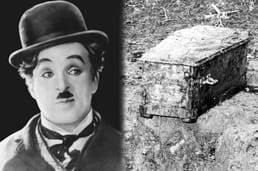
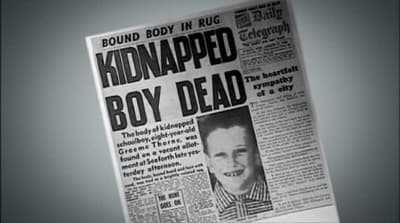
On 16 August a body was found on vacant land at Grandview Grove, Seaforth, in Sydney. Graeme had been wrapped in a tartan blanket and tied with string, gagged with a scarf, and wedged beneath a rock [1]. The autopsy concluded that he had died within 24 hours of his abduction. The pathologist could not determine whether asphyxiation, a skull fracture or a combination of the two had killed him [1].
Forensic work at the site produced two kinds of cypress foliage, three varieties of human hair including dyed blonde hair, Pekinese dog hair, and soil holding fragments of pink lime mortar [1]. Those findings, combined with an eyewitness sighting of Graeme with a man, led detectives to the home of Hungarian migrant Stephen Leslie Bradley, where cypress plants grew and pink mortar had been used in the building of the house [1].
Graeme's abduction was the first kidnapping for ransom in Australian history, and it led to a change in lottery winning procedures in the country [1]. The Opera House Lottery that made his family famous belonged to a period when governments around the world were turning back to lotteries as a way to raise revenue without raising taxes [2]. Public fascination with Australian winners did not fade. Melbourne truck driver Bill Morgan won A$250,000 on a scratchcard while a Nine News crew filmed him re-enacting an earlier win, and the footage was later shared widely online [4].