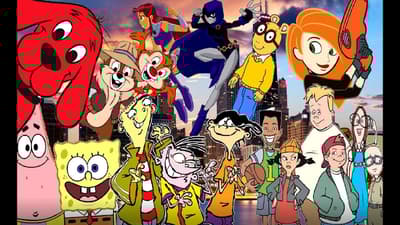
Think back to a Saturday morning in 1994. You’re sitting on the floor, a bowl of sugary cereal in your lap, eyes glued to the glowing box in the living room. You’re watching Rugrats, or maybe Boy Meets World, or perhaps an episode of Magic School Bus. The world feels vibrant, chaotic, and endlessly entertaining. But if you look closer—if you step back from the bright colors and the slapstick humor—you’ll notice something peculiar. There is a recurring, almost rhythmic undertone to these shows. They aren't just entertaining you; they are teaching you. They are nudging you toward a moral lesson, a scientific fact, or a social nuance.
For many of us, this felt natural. We just assumed that "good" TV was supposed to be meaningful. But that sense of purpose wasn't an accident of creativity, nor was it merely the result of exceptionally talented writers. It was the result of a legislative hammer that fell on the broadcasting industry at the turn of the decade, fundamentally altering the DNA of children's entertainment.
The Era of the Toy Commercial
To understand why the 90s felt so different, you have to understand the Wild West of the 1980s. Before the regulatory shifts of the 90s, children’s television was governed by a different set of rules—rules that prioritized the bottom line over the classroom. The 1980s were the golden age of the "toy commercial."
During this era, the line between a cartoon and an advertisement didn't just blur; it vanished entirely. Shows like He-Man and the Masters of the Universe or Transformers weren't just narratives; they were extended, half-hour commercials designed to move plastic off the shelves and into your toy box[1]. The primary goal of programming wasn't to foster cognitive development or emotional intelligence; it was to build brand loyalty in a demographic that was notoriously easy to influence.
Broadcasters viewed children through a very specific lens: they weren't just viewers; they were consumers. As long as the ratings were high and the toy sales were climbing, the "content" of the shows was secondary to their commercial utility. But by the end of the decade, a growing chorus of parents, educators, and policymakers began to argue that this model was doing more harm than good.
The Legislative Hammer: The Children's Television Act
The pivot point came in 1990. The Federal Communications Commission (FCC) decided that the era of pure consumerism had to end. They introduced a piece of legislation that would change the landscape of the airwaves forever: the Children's Television Act (CTA)[2].
The CTA wasn't a suggestion. It was a mandate. It required broadcast television stations to serve the "educational and informational" (E/I) needs of children. The logic was simple but profound: if a station wanted to use the public airwaves—a finite resource granted by the government—it had a responsibility to provide something of value to the public's youngest citizens[3].
Suddenly, the math changed for networks. To maintain their broadcast licenses, they couldn't just air endless loops of action-adventure designed to sell action figures. They had to prove, through documented programming, that they were contributing to a child's development. This led to the birth of the "E/I" icon—that tiny, two-letter badge you would see in the corner of the screen, signaling to parents that the program met the government's educational standards[2].
The Art of the Stealth Lesson
This is where the magic happened. You might think that a government mandate for "educational" content would lead to dry, boring, classroom-style programming. If that had been the case, kids would have changed the channel. But the 1990s became a masterclass in what we might call "stealth education."
The greatest writers of the era didn't fight the new rules; they leaned into them. They realized that the CTA provided a new framework for storytelling. Instead of just making a show about a group of babies, Rugrats could explore complex themes of perspective, empathy, and the terrifyingly large world through a child's eyes. Instead of a simple sitcom, Boy Meets World could tackle the nuances of growing up, morality, and social responsibility[4].
The "educational message" became baked into the narrative arc. Science became an adventure in The Magic School Bus; social dynamics became the heartbeat of Hey Arnold!. The mandate forced creators to think more deeply about why a story mattered, turning the "lesson" from a chore into a cornerstone of the character development.
A Legacy in the Living Room
The Children's Television Act effectively ended the era of the pure toy commercial and ushered in an era where television was expected to be a tool for growth. It shifted the perception of the child viewer from a mere consumer to a developing citizen.
While the landscape of media has shifted toward streaming and fragmented digital content, the 90s remain a unique, high-water mark in television history. It was a decade where the law and the imagination collided, creating a golden age of programming that didn't just entertain us—it helped shape us.