George Miller’s Mad Max trilogy gave the world a taste of Australian cinematics by combining explosive scenes and post-apocalyptic vibes. After almost thirty years of hiatus, Miller filmed another franchise installment. Despite it being an action movie, why did Miller choose his wife to become the editor of Fury Road?
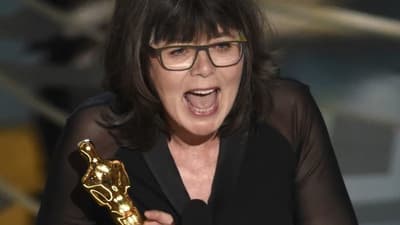
Margaret Sixel, the wife of Mad Max creator George Miller, edited “Mad Max: Fury Road.” Miller said that if any other guy would cut the film, it would just look like a typical action film. Sixel won an Oscar for her work with the movie.
The Mad Max Franchise
The Mad Max franchise is an Australian post-apocalyptic action film series created by George Miller and Byron Kennedy. The series is set in future Australia, where society has collapsed, and most of its population has reverted as barbaric nomads of the desert. The series follows the adventures of a lone drifter, Max Rockatansky, who used to be a police officer but gave up his position when his family was killed.
The first Mad Max film was screened in 1979, introducing the unknown Australian actor Mel Gibson as Max. This film introduced Miller’s vision of a dystopian Australia, presenting to the world the Australian New Wave films while simultaneously propelling Gibson’s popularity.
The franchise’s second installment was released in 1981, depicting Gibson as a hardened man who rediscovers his humane side as he helps a community of settlers against a nomadic group of marauders. The third film was released four years later, with Gibson reprising the film’s lead role.
Miller then took different projects after the third Mad Max film. But after a 30-year hiatus, Miller released the fourth installment, Mad Max: Fury Road, in 2015. Tom Hardy played the main character. Charlize Theron was his co-star.
Each Mad Max film was a success, earning millions at the box office. The first film held the Guinness Book of Records award for Most Profitable Film ever Created. The franchise has made more than $528 million globally despite its low average production cost of $162 million. (Source: Mad Max)
The Challenge in Editing Mad Max: Fury Road
Mad Max: Fury Road was well received by audiences and critics alike. It won several awards in the Oscars, including Best Achievement in Film Editing, Costume Design, Makeup and Hairstyling, Sound Mixing, Sound Editing, and Production Design. (Source: IMDb)
La production du film n’avait pas été une tâche facile, selon Margaret Sixel. Elle était la monteuse du film et l’épouse du réalisateur. Fury Road a nécessité environ huit mois de tournage dans le désert du Namib en Afrique du Sud ; le travail de post‑production a duré près de deux ans. Le défi de Sixel était de couper et d’assembler plus de 470 heures en un film de 120 minutes. (Source : Avid)
De plus, Sixel n’avait aucune expérience du montage de films d’action. Avant Mad Max, ses travaux comprenaient Babe: Pig in the City et Happy Feet. Dans une interview, elle a révélé que le montage du film était difficile parce qu’il contenait très peu de dialogues. Les films avec des dialogues aident à faire avancer l’histoire. Cela a ajouté de la pression sur ses compétences de montage. (Source : NPR)
Sixel était également inquiète de son travail du fait qu’elle était l’épouse de Miller. Il était très précis sur ce qu’il ne voulait pas que Fury Road ressemble. Elle a pris sur elle de s’assurer de livrer ce dont il avait besoin. (Source : LA Times)