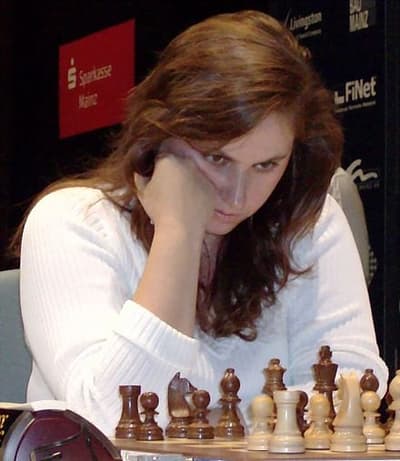
In the world of professional chess, there is a ceiling. It isn't a physical barrier, but a psychological and systemic one—a glass ceiling that has, for centuries, relegated women to a parallel universe of competition. Most female players compete in women-only tournaments, chasing titles that exist on a separate track from the main stage. But then there was Judit Polgár.
Polgár didn't just crack the ceiling; she shattered it. She didn't merely compete with the men; she hunted them. By the time she reached her prime, she wasn't just the strongest female player to ever live—she was one of the most feared grandmasters on the planet, regardless of gender.
Her ascent, however, was not a stroke of biological luck or a sudden spark of divine inspiration. It was the result of a calculated, controversial, and relentless social experiment.
The Experiment of László Polgár
To understand Judit, you have to understand her father, László Polgár. A psychologist with a radical hypothesis, László operated in defiance of the prevailing wisdom of the mid-20th century. At the time, the consensus was that geniuses were born—that greatness was an innate, unchangeable trait etched into the DNA of a select few. László disagreed. He believed that "geniuses are made, not born"[1].
He didn't want to simply observe this phenomenon; he wanted to engineer it. To prove his theory, he decided to raise his daughters to be world-class experts in a single, highly measurable field: chess. He bypassed mathematics or music in favor of a game of pure logic, where every move is documented and every victory is quantifiable.
The Polgár household was less a home and more a laboratory. From a very young age, Judit and her sisters were immersed in a world of endless tactical puzzles, endgame studies, and rigorous training. The goal was not merely to teach them how to play, but to cultivate a level of mastery that would defy the conventional boundaries of human potential.
Breaking the Records
The experiment yielded results that were nothing short of staggering. While most children were navigating social hierarchies, Judit Polgár was navigating the complex geometry of the 64 squares. The impact was immediate and disruptive.
In January 1989, at just 12 years old, Judit sent shockwaves through the chess community by breaking into the FIDE top 100, ranking at No. 55[1]. She was no longer a mere "talented girl"; she was a statistical anomaly that the established hierarchy could no longer ignore.
Her meteoric rise continued with a speed that left veterans breathless. In 1991, at the age of 15 years and 4 months, she achieved the title of Grandmaster[1]. In doing so, she didn't just reach a milestone; she eclipsed a legend, breaking the record for the youngest Grandmaster ever—a title previously held by the legendary former World Champion Bobby Fischer[1].
A Different Kind of Champion
What set Polgár apart was not just her ability to win, but her refusal to play in the "women's" circuit. While other female players sought prestige in women-only championships, Judit sought the highest level of combat available. She played in "open" tournaments, facing the strongest men in the world and proving that the distinction between "male" and "female" chess was an artificial construct with no place on the board.
She became the only woman to qualify for a World Championship tournament in the open category, cementing her status as a true peer to the giants of the game[1]. Her playing style was aggressive, tactical, and uncompromising—a direct reflection of the intense, disciplined upbringing her father had engineered.
By the time she stepped away from tournament play in September 2015, the question of whether genius is born or made had been answered by her very existence[1]. Judit Polgár hadn't just become a Grandmaster; she had become living proof that with enough deliberate practice and a radical vision, the limits of human ability are much further out than we dare to imagine.