French drain sounds like something imported from Europe. It is not. The term comes from Henry Flagg French, a Massachusetts lawyer, judge, and agricultural writer who helped popularize the drainage method in the 19th century.[1][2]
That is already a solid trivia fact. The better part is why his name stuck. French was not trying to brand a stylish bit of home improvement. He was fixated on a much muddier problem: land that stayed stubbornly wet. In 1859 he published Farm Drainage, a practical guide to moving water out of soil so fields would stop acting like swamps.[1][2]
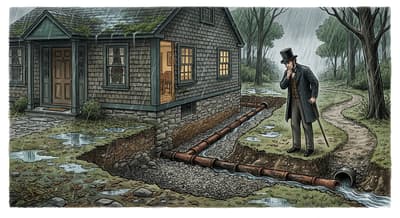
The idea was simple and effective. Dig a sloped trench. Fill it with gravel or stone. Sometimes add sections of tile pipe with small gaps so groundwater can seep in and flow away downhill.[1] Modern versions use perforated plastic pipe and filter fabric, but the basic logic is the same: give trapped water an easy exit.[1][3]
One small historical detail makes the whole thing click. When older sources mention drain tiles, they mean literal clay or terracotta drainage tiles, not kitchen or bathroom tile.[1][3] That is also why terms like “weeping tile” sound strange now. The pipe “weeps” water in, then quietly carries it away.
French did not invent drainage itself. Farmers had been cutting ditches and draining soggy ground for centuries.[1][3] What he did was study existing methods, describe them clearly, and help spread them in the United States after studying European drainage practices in the 1850s.[1][2] In other words, he did not invent the problem or even the basic fix. He helped standardize and popularize it so thoroughly that the method started traveling under his name.
That matters because drainage is one of those invisible technologies you only notice when it fails. Systems like these protect foundations, reduce standing water, improve farmland, and keep basements from turning into indoor ponds.[1][3] A French drain is not glamorous. It is just gravel, a trench, gravity, and a much better morning after heavy rain.
So the next time someone says they need a French drain, you can give them the real story. It is not French in the national sense. It is French in the same way a sandwich can be named after a person: Henry French, the 19th-century New Englander whose name got attached to one of the simplest useful ideas in drainage.[1][2]