At 7:00 in the morning, Ernest Shackleton stood on a ridge of snow and rock on South Georgia and waited for a sound. He had thought he heard a steam whistle half an hour earlier, but hunger and exhaustion could make a man greedy for miracles. Then it came again, right on time, carried over miles of cold country from the whaling station below. Shackleton later called it “sweeter music” than any of them had ever heard.[1]
When Ernest Shackleton reached South Georgia after the Endurance disaster, he thought World War I might have ended while he was trapped in the Antarctic. Instead, he was told the war was still raging, millions were dead, and Europe had gone mad.
The whistle meant men, ships, beds, boilers, and voices that did not belong to the ice. Shackleton, Frank Worsley, and Tom Crean had crossed South Georgia after their small-boat voyage from Elephant Island, and to them the journey felt over, though Shackleton knew twelve miles of hard country still lay ahead.[1] Below were black beach, wave ripples, penguins, seals, and the industrial promise of a whaling station.[1]
They had sailed out of ordinary news in the first months of the Great War. Shackleton’s Imperial Trans-Antarctic Expedition left British waters on August 8, 1914, after Winston Churchill, then First Lord of the Admiralty, told him to proceed despite the outbreak of war.[2] Shackleton himself departed England on September 27 to join the expedition in Buenos Aires.[2] On December 5, Endurance left the whaling station at Grytviken, South Georgia, bound for the Antarctic ice.[2]
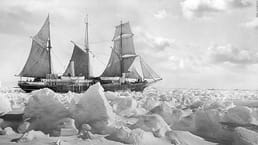
The plan belonged to the heroic age of polar ambition: cross the Antarctic continent. The reality became a slow imprisonment. Endurance was caught in pack ice within sight of the Antarctic continent, with no hope of escape.[2] The men had expected hardship, but hardship usually has direction. This was waiting, creaking, pressure, and darkness.
While armies dug into Europe, the ship froze fast. While the war widened, Shackleton’s men gave up ship’s routine and settled into winter station.[2] On September 1, 1915, pressure from the pack ice made Endurance “literally [jump] into the air and [settle] on its beam,” according to the account preserved by Historical Easter Eggs.[2] Shackleton gave the order to abandon ship, and on November 21 the wreck slipped below the surface.[2]
After that came the ice camp, the drift, and the boats. In April 1916, the ice broke up and forced the party into three small lifeboats.[2] Seven brutal days later, they reached Elephant Island, a desolate place far from rescue routes.[2] Shackleton left most of his men there under Frank Wild and pushed on in the James Caird toward South Georgia, because the whaling stations were the nearest hope.
By the time the steam whistle reached him, the expedition had been cut off from ordinary human sound for more than a year. Shackleton’s account lingers on that whistle because it collapsed the distance between survival and rescue. It told the three men that other men were living near, that ships were ready, and that the men still waiting on Elephant Island might yet be reached.[1]
Then came the question of a man who had been away too long. At South Georgia, Shackleton asked how the war had ended. The answer, in a later historical account, landed like a blow: “The war isn’t over. Millions are dead. Europe is mad. The world is mad.”[2]
The Antarctic had nearly crushed Endurance to splinters; Europe, meanwhile, had been doing the same to itself. In the dramatized version of the South Georgia exchange, Shackleton absorbs the news and turns immediately to the living problem in front of him: “I need to borrow a ship.”[3] The line endures because it leaves him where the whistle found him, filthy, exhausted, and already thinking of the men still waiting across the sea.