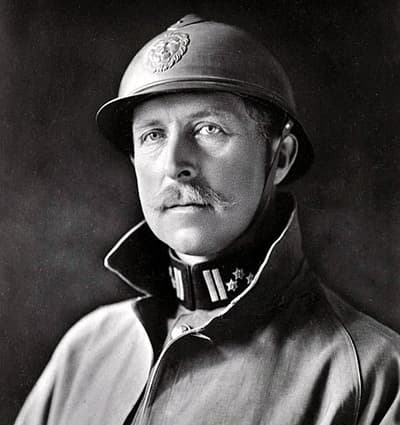
When German planners looked west in 1914, Belgium was the narrow place on the map. King Albert I answered as if the map had insulted a living country. According to one account, when he heard of Germany’s plan to use Belgian territory as a route into France, he protested, “Belgium is a country not a road map.”[1]
King Albert I of Belgium refused Germany’s demand for passage in August 1914, took personal command of the Belgian Army after the invasion, and stayed closely tied to its resistance. Queen Elisabeth worked as a nurse, while their teenage son Leopold briefly served as an infantry private.
On August 2, 1914, Germany delivered its demand: unimpeded passage through Belgium so its army could strike France.[1] Belgium’s neutrality had been guaranteed by the great powers in 1839, with Prussia among the signatories, a promise inherited by the German Empire after 1871.[1] Albert refused the demand, acting in part on advice from the British government, and German troops invaded Belgium and Luxembourg on August 4.[1][2]
Albert’s refusal was not ceremonial. He took personal command of Belgium’s armed forces, addressed parliament, and called for “stubborn resistance.”[2] He was personally involved in resisting the German advance, including command at Antwerp and along the Yser River.[2]
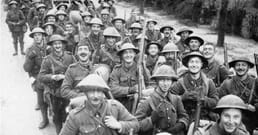
Belgium paid almost at once. German forces occupied nearly all of the country in August and September 1914.[1] The surviving Belgian front became a small, wet remnant of a state that had refused to become a corridor. Later summaries of the campaign credit Belgian resistance with delaying the German advance and helping make the Miracle on the Marne possible.[1]
A Royal Family at the Front
Albert’s household became part of the wartime image Belgium projected to itself and to the world. Queen Elisabeth worked as a nurse during the war.[2] Their son, the future Leopold III, saw brief service as an infantry private while still a teenager. One supplied source identifies him as 14 years old, not 12.[2] Royal uniforms were common in 1914, but this family attached itself unusually literally to the Belgian front.
Albert also guarded Belgian independence inside the alliance forming around Belgium’s defense. He came under pressure to join the Allies formally, but refused, preferring to keep Belgian forces under his own command and preserve the possibility of a separate peace with Germany.[2] His position was narrow and deliberate: resist the invasion, keep control of the army, and avoid letting Belgium vanish into the machinery of larger powers.
The war made Albert a hero to many Belgians. Later accounts describe him as popular, patriotic, Catholic, and concerned with the welfare of his countrymen.[2] After the war, Belgium returned to neutrality, a choice made in the shadow of what invasion had cost.[1] Less than thirty years later, Germany invaded Belgium again, and Albert’s son Leopold III commanded the Belgian Army in a much faster and more disastrous campaign.[3]
Albert did not live to see that second occupation. He died in 1934 while mountain climbing in western Belgium.[2] The image left from the first war is smaller and harder than a monument: a king in uniform, a queen at nursing work, and a young prince briefly standing in the ranks of an army defending what remained of its country.