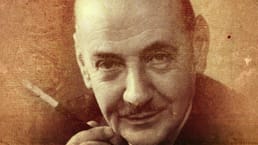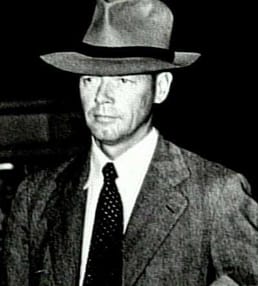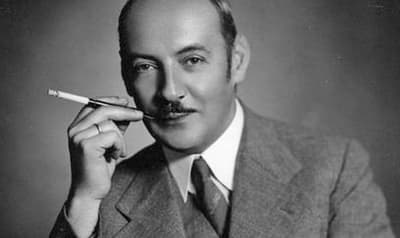
It is one of those facts that sounds invented because history is rarely this morally untidy: Hermann Göring, one of the most powerful men in Nazi Germany, had a younger brother who despised the Nazis, used the family name to undermine them, and reportedly forged Hermann’s signature to help people escape.[1]
Albert Göring moved through the Third Reich with a strange kind of protection. He had the same surname as one of Hitler’s closest allies. He looked the part of an aristocratic German industrialist. And for a time, that was enough to make people hesitate. In a regime built on fear, hesitation could save lives.
That is what makes Albert Göring so fascinating. He was not a resistance hero in the usual mold, not a conspirator with bombs or manifestos, not a man standing at a podium denouncing Hitler. He was something slipperier and, in some ways, more audacious: a man who used proximity to power as camouflage against power itself.[1]
The Wrong Brother for the Reich
Albert Günther Göring was born in 1895, the younger brother of Hermann Göring, who would go on to lead the Luftwaffe and become one of the most notorious figures in the Nazi hierarchy.[1] The contrast between the two brothers became almost too neat, as if history were trying to make a point. Hermann embraced spectacle, rank, and ideology. Albert, by contrast, was known as polished, cosmopolitan, and deeply hostile to Nazism.[1]
He did not merely keep his distance. According to accounts collected after the war, Albert openly expressed anti-Nazi views and repeatedly intervened on behalf of Jews and political dissidents.[1] This was not the behavior of a cautious conformist. In Nazi Germany, even small acts of visible dissent could be dangerous. Albert’s opposition was not theoretical. He acted on it.
And yet his greatest shield was the very thing that should have damned him: his last name.
A Name That Could Frighten the Frighteners
One of the most striking stories attached to Albert Göring took place in Vienna after the Anschluss. Nazis had forced Jews to scrub the streets, one of those ritualized humiliations totalitarian regimes favor because they are about more than labor. They are theater. They turn cruelty into a public lesson.[1]
Albert is said to have seen the scene, stepped in, and joined them on his knees, scrubbing alongside them.[1] It was not simply an act of sympathy. It was a confrontation. The SS officer in charge, realizing who he was humiliating, reportedly stopped the whole operation rather than risk disgracing Hermann Göring’s brother.[1]
That episode captures Albert’s strange talent. He understood that the Nazi system was obsessed with status, faces, and chains of command. So he weaponized those obsessions against it. Others saw the Göring name and froze. Albert used that freeze, that flicker of uncertainty, to pry open a little room for mercy.
Forging the Signature of a Reichsmarschall
Then there were the signatures. Albert is said to have forged Hermann Göring’s name on documents so that persecuted people could leave the country or avoid immediate danger.[1] On paper, that sounds almost absurdly simple. In practice, it was a shrewd exploitation of how bureaucratic tyranny actually works.
Totalitarian states do not run on rage alone. They run on stamps, permissions, letters, seals, initials in margins. They run on frightened clerks who do not want to challenge the wrong authority. If Albert could place Hermann Göring’s name where it needed to appear, whole doors could swing open.
This is one of the underappreciated truths about rescue in authoritarian systems. Sometimes courage looks like sabotage with perfect stationery. Not every life is saved by dramatic escape routes. Some are saved because one man understands that even monstrous systems remain, at heart, systems, and systems can be tricked.
Helping People Leave, Helping People Hide
Accounts of Albert’s wartime behavior describe a pattern, not a single shining incident. He assisted Jews and other persecuted people, intervened with officials, and used his access and family connections to secure releases and facilitate escapes.[1] Later testimony from those he helped became crucial, because Albert’s life posed a problem that postwar Europe was not especially eager to solve: what do you do with a man whose surname is synonymous with evil, but whose conduct appears to have been humane?
That question mattered because after 1945, Albert did not emerge into a world ready to celebrate him. He was arrested after the war, unsurprisingly, because being a Göring was more than enough to draw scrutiny.[1] He had to defend himself against guilt by bloodline. And that defense did not come from prestige or influence. It came from witnesses, people who said, in effect: no, not that brother. The other one. The one who helped.
He was eventually released, in part because of those testimonies.[1] Which is its own kind of historical irony. During the Nazi years, his brother’s name had protected him just enough to let him act. After the war, that same name became such a burden that he needed the saved to speak for the rescuer.
Why History Almost Lost Him
Albert Göring’s story did not become famous in the way it probably should have. Part of that is because the twentieth century leaves little room for moral anomalies. We like our categories clean. Villain. Victim. Resister. Collaborator. Albert was lodged inside the family of a villain while behaving, by all available accounts, more like a rescuer.[1]
And part of it is because postwar Germany was not exactly eager to sentimentalize anyone named Göring. Albert was shunned because of his family name and died in 1966 without public recognition for what he had done.[1] That, too, feels tragically fitting. He had spent years exploiting a notorious surname to help other people survive, only to find that the name outlived the deeds.
There is something almost unbearably sad in that ending. Not just that he died without honors, but that he died in the shadow of a brother he had spent so much of his life morally opposing. History remembered the Göring name. It just remembered the wrong man first.
The Moral Disturbance at the Center of the Story
What makes Albert Göring linger in the mind is not only that he helped people. It is the way he helped them. He did not escape the system entirely. He moved inside it, using its vanity, bureaucracy, and terror against itself. He understood that evil regimes are often ridiculous in their mechanics, even when they are horrifying in their consequences. A forged signature here. A famous surname there. A public humiliation halted because an SS officer suddenly realizes he may have offended the wrong brother.[1]
This does not redeem the family. It does not soften Hermann Göring. If anything, it sharpens the contrast. Two brothers raised in the same household traveled into history and arrived on opposite moral planets.
Which is why Albert Göring’s story matters. It is a reminder that proximity to power does not always produce obedience. Sometimes it produces revulsion. Sometimes the person closest to the regime sees most clearly what it is. And sometimes, in the narrow spaces left by fear and hierarchy, that person can do real good.
Not enough to stop the machine. But enough to jam it, briefly, at the point where a human life might still slip through.