Most people imagine longevity as a story of denial. No vices. No indulgence. No pleasures that come in smoke.
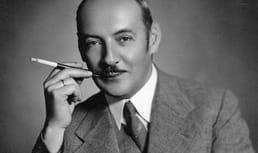
Walter Breuning offered a different version. He smoked cigars for most of his life. Then, at 103, he quit, not because a doctor frightened him, not because age finally pushed him into caution, but because cigars had become too expensive.[1] Five years later, at 108, the cigars came back. Not as rebellion. As gifts. People from as far away as London kept sending them, and Breuning, apparently seeing no reason to waste a good cigar, briefly took up smoking again.[1]
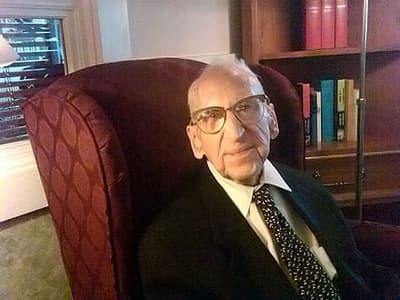
And then he kept going. Past 109. Past 110. Past the point where a person is no longer simply old, but a living witness to vanished centuries. Walter Breuning died in 2011 at 114 years and 205 days, making him one of the oldest verified men in history and, remarkably, one of the very last verified surviving men born in the 1800s.[1]
A Man Born Before the Modern World Arrived
Breuning was born on September 21, 1896, in Melrose, Minnesota. When he later looked back on his childhood, he described part of it as the “dark ages,” and he meant that almost literally. After his family moved to De Smet, South Dakota, they lived without electricity, running water, or plumbing.[1] He could remember his grandfather talking about the Civil War when Walter was only three. He remembered the day President William McKinley was shot because, as he put it, that was the day he got his first haircut.[1]
This is what makes a life like Breuning’s feel almost structurally impossible. He was not simply old. He was old enough to turn memory itself into infrastructure. His life stretched from horse-and-buggy America into the Obama presidency. He cast his first presidential vote for Woodrow Wilson.[1] He lived through the Great Depression, two world wars, railroads at their industrial peak, and the era when being interviewed on national television at 112 no longer seemed surprising because, by then, Walter Breuning had become a category of his own.[1]
The Railroad, the Routine, the Rules
At 14, Breuning dropped out of school and went to work scraping bakery pans for $2.50 a week. Soon after, he joined the Great Northern Railway, where he remained until age 66.[1] He later joked that, early on, he had to hide from railroad titan James J. Hill because Hill did not want employees under 18, and Breuning had started young.[1]
That detail matters because so much of Breuning’s life was built around one unglamorous virtue: routine. He kept working. After retiring from the railroad, he served as a manager and secretary for the local Shrine club until age 99.[1] He rose early. He ate predictably. He walked. He talked with people. He kept his mind busy. He kept his body busy. That, more than any miracle tonic, was his theory of survival.[1]
On his 112th birthday, he said the secret to long life was staying active: “If you keep your mind busy and keep your body busy, you’re going to be around a long time.”[1] It sounds almost too simple. Then again, simple rules followed for a century begin to look less like clichés and more like engineering.
The Cigar Problem
And yet the cigars are what people remember, because they disrupt the moral neatness we like to impose on very old people. We want our supercentenarians to be saints of discipline, not men who light up after their 108th birthday because admirers keep mailing them smokes.
Breuning was a lifelong cigar smoker. In an interview at 110, he explained that he had quit in 1999, at age 103, because cigars had become too expensive.[1] Not dangerous. Expensive. It is such a practical, dryly American reason that it almost feels like a joke, except it wasn’t. Then came the reversal. At 108, he briefly started smoking again, encouraged by gifts of cigars arriving from around the world.[1]
That does not mean cigars are healthy. It means Breuning’s story resists the tidy formula people hunger for. Longevity biographies are often treated like treasure maps. Eat this. Avoid that. Wake at this hour. Never touch tobacco. But human beings are messier than systems, and Breuning remained cheerfully, stubbornly human all the way through. His life was not proof that cigars extend lifespan. It was proof that exceptional longevity does not always obey the narratives we try to wrap around it.
What 114 Years Looked Like
For most of his life, Breuning was in strikingly good health. He survived colon cancer at 64, recovered from a broken hip at 108, and remained mentally sharp to the end.[1] Even when his eyesight failed because of cataracts, he kept his mind occupied by listening to the radio. For years, he did daily calisthenics. He maintained a steady weight late into life and eventually gave up medication altogether.[1]
His eating habits were disciplined in the kind of way that sounds eccentric until you realize he practiced them for decades. He ate two meals a day, a large breakfast and a hearty lunch, then skipped dinner and snacked on fruit instead.[1] He drank water throughout the day, plus coffee with breakfast and lunch. Nothing about it feels fashionable. There is no lifestyle branding here. Just repetition, moderation, and a body that kept honoring the arrangement.
He also possessed something rarer than physical durability: composure. In autumn 2010, he told the Associated Press that people should not fear death. “You’re born to die,” he said.[1] Before his death, after being hospitalized with an illness from which he knew he would not recover, he told his pastor he had reminded God of “our agreement.” If he was not going to get better, he said, then it was time to go.[1]
The Last Men of the 19th Century
By the time Walter Breuning died peacefully in his sleep on April 14, 2011, he had become more than the world’s oldest living man. He had become one of the final living links to the 19th century among verified men.[1] That is what gives his story its strange emotional charge. He was not merely old enough to remember another era. He was old enough to make another era feel, briefly, still inhabited.
And perhaps that is why the cigar detail lingers. Not because it is medical advice, and certainly not because it cancels everything we know about smoking, but because it makes Breuning legible as a person rather than a specimen. He was a railroad man, a creature of habit, a keeper of old rhythms, a man who quit cigars when prices annoyed him and resumed them when the world insisted on sending gifts.
Walter Breuning did not live 114 and a half years because he smoked cigars. He lived 114 and a half years while remaining, against all odds, stubbornly himself.[1]