
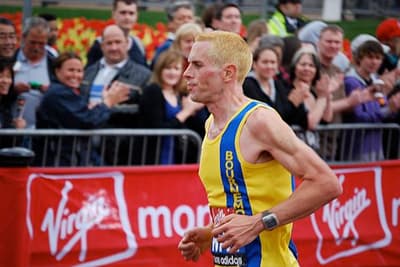
Imagine a man who is, by all conventional metrics, a ticking time bomb. In 2007, Steve Way was 33 years old, weighing over 100kg, and living a lifestyle that most doctors would describe as a recipe for disaster. He smoked twenty cigarettes a day and consumed junk food with a regularity that suggested he wasn't just eating for pleasure, but for survival. At that moment, the idea of him ever stepping onto a professional athletic stage wasn't just unlikely; it was statistically absurd.
But there is a peculiar thing about the human body. We often think of our health as a static ledger—a collection of bad habits that eventually leads to an inevitable bankruptcy. We assume that once you've spent decades building a foundation of poor choices, you are destined to live within the architecture those choices created. We forget that the body is not a monument; it is a biological process, constantly rebuilding itself, waiting for a different set of instructions.
For Way, those instructions came in the form of a desperate decision to overcome mounting health issues. He didn't just start walking; he started running. And he didn't just run to lose weight; he ran to redefine his entire physiological identity.
The Impossible Trajectory
The transformation didn't happen in a vacuum. It occurred with a velocity that defied the logic of athletic aging. Just one year after deciding to take running seriously, Way lined up for the 2008 London Marathon. The man who had been a heavy smoker and a sedentary eater didn't just finish; he crossed the line in under three hours. It was a staggering feat for a novice, but it was merely the prologue.
What followed was less a gradual improvement and more a complete physiological overhaul. As Way transitioned from amateur enthusiast to elite competitor, his metrics began to look less like human achievements and more like glitches in the system. By 2014, he had achieved something truly remarkable: he had run the London Marathon in under 2:20 on four separate occasions[1]. To put that in perspective, he had shattered the Commonwealth Games qualifying time of 2:17, setting a new personal best of 2:15:16[1].
But the true measure of his metamorphosis wasn't found in the 26.2 miles of a marathon. It was found in the grueling, soul-crushing expanse of ultra-endurance racing. In 2014, at the age of 39—an age when many marathoners are eyeing retirement—Way entered the British Championship for the 100 km run. He didn't just compete; he dominated, clocking a time of 6:19:20 to set a new British record[1].
The Anatomy of a Rebirth
Why does Steve Way’s story matter beyond the simple "inspiration" trope? Because it challenges our fundamental understanding of biological destiny. Most people look at a 100kg smoker and see a fixed outcome. They see a cardiovascular system too compromised to ever reach the upper echelons of human performance.
Way’s career suggests otherwise. He proved that the "lifestyle-related health issues" many believe are permanent are often just temporary states of being. By representing England at the 2014 Commonwealth Games in Glasgow—finishing 10th overall and standing as the top performer for England[1]—he demonstrated that the body's capacity for adaptation is far more aggressive than we give it credit for.
He transitioned from a man fighting against his own biology to a man who had mastered it. He went from struggling with the consequences of his choices to setting British veterans' records[1]. It is a reminder that the distance between where you are and where you could be isn't measured in years, but in the radical, disciplined restructuring of your daily reality.