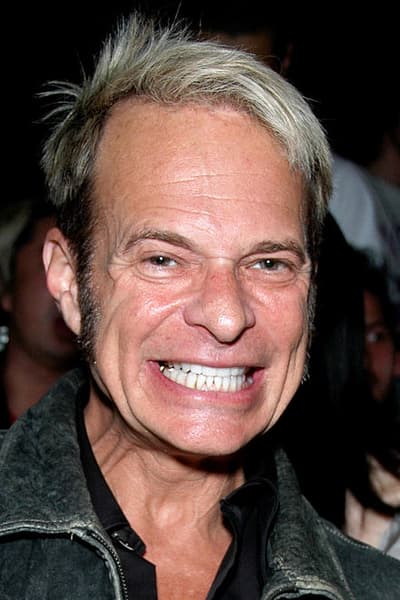
Most rock stars with millions in the bank eventually develop a hobby. Some collect cars. Some buy islands. Some drift into wellness, wine, or increasingly strange architecture.
David Lee Roth became an EMT.
Not as a publicity stunt. Not as a one-week celebrity cameo. In the late 1990s, after the screaming crowds, the platinum records, the arena-stage acrobatics, and the accumulation of enough money to never work a practical job again, Roth became a New York state-licensed emergency medical technician and went out on hundreds of ambulance calls.[1]
This is the kind of fact that sounds made up in exactly the way the best facts do. The frontman of Van Halen, one of the most flamboyant performers in American rock, spent part of his post-superstar life responding to emergencies. Sirens instead of spotlights. Stairwells instead of backstage passes. Real bodies, real panic, real blood pressure, real consequences.
The Last Person You Would Expect In The Ambulance
Roth built his fame on excess. He was “Diamond Dave,” a human firecracker in spandex, shrieks, swagger, kicks, and grins, the kinetic center of Van Halen during its first and most explosive era.[1] He was not merely a singer. He was a spectacle generator. His public persona suggested a man who treated gravity as a negotiable concept.
Which is what makes the EMT turn so compelling. Emergency medicine is almost the opposite of rock stardom. It rewards steadiness over performance, protocol over improvisation, calm over charisma. In one world, being unforgettable is the job. In the other, the job is to forget yourself entirely and focus on the patient.
And yet Roth, improbably, did exactly that.
The Reinvention Was Real
David Lee Roth was born on October 10, 1954, and became one of the defining American rock frontmen of the 1970s and 1980s, best known for his work with Van Halen, along with a substantial solo career of his own.[1] By the late 1990s, he was already long established as a musician, celebrity, and pop-cultural type: the hyperarticulate showman with martial-arts bravado and the grin of someone who knew the camera was watching.
Then came the detour.
According to biographical accounts, Roth trained and became a New York state-certified EMT, later saying he had gone on hundreds of calls.[1] That detail matters. Plenty of famous people flirt with reinvention. Far fewer stick with something that requires exams, licensing, discipline, and the willingness to show up for situations that are chaotic, uncomfortable, and profoundly unglamorous.
Being rich does not help you lift a patient correctly. Fame does not teach you airway management. Album sales do not steady your hands in an emergency.
Why This Was So Strange, And So Interesting
Part of the fascination here is simple contrast. We like our public figures to remain legible. If someone becomes famous as one thing, we prefer them to stay one thing. Actors act. Athletes invest badly. Rock stars age into memoirs, reunion tours, or expensive eccentricity.
Roth chose a role with almost no celebrity upside. In fact, it offered the opposite. In emergency response, fame is friction. The patient does not care about your chart position. The stairwell does not care that you once fronted one of the biggest bands in the world. The body in distress is a ruthless editor of ego.
Maybe that is part of the appeal. Rock stardom is built on amplification. EMT work is built on attention. One asks, “Can I command the room?” The other asks, “What does this person need right now?”
For someone as theatrical as Roth, that second question feels almost like a spiritual counterweight.
The Discipline Under The Showmanship
What makes the EMT chapter more believable, the more you look at it, is that Roth’s public persona always contained more discipline than people gave him credit for. The clowning was real, but so was the control behind it. Stagecraft at that level is not chaos. It is organized chaos, rehearsed to the point where spontaneity can be performed convincingly.
Emergency medicine requires a different kind of choreography, but it is still choreography. Assess the scene. Read the patient. Move efficiently. Communicate clearly. Do not panic. Do not grandstand. Get the job done.
That does not make being a frontman and being an EMT the same thing, obviously. It does suggest, though, that Roth may have been less randomly transformed than he first appears. Reinvention often looks like rupture from the outside and continuity from the inside. The costume changes. The nervous system does not.
Hundreds Of Calls Means Something
The phrase “hundreds of calls” is what turns this from a quirky anecdote into something heavier.[1] One or two calls could be novelty. A dozen could be curiosity. Hundreds suggest commitment. It suggests repetition, fatigue, training becoming instinct, and enough exposure to see the city not as an audience but as a series of human emergencies.
That is the detail that rescues the story from celebrity trivia. It means Roth was not just borrowing the identity of an EMT. He was doing the work long enough for the work to push back on him.
And EMT work always pushes back. It introduces you to the unedited version of public life, the falls, the overdoses, the fear, the frailty, the families in hallways, the bodies that suddenly refuse to cooperate with the story people thought they were living. It is intimate contact with the fact that everyone is breakable.
The Celebrity Who Stepped Out Of Character
There is also something quietly radical in the choice itself. Roth had spent years being looked at. EMTs spend their time looking closely at other people. He had made a career out of enlarging himself. Then he entered a field that required him to shrink the importance of self.
That is rare. Not because celebrities are uniquely vain, but because most people, once they have been rewarded for being a certain kind of person, keep being that person. It is easier. The world cooperates. Reinvention costs status.
Roth, for a while, seemed willing to pay that cost. He moved from fantasy to procedure, from applause to responsibility, from being the center of the scene to being one of the people who arrive when the scene has already gone wrong.
The Point Is Not That He “Became Normal”
The easy version of this story is to frame it as a wild rock star becoming grounded. But that is too simple, and probably too moralizing. Roth did not stop being David Lee Roth. He did not become anti-theatrical or suddenly anonymous. He remained a performer, writer, public personality, and eventual Van Halen returnee.[1]
The better reading is that he added something startlingly practical to an already improbable life. He became the kind of person who could command a stadium and also show up with a medical bag. Not one identity replacing another, but two identities sitting side by side in productive tension.
That tension is what makes the story stick. It violates the script without becoming sentimental. It suggests that reinvention does not have to be clean or complete to be real.
Why We Still Love This Fact
We love this fact because it restores surprise to celebrity. It reminds us that people, even highly branded people, can still do something genuinely unexpected. And not “unexpected” in the flimsy PR sense. Unexpected in the older, better sense, the kind that forces you to redraw your map of what a person is.
By the late 1990s, David Lee Roth had enough money to disappear into comfort forever. Instead, for a stretch, he moved toward urgency. Toward calls. Toward strangers. Toward a job where no one is impressed by your past and everyone is interested in whether you can help.
That is why the story lingers. Not because it proves he was secretly humble or secretly profound. Maybe it proves nothing that tidy. Maybe it simply shows that one of the loudest men in rock found meaning, for a while, in a role where the work mattered more than the persona.
And that is a better twist than most fiction would dare write.