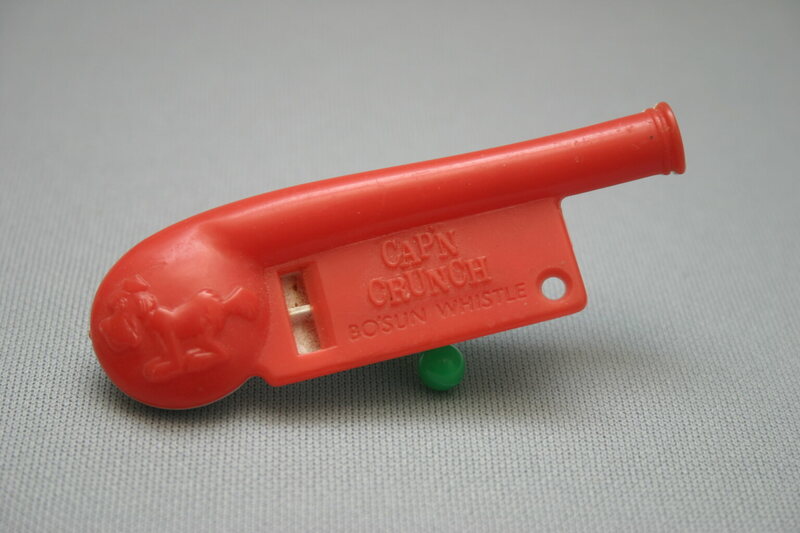

In the mid-1950s, a blind boy in Virginia pressed a telephone receiver to his ear and whistled. The line went dead. He whistled again. Dead again. Most kids would have hung up and found something else to do. Josef Carl Engressia Jr. spent the next fifty years figuring out exactly what had happened - and in doing so, accidentally lit the fuse on the entire hacker revolution.
Here's what the seven-year-old had stumbled onto: the telephone network's deepest secret. AT&T's long-distance switching system used a single audio tone - precisely 2,600 hertz - to signal that a trunk line was free.[1] When Engressia's whistle hit that exact frequency, the system thought it was receiving an internal command. The circuit opened up. He could route calls anywhere in the world, for free, using nothing but his mouth.
Born blind in Richmond, Virginia, in 1949, Engressia had absolute pitch - the ability to identify or produce any musical note without a reference tone. He couldn't see the telephone, but he could hear things inside it that sighted engineers missed. By age five, he'd figured out that rapidly clicking the hang-up switch could dial numbers without touching the rotary dial.[2] By seven, he was having full conversations with the phone system itself, learning its language of clicks and tones the way other children learn to read.
By the late 1960s, Engressia was a philosophy student at the University of South Florida, where he earned the nickname "Whistler." He'd whistle free long-distance calls for classmates at a dollar apiece - a campus service that ended when a Canadian operator reported the suspicious activity.[3] But Engressia wasn't alone. A loose subculture of "phone phreaks" had been growing in the shadows - blind kids with perfect pitch, electronics hobbyists, and proto-hackers who loved the phone system the way trainspotters love rail networks.
In 1971, journalist Ron Rosenbaum blew the scene wide open. His landmark Esquire article, "Secrets of the Little Blue Box," named Engressia as "the original granddaddy phone phreak" - though he was only 22.[4] The article described a world of homemade electronic devices that replicated the 2,600 Hz tone, giving anyone with basic electronics knowledge the power of a telephone operator.
Two college students in California read Rosenbaum's article and couldn't put it down. Steve Wozniak and Steve Jobs began building and selling their own blue boxes - their first joint business venture.[5] "If we hadn't made blue boxes," Jobs later told biographer Walter Isaacson, "there would have been no Apple."
The unexpected angle? Engressia didn't want to be a criminal. After his 1971 arrest for defrauding the phone company, he claimed he'd gotten arrested on purpose - to get the attention of the telephone company so they'd hire him.[2] It worked. He landed jobs as a troubleshooter for phone companies in Tennessee and Colorado, spending his days doing legally what he'd once done in secret. He was the world's first white-hat hacker, decades before the term existed.
His later life took a poignant turn. Sexually abused as a child, Engressia declared himself five years old in 1988, legally changed his name to Joybubbles in 1991, and founded the Church of Eternal Childhood. He ran a telephone story line called "Stories and Stuff" from his tiny, unlighted Minneapolis apartment.[6]
When Joybubbles died in 2007 at age 58, his friends held a four-hour telephone memorial - a conference call with fifty people telling stories. The digital switching networks that replaced AT&T's old tone-based system had long since made his whistle useless. But the culture he helped create - curious people poking at systems to understand how they work, finding the cracks, building something new - that's still the beating heart of every startup garage and open-source project on earth.
A blind boy whistled into a phone and heard the whole world answer back. Everything that followed started with that single, perfect note.
Sources
- Phone Phreaking - Wikipedia
- Joybubbles - Wikipedia
- Joe Engressia, Expert 'Phone Phreak,' Dies - NPR All Things Considered
- "Secrets of the Little Blue Box": The 1971 Article That Inspired Steve Jobs - Slate
- Steve Jobs obituary referencing blue box venture - The New York Times
- Dial-Tone Phreak - The New York Times Magazine