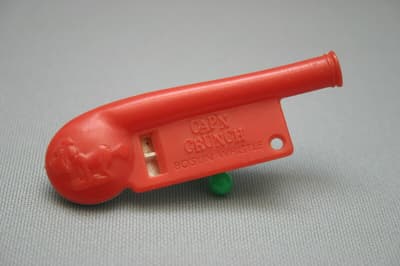
A child could pull the Cap’n Crunch Bo’sun whistle from a cereal box, put it to their lips, and make a shrill little toy sound. The prize had been modeled on a boatswain’s whistle, the kind used at sea to signal commands or mealtimes, and it began appearing in Cap’n Crunch boxes in the mid-1960s.[1]
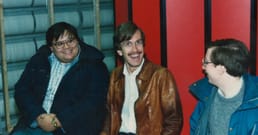
The Cap’n Crunch whistle could produce a 2600 Hz tone, the same frequency AT&T’s analog long-distance system used to control trunk lines. John Draper, a former Air Force electronics technician, used that sound in phone phreaking and became known as “Captain Crunch.”
Draper was not a child stumbling into telecommunications history over breakfast. He was already part of the phone phreak underground, a loose culture of people who explored the telephone network by sending tones through handsets and listening for what the system did next.[1] Before that, he had served as a U.S. Air Force electronics technician, and while stationed in Alaska he helped fellow service members make free calls home by finding a way into a local switchboard.[2]
The useful flaw was built into the old network’s design. AT&T’s analog long-distance system sent control signals over the same lines that carried voices, so a sound made by a caller could be mistaken for an instruction inside the system.[1] At 2600 Hz, the Cap’n Crunch whistle hit the tone Steve Wozniak later described as able to “seize a phone line.”[1]
The Tone Behind the Toy
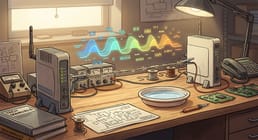
Phone phreaks were working with ears, whistles, tape recorders, and homemade electronics rather than computer screens. Their aim was often free long-distance calling, but the method required learning the network as a kind of hidden language.[1] A tone could open a path. Other tones could help route a call. The telephone system, which looked sealed from the outside, would respond if someone knew how to speak to it.
Draper learned about the cereal whistle from other phreakers, and the association stuck.[1] He adopted the nickname “Captain Crunch,” after the toy that had made the phone company’s private signals feel strangely public.[1] The whistle itself was crude, but the idea behind it led Draper to build blue boxes, electronic devices that could reproduce the 2600 Hz tone and other telephone tones more reliably.[3]
Those blue boxes let users manipulate the phone system and place unauthorized long-distance calls.[3] Draper’s experiments made him famous in a small technical subculture, but they also crossed legal lines. His exploration of the network led to criminal charges and prison time for toll fraud.[2] He later worked as a programmer, including on the EasyWriter word processor, and remained a familiar figure in Silicon Valley lore.[2]
Before Apple
Steve Jobs and Steve Wozniak sought Draper out while they were students because they wanted to understand phone phreaking and blue boxes.[3] Before Apple Computer existed, Jobs and Wozniak’s first business venture together was selling blue boxes to would-be phreakers.[3]
Jobs later said, “I don’t think there would ever have been an Apple Computer had there not been blue-boxing.”[3] The point was not that a cereal whistle created Apple. The blue box gave Jobs and Wozniak early practice building a device, finding customers, and discovering that a closed technical system could be understood from the outside.[3]
The cleaner myth has Draper opening a box of cereal and breaking the phone company in one brilliant moment. The sourced version is stranger and more useful: an Air Force electronics man, an underground phone culture, an analog network that trusted sounds, and a cheap plastic whistle that happened to sing at the right pitch.[1] For most children, it was a breakfast prize. In Draper’s hands, it became a tuning fork for Ma Bell’s hidden machinery.