
Adam Clayton did not begin by accusing Atari of hiding anything. In his Aug. 4, 1980 letter, the 15-year-old from Salt Lake City sounded mostly impatient for brochures and proud of a machine he could not yet afford. Then came the postscript. He had gone into Adventure's Black Castle, found a dot in a blocked room, carried it with other objects, and pushed through a wall into a place the cartridge manual never mentioned.[3]
The first widely known video game Easter egg came from Atari's Adventure, where programmer Warren Robinett hid the words "Created by Warren Robinett" inside a secret room. Atari learned about the signature after teenage player Adam Clayton mailed in hand-drawn instructions.
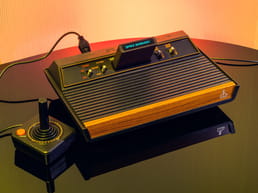
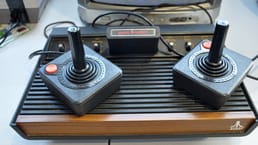
The game was Adventure, a 4-kilobyte Atari 2600 cartridge about castles, dragons, keys, and a square that stood in for the player. Robinett later described it as the first action-adventure video game, built for a console with 128 bytes of RAM and almost no room for vanity.[1]
By the time Adventure reached store shelves, Atari's box and manual carried the game but not Robinett's name. He told Game Developer that Adventure sold about a million copies, while he earned a salary of $22,000 a year and no royalties. He had already left the company by the time Clayton's letter arrived.[2]
Inside the cartridge, Robinett had saved a sliver of memory for a private act of authorship. The official version of his own site calls it "the author's signature hidden in a secret room." To reach it, a player had to find an invisible-looking dot, use the bridge, drag the dot through the maze, and bring it with other objects to a corridor below the Golden Castle.[1]
Clayton's letter made the secret feel less like a programmer's prank than a tiny archaeological report. Page one includes a map with the dot labeled in the room where he found it. Page two sketches the hidden chamber and the vertical letters spelling Robinett's credit, then adds, "I just thought I'd tell you because I want to. Could you please comment on this." [3]
Atari could have removed the message, but replacing a cartridge's ROM mask was expensive. Accounts of the episode say the company left the code alone and began treating hidden surprises as things players might hunt for on purpose. The term "Easter egg" attached itself to the practice from there.[4]
A credit line meant to slip past management survived because a kid treated a weird pixel as a clue. Atari printed no designer name on the box. Robinett hid one in the maze. Clayton found it by refusing to treat a speck on the screen as meaningless. The old cartridge turns authorship into an errand: fetch the dot, carry it through the wall, and watch a name appear where the company had left only a square.
Sources: