At dawn on November 4, 1791, in what is now Fort Recovery, Ohio, Arthur St. Clair’s camp became a killing ground. Native warriors struck before the American army could steady itself, and by the time the shooting ended, only 24 of roughly 1,000 officers and men under St. Clair had escaped without injury.[1]
St. Clair’s defeat, also called the Battle of the Wabash, was the U.S. Army’s worst defeat by Native American forces. Fought in 1791 during the Northwest Indian War, it left hundreds of American soldiers killed, captured, or wounded, and forced a reckoning inside George Washington’s young government.
Custer’s Last Stand still owns the better-known place in American memory, but St. Clair’s disaster came 85 years earlier and produced far heavier American losses.[2] Accounts describe it as “the most decisive defeat in the history of the American military” and the largest defeat ever inflicted on the United States by Native American forces.[1]
The fight began in the unsettled aftermath of the American Revolution. In the 1783 Treaty of Paris, Britain recognized U.S. sovereignty over land east of the Mississippi River and south of the Great Lakes.[1] On the ground, Native nations already lived there and did not accept American claims to sell or occupy their homelands.[3] The Northwest Indian War grew from that collision over the Ohio Country and the future of westward expansion.
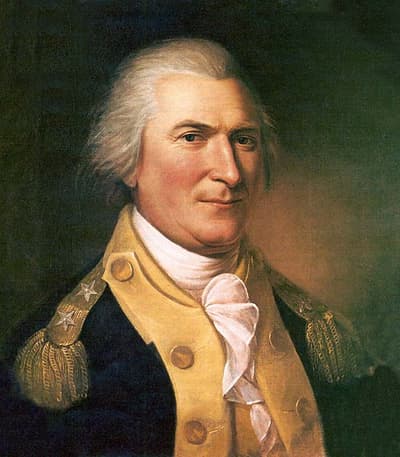
Washington ordered Major General Arthur St. Clair to march a mixed force of regular troops and militia into the Ohio territory and subdue the Native confederacy there.[3] The campaign began badly. St. Clair’s army was weakened by desertions, poor discipline, disease, inadequate horses, and poor equipment.[3] The column did not leave for the Ohio country until October 1791, late in the season, moving from the area of present-day Cincinnati toward what is now Fort Wayne, Indiana, while Native skirmishers harassed it along the way.[3]
Across from St. Clair was a confederated Native force led by Little Turtle of the Miamis, Blue Jacket of the Shawnees, and Buckongahelas of the Delawares, or Lenape.[1] Their war party numbered more than 1,000 warriors, including many Potawatomis from eastern Michigan.[1] The American force was of roughly similar size, about 1,000 men.[1] This was not a story of an army swallowed by overwhelming numbers. In manpower, the two sides were close. Surprise, preparation, and battlefield control decided the morning.
The attack came at dawn.[1] St. Clair’s army was overwhelmed. The casualty figures are stark: 656 Americans killed or captured and 279 wounded, compared with 21 Native warriors killed and 40 wounded.[1] Of the approximately 1,000 officers and men under St. Clair, only 24 escaped unharmed.[1] Another account describes the Army as taking almost 95 percent casualties.[3]
The battle was also known as the Battle of a Thousand Slain, a name that tried to fit the scale of the collapse.[1] The American army had marched into the Northwest Territory expecting to impose federal authority. Instead, it revealed how fragile that authority still was beyond the settled eastern states.
The consequences reached President Washington. He forced St. Clair to resign his post, and Congress opened what became its first investigation of the executive branch.[1] A battlefield defeat had turned into a test of the new republic’s ability to explain failure, assign blame, and keep governing.
Today the site is identified with present-day Fort Recovery, Ohio, a name that carries the later American memory of return and rebuilding.[1] The first image remains darker: a November camp at daybreak, an army caught unready, and a casualty list so severe that only 24 men could walk away unscathed.