Imagine standing on the most desolate, magnificent landscape ever witnessed by human eyes. The silence is absolute, broken only by the rhythmic hiss of your own breathing inside a pressurized suit. You’ve done it. You have achieved the impossible. You have landed on the Moon.
But as you prepare to leave, as you reach for the controls to ignite the engines that will carry you home, you realize something is terribly wrong. The switch is gone. In a single, clumsy moment of physical contact, the circuit breaker meant to arm the ascent engine—the vital link between the lunar surface and the journey home—has snapped off. The mission hasn't just hit a snag; it has hit a terminal dead end.
This wasn't a scene from a Hollywood thriller. This was the reality for Buzz Aldrin and Neil Armstrong during the most consequential mission in human history: Apollo 11[1].
The Margin of Error
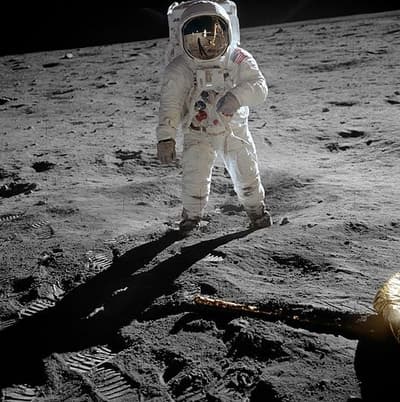
On July 20, 1969, the world watched in collective awe as the Lunar Module, Eagle, touched down in the Sea of Tranquility[1]. For Armstrong and Aldrin, the achievement was monumental. They spent roughly two and a quarter hours exploring the lunar terrain, collecting 47.5 pounds of moon rocks and etching humanity's presence into the dust[1]. While Michael Collins orbited above in the Command Module Columbia, the two men on the surface were living a dream that had been the singular goal of nations.
But space exploration is a game played in the margins. When operating a machine composed of millions of parts, all functioning in a vacuum under extreme thermal shifts, the margin for error isn't just slim—it is non-existent. The ascent engine was the Eagle's most critical component. Without it, there is no return trip. There is no reentry. There is only the Moon.
During the preparations to depart, a critical circuit breaker was accidentally damaged. This specific breaker was responsible for arming the ascent engine; without that connection, the engine was essentially a paperweight. The astronauts were faced with a terrifying realization: the hardware designed to save them had failed at the exact moment they needed it most[1].
The Felt-Tip Solution
In the high-stakes environment of NASA mission control, "failure" is a word that carries a heavy, almost physical weight. But in the cockpit of the Eagle, the astronauts couldn't afford the luxury of panic. They had to move from problem to solution with clinical precision. If the switch was broken, they needed another way to complete the circuit. They needed to bridge the gap between the electrical command and the engine's ignition.
They didn't have a spare circuit breaker. They didn't have a soldering iron. What they did have was the standard kit of a lunar pilot. Among the supplies available to them was something remarkably mundane, something you might find in the pocket of a student or the desk of an architect: a felt-tipped pen.
The logic was as desperate as it was ingenious. By using the pen to manually bridge the electrical contact that the broken switch could no longer reach, they could complete the circuit. It was a moment of improvised engineering performed in the most high-pressure environment imaginable. By carefully using the pen to engage the connection, Aldrin and Armstrong were able to bypass the damaged hardware and arm the engine[1].
A Legacy of Improvisation
The ascent engine roared to life, the Eagle lifted off the lunar dust, and the crew began their journey back to the command module and, ultimately, back to Earth. The mission was a triumph, but it remains one of the most harrowing "what if" scenarios in the history of exploration.
We often think of space travel as a triumph of perfect mathematics and flawless engineering—the Apollo missions as exercises in clockwork precision. But the reality of Apollo 11 teaches us something different. It teaches us that the history of human progress isn't just written by the engineers who build the machines, but by the pilots who know how to fix them when they break with nothing more than a piece of stationery.
The moon landing wasn't just a victory of technology; it was a victory of human ingenuity under crushing pressure. It was the moment a felt-tipped pen became as essential as a Saturn V rocket.