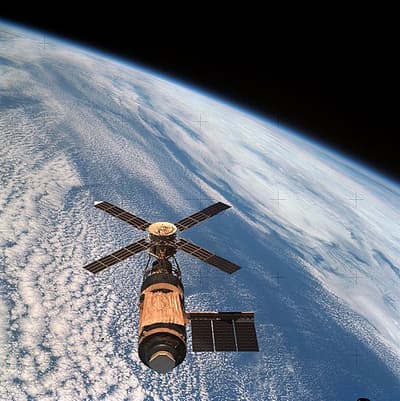
Imagine you are an astronaut, drifting through the silent, pressurized corridors of a multi-million dollar space station. You are part of a relief crew, arriving to take over a mission that has been operational for months. The lights are on, the life support is humming, and the station is officially "unoccupied." You prepare to dock, to enter, and to begin your work.
But as your eyes adjust to the dim interior, your breath catches. There, seated in the modules, are figures. Three of them. They are motionless, positioned with a stillness that suggests they are merely waiting for the next command. In the profound isolation of orbit, where shadows play tricks on the mind, the sight is haunting.
For a split second, the impossibility of it hits you: how could there be people inside a station that was supposed to be empty? The answer, it turns out, wasn't a ghost or a stowaway. It was a prank—a piece of cosmic mischief left behind by the men who had just departed.
The Ghost Crew of Skylab 4
This wasn't a scene from a science fiction horror film; it was the reality of the Skylab 4 mission in 1973. The "intruders" were nothing more than flight suits stuffed with padding, meticulously arranged by the outgoing crew to mimic human beings drifting in the void[1]. It was a brief, calculated moment of levity in an environment otherwise defined by extreme discipline and high-stakes scientific rigor.
To understand why such a prank occurred, one must understand the shifting paradigm of the American space program. By the time the third and final crewed mission arrived, the frantic, "get there first" energy of the Apollo moon landings had cooled. The era of pure exploration was giving way to an era of methodical science. Skylab was no longer just a destination; it was a laboratory. The astronauts were no longer just explorers—they were researchers.
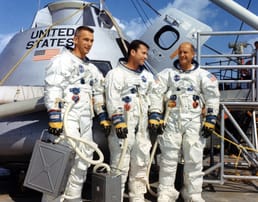
The Skylab 4 mission launched on November 16, 1973, via a Saturn IB rocket from the Kennedy Space Center[1]. The crew consisted of three astronauts tasked with a monumental workload. They weren't just there to fly; they were there to observe the heavens and the Earth with a level of detail never before achieved in orbit.
84 Days of Scientific Mastery
While the "dummy crew" offered a moment of humor for the relief team, the actual work performed by the Skylab 4 astronauts was anything but lighthearted. Over the course of 84 days, one hour, and 16 minutes, the crew logged a staggering 6,051 astronaut-utilization hours[1]. In the context of spaceflight, this represented an unprecedented volume of "on-the-clock" scientific labor.
Their mission was a whirlwind of multidisciplinary study. They conducted complex medical experiments to understand how the human body adapts to long-term weightlessness—an essential precursor to any future journey to Mars. They turned their instruments toward the sun, performing detailed solar observations, and kept a watchful eye on the skies for the passing Comet Kohoutek[1]. They even looked back at our own planet, utilizing Earth resources observations to monitor how our world was changing from above.
This mission represented the pinnacle of the Skylab program. It was the final chapter of America's first foray into long-duration space habitation. The crew had to balance the grueling technical demands of maintaining a station in the harsh vacuum of space with the psychological toll of being separated from humanity by hundreds of miles of nothingness.
A Legacy Written in the Stars
The Skylab missions were often subject to administrative confusion—sometimes referred to as Skylab 2, 3, and 4, and other times by different designations due to miscommunications in the early days of the program[1]. But the scientific legacy was never in doubt. Skylab 4 proved that humans could not only survive in space for months at a time but could also function as a high-output scientific outpost.
The prank with the flight suits serves as a poignant reminder of the human element in space exploration. Even amidst the most advanced technology ever built, and even when performing the most serious scientific work in history, the astronauts remained human. They felt the isolation, the boredom, and the need to reach out across the vacuum with a bit of humor—even if that humor involved scaring the next crew half to death.
When the Skylab 4 crew finally returned to Earth, they left behind more than just data and solar charts; they left a blueprint for how humans might one day live and work among the stars, reminding us that no matter how far we travel, we carry our humanity with us.