Most actors leave cartoon roles over money, scheduling, or the quiet drift that happens when a career moves on. Casey Kasem left Scooby-Doo over a hamburger.[1]
More specifically, he left because Shaggy, the lanky, terrified, always-hungry character he had helped define since 1969, was being asked to sell Burger King.[1] And by then Kasem had become a committed vegan and an outspoken critic of factory farming. He did not want his voice, or his most famous character, helping sell fast food.[1]
That is the kind of detail that sounds almost too perfect to be true, which is probably why it lingers. The man behind one of animation's most recognizable hungry cowards drew a moral line at beef advertising. Not quietly, either. He walked.
The Voice Behind the Appetite
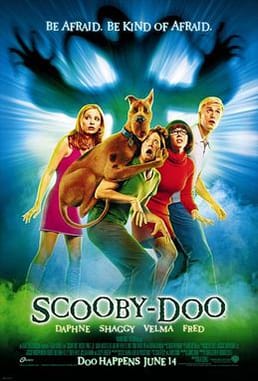
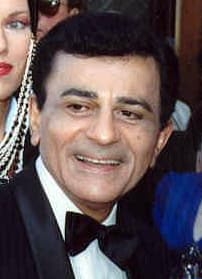
Kasem was already a cultural institution long before this became one of the stranger integrity stories in cartoon history. He was the host of American Top 40, one of the defining radio voices in the United States, and he was also the original voice of Norville "Shaggy" Rogers in the Scooby-Doo franchise.[1] For generations of viewers, Shaggy did not merely sound like Casey Kasem. Shaggy was Casey Kasem.
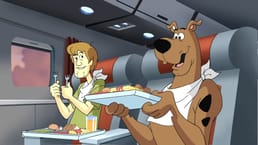
That matters because cartoon voices are not neutral. A voice actor does more than read lines. He establishes rhythm, personality, emotional logic. Kasem helped turn Shaggy into something instantly recognizable: a trembling bundle of nerves with a bottomless stomach, a comic coward whose hunger was almost as important as his fear.[1]
So when producers wanted that same character to pitch Burger King in 1995, they were not just hiring an actor for an ad. They were borrowing decades of affection and familiarity. They wanted the appetite, the catchphrases, the whole package.
Kasem refused.[1]
When a Cartoon Collides With a Conviction
By that point, Kasem's views on animal welfare were not casual lifestyle preferences. He was a vegan and a critic of factory farming, and he took those beliefs seriously enough to let them shape his professional choices.[1] That is where this story becomes interesting. Plenty of public figures have principles. Fewer are willing to let those principles interfere with a beloved, long-running role.
Kasem was.
There is a revealing tension here. Shaggy was famous for craving giant sandwiches, towering snacks, and anything else he could stuff into his mouth while running from a ghost. The character's comedy was built around consumption. But Kasem separated appetite from endorsement. A fictional glutton was one thing. A real fast-food commercial was another.
That distinction was enough to break the relationship. In 1995, Kasem quit the role rather than voice Shaggy for Burger King.[1]
The Long Gap
What followed is what makes the story more than a quirky Hollywood anecdote. Kasem did not make a dramatic protest and then quietly return once everyone forgot why he had left. He stayed away.[1]
For years, that absence stood as proof that the objection was real. It was not performative. It was not a negotiation tactic dressed up as ethics. If it had been, it would have ended quickly. Instead, Kasem remained apart from a character he had helped build.
That is rare in entertainment, where nostalgia is powerful, franchises are durable, and moral compromises are often smoothed over with vague language. Kasem's position was clearer than that. He had decided there were terms under which Shaggy could exist in the world, and terms under which he could not.
The Condition for Coming Back
Then came the twist that makes the whole episode unforgettable. Kasem eventually agreed to return, but only on one condition: Shaggy had to become a vegetarian.[1]
And in 2002, producers agreed.[1]
That is the remarkable part. Kasem did not merely protect his own conscience. He managed, in a small but very real way, to push his values into the franchise itself. The compromise was not, "Fine, no commercial." It was more radical than that. If Shaggy was going to have Kasem's voice again, Shaggy's eating habits had to change too.
So the most food-obsessed character in the gang, the one whose identity seemed permanently tied to comic excess, was reshaped through the ethics of the actor behind him. Not fully reinvented, not turned into a political pamphlet, but nudged in a new direction by a man who believed that even a cartoon's diet could mean something.
Why This Story Endures
Part of the reason this story survives is that it reverses the usual logic of celebrity activism. Normally, stars use fame to make speeches. Kasem used a contract dispute. He did not need a manifesto. He made his point by withholding the voice everyone wanted back.
And part of it survives because it reveals something quietly powerful about voice acting itself. We tend to think animated characters belong to studios, writers, and brand managers. But sometimes they belong, at least in part, to the people who give them life. Kasem's stand worked because his connection to Shaggy was not decorative. It was foundational.
He had enough ownership, in the cultural sense, to say no. Enough leverage to make that no last. And eventually, enough moral stubbornness to come back only after the character bent toward his values.[1]
That is why this is more than a trivia fact about a cartoon and a burger chain. It is a small case study in artistic identity. Casey Kasem did not just voice Shaggy. For decades, he helped define what Shaggy was. And when that definition collided with his beliefs, he chose the beliefs.
Then, years later, he came back and changed the character too.