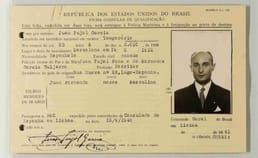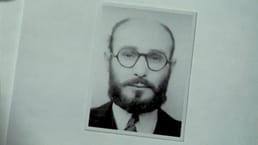
Juan Pujol García was born in Barcelona on 14 February 1912. He studied animal husbandry at the Royal Poultry School in Arenys de Mar and later managed several businesses, including a cinema [2]. In 1936 he was managing a poultry farm north of Barcelona when the Spanish Civil War began [2]. The war turned him against totalitarianism, and he later said he wanted to work for Britain for the good of humanity [2].
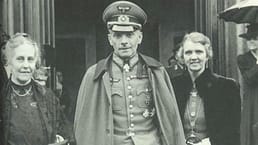
After the British Embassy in Madrid rejected his offer to spy for Britain, Pujol created a false identity as a fanatically pro-Nazi Spanish government official and became a German agent [2]. The German service that handled him was the Abwehr, the military intelligence organization then led by Vice-Admiral Wilhelm Canaris [2][3]. His handlers told him to travel to Britain and recruit more agents. Instead, he moved to Lisbon and wrote bogus reports about Britain from a tourist guide, train timetables, cinema newsreels, and magazine advertisements [2].
Pujol began inventing fictitious sub-agents who could take the blame for false information and mistakes [2]. The invention worked. The Allies accepted him after the Germans spent considerable resources trying to hunt down a fictitious convoy [2]. MI6 interviews by Desmond Bristow of the Iberian Section followed, the family moved to Britain, and Pujol received the code name Garbo [2]. His German handlers called him Alaric and referred to his nonexistent network as Arabal [2].
Pujol and his handler Tomás Harris spent the rest of the war expanding the fictitious network, communicating with German handlers first by letters and later by radio [2]. Eventually the Germans were funding a network of 27 agents, all of them imaginary [2]. That arrangement gave Pujol a channel for false information and a way to explain away errors through invented sub-agents [2].
Operation Fortitude was the deception operation intended to mislead the Germans about the timing, location, and scale of the Normandy invasion in 1944 [2]. Pujol supplied false information that helped persuade the Germans the main attack would come at the Pas de Calais [2]. They kept large forces there, including the Fifteenth Army led by Hans von Salmuth, before and even after the Normandy landings [2].
By June 1944, more than 6,000 ships and 13,000 planes were assembled for the Normandy invasion, and Allied planners needed the Germans to look elsewhere [1]. Pujol's reports fit that need. His invented network helped sustain the German belief in a separate, larger attack at the Pas de Calais [2]. The deception did not win the war alone, and Pujol did not work alone; his handler and the wider Allied deception apparatus were part of the effort [2].
Pujol received the Iron Cross from Germany and later became a Member of the Order of the British Empire [2]. He died on 10 October 1988 [2]. His wartime record rests on a fabricated identity, a fabricated network, and a stream of reports that shaped German expectations about where the Normandy invasion would land [2].