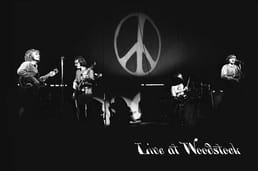
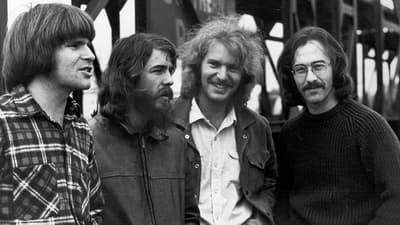
Some bands feel as if they lasted forever because their songs never left. Creedence Clearwater Revival is one of those bands. “Proud Mary.” “Born on the Bayou.” Hit after hit after hit, songs so embedded in American life that they can make a four-year career feel like a full era.
But it was not a full era. That is the strange part. Creedence Clearwater Revival sold around 30 million albums, notched nine top ten hits, and became one of the defining American rock bands of their time, all while being together for only four years.
Four years is barely enough time for most bands to figure out who they are. CCR used it to become immortal.
The Band That Sounded Ancient Almost Immediately
Creedence Clearwater Revival pulled off one of rock’s great sonic illusions. They sounded old, rooted, weathered, almost inherited. Their music evoked swamps, back roads, riverboats, and the deep American South. But the band did not come out of Louisiana, Mississippi, or some half-mythic roadside bar. They came from El Cerrito, California.[1]
That mismatch matters, because it helps explain part of their power. CCR were not simply reproducing the place they came from. They were building a musical America in their heads, then making it feel so vivid that listeners accepted it as real. Swamp rock, roots rock, blues, all of it was filtered through four California musicians who understood that atmosphere can be as persuasive as biography.[1]
The result was a band that arrived sounding as if it had already been around for decades.
Before They Were Creedence
One reason their four-year run was so explosive is that those four years were not the whole story. Doug Clifford, Stu Cook, and brothers Tom and John Fogerty had been playing together since they were teenagers.[1] Long before the world knew them as Creedence Clearwater Revival, they had already spent years learning how to function as a unit.
By the mid-1960s, they had signed with Berkeley’s Fantasy Records and were working under the name The Golliwogs, sharpening themselves on the road and in the studio.[1] That apprenticeship is easy to miss because the famous version of the band seems to arrive fully formed. But bands rarely explode by accident. Usually, they spend years becoming compressible. They build pressure in obscurity and then, if the moment comes, everything releases at once.
That is what happened here.
1968: The Switch Flips
In 1968, the group changed its name to Creedence Clearwater Revival and released its self-titled debut.[1] That was the hinge. The obscure working band became something sharper, stranger, and much more memorable. A new name, a new frame, and suddenly the music had somewhere larger to go.
And once it started moving, it moved fast.
This is what makes CCR’s career so fascinating. Their success did not unfold like a leisurely climb. It came in a concentrated burst. They did not spend a decade circling greatness. They hit a vein and kept drilling. In the space of just a few years, they produced the kind of catalog most bands would need a lifetime to assemble.
Why The Run Feels Longer Than It Was
The obvious answer is volume. If you cram enough great songs into a short enough period, time starts to distort. A band with one or two signature tracks can be placed neatly in a single year. A band with a dense run of enduring hits starts to feel like a permanent institution.
But there is something else going on with Creedence. Their songs do not just survive. They recur. They keep being rediscovered by people who were not there the first time. They are played at parties, in movies, on road trips, at barbecues, in nostalgia playlists and anti-nostalgia playlists, by people who know the band’s name and by people who only know the chorus.
That is how a four-year band acquires the emotional footprint of a twenty-year one. It stops belonging to its own chronology.
The Efficiency Of Great Bands
CCR’s story is a reminder that longevity and impact are not the same thing. We often assume greatness needs duration, as if cultural weight has to accumulate slowly. But some bands work differently. They do not age into significance. They detonate into it.
Creedence Clearwater Revival became one of the great American rock bands with astonishing efficiency.[1] Their blend of swamp rock, roots, and blues was distinctive enough to stand out immediately and familiar enough to feel native the moment you heard it.[1] That is a rare trick. Too original, and audiences resist. Too familiar, and they forget you. CCR found the narrow lane where music sounds both inevitable and unmistakable.
That is why songs like “Proud Mary” and “Born on the Bayou” landed so hard.[1] They did not feel like experiments. They felt like discoveries, as though the songs had always existed and the band had simply been the first to find them.
The Paradox At The Center Of CCR
The paradox is almost perfect. A band from California makes music that sounds Southern. A band that seems timeless lasts only four years. A group with a relatively brief life leaves behind a catalog large enough to dominate classic rock radio for generations.
That paradox is part of why their story sticks. It breaks the normal script. Usually, when a band burns this brightly, we assume there must have been a long, stable empire behind it. With Creedence, there was only a short window, and yet the window was enough.
In some ways, that may deepen the fascination. Four years means there was almost no waste. No long, slow decline. No decade of diminishing returns built into the legend. Just a compact run of work so durable that it made brevity look enormous.
What Their Career Actually Proves
It proves that the lifespan of a band and the lifespan of its music are two completely different things.
Creedence Clearwater Revival were together for only four years. But their songs stayed. Their sound stayed. Their version of America stayed. The band itself was brief. The echo was not.
And maybe that is the most impressive version of success in rock. Not lasting forever as a group, but creating something that makes people assume you did.
Some bands spend decades trying to build a legacy. Creedence Clearwater Revival did it in one compressed, improbable rush, then disappeared into history while the music kept walking around as if the band had never left.