Most college marching bands are built for Saturdays. They are there for the tunnel, the touchdown, the fight song, the ritual burst of noise that turns a football game into a small civic religion. The Spirit of Troy does all of that. Then it does something stranger. It leaves campus, steps into the larger culture, and keeps showing up in places a marching band is not supposed to belong.[1]
This is how you end up with a collegiate band that played on Fleetwood Mac's Tusk, performed at the Oscars and the Grammys, appeared for five U.S. presidents, and played at the fall of the Berlin Wall.[1] It is also how you end up with a fact that sounds invented until you check it: the University of Southern California's Spirit of Troy is the only collegiate band to earn two platinum records.[1]
That detail tells you almost everything. Most university bands are excellent at being university bands. Spirit of Troy became something rarer, a school ensemble that learned how to function as both pageantry and pop artifact, both campus tradition and traveling American spectacle.[1]
The Sound That Refused to Stay in the Stadium
The band was founded in 1918, which means it has existed long enough to evolve alongside the culture that kept inviting it into new rooms.[1] Officially, it is the USC Trojan Marching Band. More memorably, it is the Spirit of Troy, a name that feels less like a label than a job description. It represents USC at athletic events, yes, but also at broadcast appearances, recording sessions, and national public ceremonies.[1]
That range matters. Most people imagine a marching band as a thing with borders: campus on one side, real show business on the other. Spirit of Troy spent decades erasing that boundary. It became known not just for volume and precision, but for portability, for its ability to carry school-pageant energy into entirely different worlds and somehow make it work there too.[1]
That is a harder trick than it sounds. A marching band is, by design, oversized. The uniforms are oversized. The gestures are oversized. Even the leadership is theatrical. The drum major of Spirit of Troy traditionally wears a more elaborate uniform and conducts with a sword, which tells you something important about the group's self-conception. This was never meant to be modest background music. It was meant to arrive.[1]
Why Tusk Changed the Story
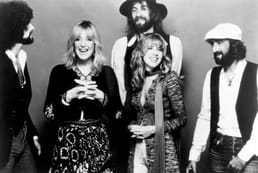
Then came Fleetwood Mac. In 1979, the band appeared on the title track of Tusk, one of those collaborations that sounds eccentric until you hear it and realize eccentricity was exactly the point.[1] Fleetwood Mac wanted size, swagger, and a kind of organized chaos. A conventional studio arrangement would have made the song bigger. Spirit of Troy made it cinematic.
The result did more than place a college band on a famous record. It placed a college band inside the machinery of pop history. And because Tusk went platinum, the marching band ended up sharing in an honor no other collegiate band has matched, becoming part of the story behind its two platinum records.[1]
That is the leap. One minute, you are a university ensemble associated with football Saturdays. The next, you are part of a platinum-selling rock album, proving that the brass-and-percussion grammar of a marching band can survive contact with mainstream music, awards-show glitz, and mass-media spectacle.[1]
A Band Built for Big Stages
After that, the pattern kept repeating. The Spirit of Troy performed at the Academy Awards. Then at the Grammys. It appeared in the sort of national events where producers need something instantly legible, unmistakably American, and impossible to ignore.[1] A symphony can be elegant. A rock band can be cool. A marching band in full force does something different. It announces itself before it even finishes the first phrase.
And Spirit of Troy was especially good at that kind of entrance. It had the discipline of a university ensemble but the instincts of a show-business act. That combination made it useful far beyond the boundaries of college sports. If you wanted ceremony with momentum, tradition with velocity, USC's band was already trained for the assignment.[1]
That is also how you get a résumé that includes performances for five U.S. presidents.[1] Not because presidents are secretly marching-band obsessives, but because institutions like to borrow authority from other institutions. A presidential appearance wants symbols. A band like Spirit of Troy provides them at full volume.
Berlin, 1989
And then there is the Berlin Wall. This is the moment that makes the rest of the résumé feel less like novelty and more like history in motion. When the wall fell, the band was there to perform.[1] That fact lands differently from the platinum records or the awards shows. Those are cultural milestones. Berlin was geopolitical theater, one of those events that seemed to rearrange the emotional furniture of an era in real time.
A college marching band has no obvious reason to be near a world-historical rupture. Yet there it was. Which is another way of saying that Spirit of Troy had become, by then, more than a school ensemble. It had become a mobile piece of American symbolism, something large enough and familiar enough to be inserted into moments meant to say this matters.[1]
The Secret Is That It Never Stopped Being a College Band
The paradox is that none of this required Spirit of Troy to stop being what it was. It remained deeply tied to USC athletics, especially football, where it built the kind of identity most bands would be thrilled to have on its own.[1] The public mythology grew because the foundation was already solid: repetition, discipline, choreography, sound, tradition.
That may be the most interesting part of the story. The band's fame did not come from abandoning college ritual for celebrity. It came from doing college ritual so vividly that the rest of the culture kept finding uses for it. Hollywood wanted it. Rock music wanted it. State ceremony wanted it. History, on at least one famous night in Berlin, wanted it too.[1]
So yes, the easy headline is that Spirit of Troy is the only collegiate band with two platinum records.[1] But the deeper point is what that fact represents. It is proof that sometimes an institution built for one narrow purpose becomes unexpectedly fluent in the language of an entire era. A marching band became a recording act, a television act, a ceremonial act, and a recurring extra in American history. It just happened to keep wearing school colors while it did it.