
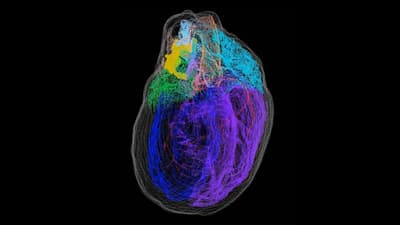
In the mouse studies reported in 2026, the scene was a small animal under stress, its heart trying to keep time while researchers watched a hidden set of cardiac neurons help keep the rhythm from going wrong.[3]
The heart’s “little brain,” formally called the intrinsic cardiac nervous system, is a real network of neurons and ganglia embedded in heart tissue.[1] Described by Dr. Armour in 1991, it contains about 40,000 neurons and helps regulate heartbeat from inside the heart itself.[4]
The older picture was simpler. The brain sent signals. The heart responded. A pulse quickened, slowed, or steadied because the central nervous system and autonomic nerves told the organ what to do. Then researchers began looking more closely at the nerve cells sitting in the heart’s own tissue.
Dr. Armour’s 1991 description gave the system its memorable nickname, the heart’s “little brain,” or the intrinsic cardiac nervous system.[4] The phrase can sound mystical when it is repeated without context. It does not mean the heart thinks, stores memories, or makes decisions like the brain. It means the heart contains a local nervous system, built into the organ it helps regulate.
Under the surface, that network is organized into clusters of neurons called ganglia, connected by nerve fibers into ganglionated plexuses.[1] In humans, many of the ganglia are associated with the posterior or superior areas of the atria, the upper chambers of the heart.[1] Some are embedded in epicardial fat pads on the heart’s surface, in clusters ranging from only a few neurons to as many as 400.[1]
The cells have different jobs. Afferent neurons detect mechanical and chemical changes in the heart. Efferent neurons modulate cardiac muscle activity. Interneurons help signals move within the cardiac network itself.[1] Together, they give the heart a local way to sense conditions and adjust its own behavior.
That local control is the counterintuitive part. The heart remains deeply connected to the brain and the rest of the autonomic nervous system, but it is not only a pump waiting for distant instructions. The intrinsic cardiac nervous system helps modulate heart rate, electrical conduction, and contractility in response to local and external stimuli, and it can regulate cardiac function independently of the central nervous system.[1]
At Yale, researchers have described this “little brain on the heart” as essential for cardiac function.[2] The 2026 mouse work added a sharper detail: the cardiac neurons were not all interchangeable. A subset helped keep the heart beating steadily during extreme stress, protecting against malfunction in the animals studied.[3]
The phrase also complicates the old habit of treating bodily experience as if it were only a brain story. The legacy article that carried this fact came from a review of pain, emotion, cognition, and the possible role of the heart in pain modulation.[4] That does not make pain a product of the heart. It points to signaling systems that are distributed, layered, and constantly talking across the body.
The heart’s little brain is not a second mind. It is a small embedded nervous system, about 40,000 neurons tucked into the moving tissue of an organ that never gets to stop working.[4] Each beat passes through muscle, blood, electricity, and those quiet clusters of nerve cells on the heart itself.