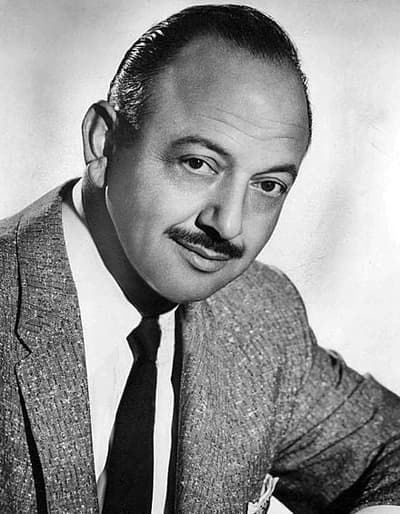
Imagine, for a moment, a world without the frantic, rhythmic stutter of Porky Pig or the cool, nonchalant drawl of Bugs Bunny. It is a world where the golden age of animation lacks its pulse. For most of the 20th century, that pulse was provided by a single man. But if you look closely at the life of Mel Blanc, you won't find the story of a simple voice actor. You'll find a saga of survival, reinvention, and a relentless, almost supernatural dedication to a craft that demanded everything he had.
He wasn't always the legendary "Man of a Thousand Voices." He began as Melvin Jerome Blank—a name that felt too pedestrian for the whirlwind of personality he was destined to become[1]. In a move that signaled his desire to reshape his own reality, he swapped the 'k' for a 'c,' transforming into Blanc. It was a small change on paper, but it was the first step in a lifelong process of becoming something larger than life.
A Life of Extremes
The resilience that allowed Blanc to navigate the fickle world of Hollywood was forged early, often through harrowing habits. By the age of nine, Blanc was already smoking—a staggering statistic even by the standards of the era[1]. It was a habit that would follow him through decades of high-pressure recording sessions, a shadow trailing the bright, colorful characters he breathed life into.
But the physical toll was only part of the story. Life had a way of throwing literal obstacles in his path. A devastating car accident once left Blanc in a coma for two weeks[1]. For anyone else, that would have been a definitive end—a moment where the curtain falls and the lights go dark. But Blanc didn't just wake up; he returned to the microphone. He possessed a grit that seemed disconnected from the fragile reality of the human body.
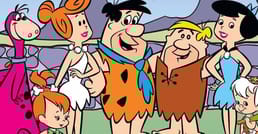
This grit was most famously tested during the production of The Flintstones. While most actors require a quiet studio and a comfortable chair, Blanc recorded his lines while encased in a full-body cast[1]. Imagine the technical precision required: navigating the rapid-fire dialogue of Barney Rubble while your entire physical form is immobilized. It was a feat of pure willpower, proving that while his body might be broken, the voice remained untouched.
The Architect of Imagination
To understand Blanc's impact, you have to look past the voices and into the soul of the characters. He wasn't merely making sounds; he was constructing personalities. During the golden age of radio, he was a mainstay, performing alongside comedy titans like Jack Benny, Abbott and Costello, and Burns and Allen[1]. He learned the rhythm of comedy in the live, unpredictable environment of radio—a skill that translated perfectly to the nuanced timing required for animation.
When the era of theatrical cartoons arrived, Blanc became the architect of the Looney Tunes universe. He didn't just voice Bugs Bunny and Daffy Duck; he gave them existential weight. He gave them their neuroses, their triumphs, and their iconic flaws. From the frantic energy of the Merrie Melodies to the domestic warmth of Hanna-Barbera’s The Jetsons, Blanc's range was less of a spectrum and more of a vast, uncharted territory[1].
The Final Act
There is a haunting melancholy to the end of Blanc's career. In the twilight of his life, he participated in one of the most significant animated milestones of the modern era: Who Framed Roger Rabbit. It was a film that brought together the very legends he had helped create, a celebration of the medium he had defined. He delivered his performances with the same precision that had carried him through decades of industry shifts.
Yet, the timing was haunting. Only one year after contributing to that masterpiece, the man who had voiced the most enduring characters in American history passed away[1]. He died from complications related to emphysema and coronary artery disease—the long-term echoes of a life lived at high volume and high stakes[1].
Mel Blanc left behind more than just a discography. He left a blueprint for how to inhabit a character so completely that the person and the persona become indistinguishable. He was a man who changed his name, survived the unthinkable, and worked through the pain, all to ensure that when we heard a certain rabbit or a certain duck, we didn't just hear a cartoon—we heard a soul.