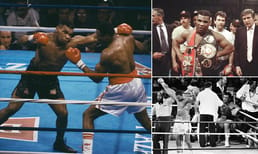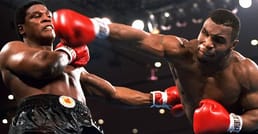
On 22 November 1986, Mike Tyson stopped Trevor Berbick to become the youngest heavyweight champion in history at 20 years and four months [2]. He did it at 178cm and about 99 to 100kg, a frame assembled in the Catskill gym under Cus D'Amato and then Kevin Rooney [2]. His professional record closed at 50 wins, 44 by knockout, 7 losses and 2 no contests [2].
Tyson's alarm went off at 4am and the first task was roadwork, 3 to 5 miles at a steady pace [1][2]. One reconstruction of the morning adds light stretching, 10 hard sprints, box jumps, and 500 pushups and 500 sit-ups before breakfast [3]. Another has him out at 4 or 5am and walking a mile afterwards to cool down [4]. Tyson said the hour itself was not the point; the edge came from knowing his opponent was still asleep [2].
Two thousand sit-ups, 500 push-ups, 500 dips and 500 barbell shrugs a day are the totals most often attached to him, plus neck bridges [1][2]. The shrug load is reported anywhere from 30kg to 75kg, so the weight is a guess rather than a record [2]. Neck work, front and back wrestler's bridges, ran somewhere between 10 and 30 minutes depending on the account [2][3].
A second block of bodyweight work landed in the evening, because the totals were spread across the day rather than done in one hit [2][3]. One version of that session lists ten rounds of 150 air squats, 150 sit-ups, 50 bench dips, 50 barbell shrugs at about 60lb and 10 minutes of wrestler bridges, which totals 1,500 squats, 1,500 sit-ups, 500 dips and 500 shrugs [3]. Other tallies push the daily figures to 2,000 squats and 2,500 sit-ups [3][4].
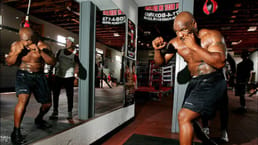
Sparring filled the middle of the day, usually 10 to 12 rounds of three minutes with a minute's rest [3], though some accounts put it at 8 to 10 [1]. Partners rotated constantly so he saw tall fighters, fast fighters and southpaws [1]. The rest of the technical work was mitts, 10 to 12 rounds on the heavy bag, speed bag and slip bag [1][3]. Teddy Atlas said the slip bag taught Tyson the rhythm of punches so he could read and react before getting hit [3].
Cus D'Amato built the schedule around repetition and mental tolerance rather than variety [1]. The same exercises ran thousands of times to create muscle memory, and each session was designed to make discomfort feel ordinary [1][4]. Sparring was treated as sacred, and headgear was rarely used, which sharpened his reflexes [3]. The routine repeated six days a week with Sunday off [4].
Breakfast after the run was typically oatmeal, milk and juice, followed by sleep before the noon session [3]. Fight weight held near 99 to 100kg from 1986 to 1990 [2]. The habit outlasted the title years: at 58, Tyson trained for a November 2024 bout against Jake Paul on the same core of roadwork, calisthenics volume and technical work [4].