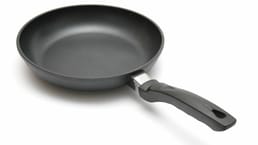
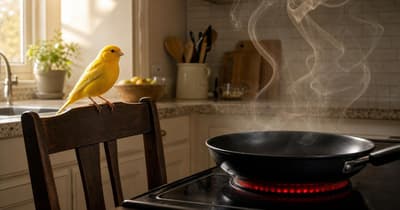
An overheated nonstick pan can do something most people never see coming: it can make humans feel like they have the flu and kill a pet bird before anyone understands what went wrong.[1][2][3]
That warning is not internet folklore. Polytetrafluoroethylene, better known as PTFE or by the brand name Teflon, can release toxic decomposition products when it gets too hot. StatPearls says fumes can be released at temperatures as low as 260°C (500°F), symptoms in humans usually begin around 350°C (662°F), and pyrolysis begins around 400°C (752°F).[1] The human illness is called polymer fume fever, and it can bring on fever, chills, headache, cough, chest tightness, and a miserable flu-like crash that often shows up hours after exposure.[1][2]
Birds are far more vulnerable. Their respiratory systems are extraordinarily efficient, which is useful for flight and awful for airborne toxins. VCA Animal Hospitals warns that birds do not even need to be in the same room as overheated cookware for poisoning to occur, and sudden death may be the first sign anything is wrong.[3]
The medical literature makes the danger feel unnervingly domestic. In one BMJ case report, a 29-year-old man left a PTFE-coated pan on the stove while he fell asleep waiting for pasta water to boil. Five hours later he woke to a room full of white smoke, inhaled a burst of vapor when water hit the scorched pan, and developed fever, shortness of breath, and cough within hours. He recovered after oxygen and hospital observation.[2]
The strangest part is that this syndrome did not just show up in kitchens. StatPearls notes that older occupational outbreaks sometimes came from workers handling raw PTFE and then smoking without washing their hands. Tiny contaminated particles on cigarettes were enough to trigger the same feverish reaction.[1] That detail changes the scale of the risk. The danger is not a pan sitting harmlessly on the stove. The danger is what ordinary heat can turn the coating into.
That is why this matters. Most of us think of kitchen danger in obvious terms like fire, knives, or gas. Overheated nonstick cookware is sneakier. For people, it can masquerade as the flu. For birds, it can be catastrophic before anyone understands what is happening. Once you know that, an unattended empty pan stops looking harmless.[1][3]