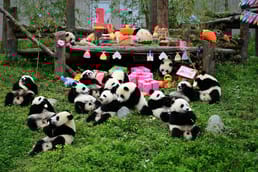
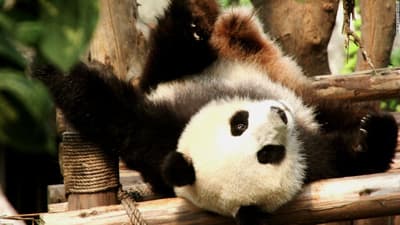
You walk up to the glass. There, amidst a pile of seemingly endless bamboo, sits a creature that defines "cute." It’s clumsy, it’s black-and-white, and it is, quite arguably, the most successful brand ambassador on the planet. You take a photo, you buy a plush toy at the gift shop, and you feel a sense of connection to this exotic visitor.
But there is a fundamental misunderstanding at the heart of your zoo visit. You think you are looking at a resident of the zoo. You think the institution "has" a panda. In reality, the zoo is merely a tenant. That bear is not a resident; it is a high-stakes, multi-million-dollar international leaseholder.
In the world of global conservation and high-level diplomacy, the giant panda is not just an animal. It is a sovereign asset. And every single one of them, no matter how far they roam from the mountains of Sichuan, belongs to one entity: the People's Republic of China.
The Million-Dollar Lease
To understand the scale of this arrangement, you have to look past the bamboo and into the ledger books. When a zoo wants to host a panda, they aren't making a simple donation or a one-time purchase. They are entering into a sophisticated rental agreement that would make a real estate mogul blush.
The price tag? Roughly $1 million per year, per breeding pair [1]. And this isn't a short-term arrangement. These are long-term commitments, typically lasting a minimum of ten years [1]. It is a massive financial undertaking that requires a zoo to commit to a decade of specialized care, high-end facilities, and a constant stream of capital.
But why would a zoo agree to such an astronomical expense? Why pay a million dollars a year for an animal that is notoriously difficult to breed and even more difficult to keep happy? The answer lies in the math of the modern zoo. A panda is a biological magnet. They drive attendance, they fuel gift shop sales, and they provide a level of prestige that no other species can match. They are the "blockbuster movies" of the zoological world—expensive to produce, but capable of generating massive returns.
The Biological Fine Print
However, the contract goes deeper than just the annual fee. There is a clause in these agreements that is often overlooked by the casual observer, and it is perhaps the most important part of the entire deal: the ownership of the offspring.
In most zoo settings, when an animal has a baby, that baby becomes part of the zoo's collection. But with pandas, the rules of biology are superseded by the rules of diplomacy. If a loaned panda gives birth, the cubs do not belong to the zoo. They belong to China [1].
This creates a fascinating, almost surreal, cycle of biological redistribution. A zoo might spend years perfecting the delicate art of panda breeding, only to see their "success" packed into crates and flown back to China. It is a system designed to ensure that the genetic material of the species remains under centralized control, managed by the state that owns the patent on the animal itself.
Funding the Wild
If this sounds like a massive money-making scheme, it’s important to look at where the money actually goes. This isn't just a way for a government to pad its coffers; it is a highly structured mechanism for conservation.
The millions of dollars flowing from international zoos back to China are earmarked for a very specific purpose: the protection of the species in its natural habitat. While there are approximately 350 pandas living under human care globally, the true priority is the much larger, though still vulnerable, population in the wild [1]. Recent estimates suggest there are roughly 1,800 to 1,900 pandas left in their natural environment [1].
The rental fees act as a global subscription service for panda survival. The money funds habitat restoration, anti-poaching patrols, and the complex science of maintaining the corridors that allow wild pandas to meet, mate, and thrive. In essence, the "cuteness" of the captive panda is being monetized to ensure the survival of the wild one.
The Diplomacy of a Bear
Finally, we have to address the "why" behind the ownership. This is what historians and political scientists call "Panda Diplomacy." For decades, the giant panda has been used as a tool of soft power—a way to build goodwill and strengthen ties between China and the rest of the world.
By "loaning" these animals, China can signal friendship, reward allies, or mend broken diplomatic relations. It is a form of biological currency. A panda arrival at a national zoo is a major geopolitical event, often accompanied by high-level state visits and diplomatic fanfare.
So, the next time you stand before the glass, watching a panda munch on a stalk of bamboo, remember: you aren't just looking at an animal. You are looking at a diplomat, a biological asset, and a million-dollar-a-year masterpiece of international relations. You aren't just watching a bear; you are watching a very expensive, very fuzzy, very successful global business in motion.
Sources
- World Wildlife Fund (WWF) - Panda Conservation Data and International Loan Agreements.