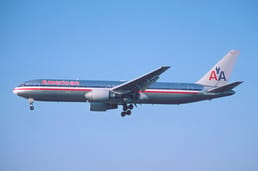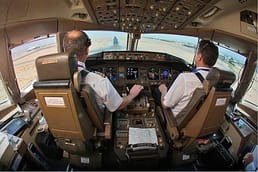

A jet climbing out of Runway 20R at John Wayne Airport typically reaches 500 to 800 feet above the ground before the crew pulls the throttles back to a minimal climb setting [6]. Passengers feel the nose flatten and the cabin go quiet. The engines keep running. The maneuver is a thrust cutback, not a shutdown, and it is the most noticeable part of a noise abatement departure procedure that carriers flying out of Orange County build into scheduled takeoffs [1][6].
John Wayne Airport sits in the center of Orange County, hemmed in by Irvine, Newport Beach and Costa Mesa [2][5]. Its main runway, 2L/20R, measures 5,700 feet, which makes it the shortest runway in the United States that handles regularly scheduled international flights [2]. Airport officials describe SNA as one of the most noise sensitive airports in the country, and the surrounding residential communities are the reason [5].
The first airstrip on the site opened in 1923, when Eddie Martin signed a five-year lease with James Irvine to run a flying school [2]. Orange County acquired the field through a land swap in 1939 and renamed it for actor John Wayne in 1979, the year he died [2]. Residents under the departure path organized as turboprops and jets arrived in the 1970s, and lawsuits followed [1]. A 1985 suit brought by a group representing those residents ended in a settlement that imposed noise limits and curfew requirements still in force [1].
The geared Pratt & Whitney PW1000G turbofan has a noise footprint about 75 percent smaller than earlier equivalents, and engine makers keep working the same problem [4]. Jet noise rises steeply with exhaust velocity, so a modest thrust reduction produces a large drop in sound pressure at ground level [4]. Noise engineers split the job into three parts, source, path and receiver, and SNA works each of them through engines, routing and monitoring [3][5].
Two FAA-recognized departure profiles, close-in and distant, cover most of what happens after liftoff [6]. The close-in profile calls for a steep initial climb and a thrust reduction near 800 feet, while the distant profile holds climb thrust longer and delays the cutback to a higher altitude [6]. Airlines pick between them based on aircraft performance and weight so that each departure stays under the airport's fixed ground monitoring limits [6]. Noise monitoring stations along the departure path record the sound footprint of every departing aircraft [1][5].
After the cutback, crews usually turn left to a heading near 175 degrees, tracking over the Newport Bay channels and out across the Pacific [6]. General aviation traffic follows a separate rulebook. The county's General Aviation Noise Ordinance sets operating hours and maximum permitted noise levels, and compliance is mandatory unless air traffic control instructions, a medical emergency or another safety consideration requires a deviation [5]. The airport publishes a noise abatement guide and a program flyer for those pilots [5][8].
The airport counted 5,370,273 enplanements in 2024, down from 5,706,332 in 2023, and stayed the second busiest in the Los Angeles area by passenger count with more than 10 million total passengers [2]. Newport Beach, which lies under the climb-out, keeps its own aircraft noise and emissions page for residents following the issue [7]. Carriers that skip the procedure face fines [1].