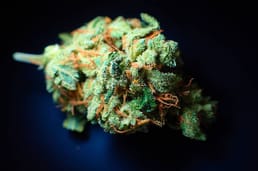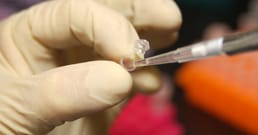
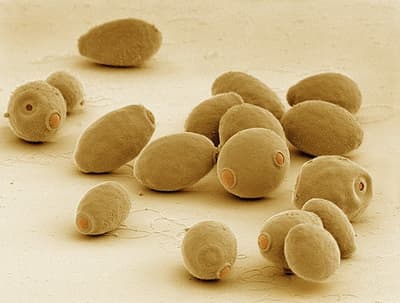
In a Berkeley lab, a microbe better known for beer and bread was put on a very different diet. Saccharomyces cerevisiae, brewer’s yeast, was fed sugar and engineered to make chemicals associated with cannabis rather than alcohol or risen dough.[2]
Scientists engineered brewer’s yeast with cannabis plant genes and other genetic changes so it could produce cannabinoids including THC and CBD from sugar. The long-term aim is fermentation-based cannabinoid production that is cheaper, purer, and less dependent on cultivating cannabis plants.
The work, reported in Nature in February 2019, turned a familiar brewing organism into a miniature chemical factory.[1] Researchers led by Jay Keasling at the University of California, Berkeley modified the yeast so it could convert galactose, a sugar, into cannabinoid compounds found in Cannabis sativa.[1]
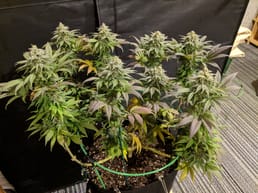
Keasling, a professor of chemical and biomolecular engineering and of bioengineering, described the appeal bluntly: “you get exactly what you want from yeast.”[2] Cannabis plants can be variable sources, and extracting rare compounds from them can be expensive because many cannabinoids appear only in trace amounts.[3]
A Beer Yeast With a Cannabis Pathway
The Berkeley team did not flip one genetic switch. According to the Nature coverage, the researchers modified several genes already found in S. cerevisiae and introduced others from five types of bacteria and from the cannabis plant.[4] In all, the yeast needed 16 genetic modifications to transform galactose into inactive forms of THC or CBD, which can be converted into active forms by heating.[4]
Inside the engineered cells, the sugar passes through a rebuilt version of a plant pathway. The yeast makes intermediate chemicals and then produces cannabigerolic acid, or CBGa, often called the “mother cannabinoid” because it can develop into several other cannabis compounds.[3]
At the final step, the researchers could steer the product. Keasling told Scientific American that the yeast strain producing THC and the one producing CBD differ by only one gene, the last gene in the pathway that turns CBGa into either molecule.[3] Swap that gene, and the same approach could be used to pursue rarer cannabinoids.[3]
Those rarer compounds are a major reason the yeast mattered. Marijuana contains more than 100 cannabinoids, but most occur in far lower concentrations than THC and CBD.[3] When scientists try to isolate them from plants, the products can be costly and may contain traces of more common cannabinoid cousins.[3] Fermentation offered the possibility of cleaner, more standardized batches.
The Scale Problem
The first yields were still tiny. The engineered yeast produced roughly 8 milligrams per liter of THC and lower levels of CBD, according to the Nature report summarized by Innoscience.[4] Jason Poulos, chief executive of Librede, said yields would need to rise by at least 100-fold before yeast-made cannabinoids could compete with plant-extracted versions on cost.[4]
Other researchers saw the result as an important proof of construction. Kevin Chen, chief executive of Hyasynth Bio in Montreal, said the study was significant because it put the complete cannabinoid production line together inside one cell.[4] David Kideckel, a cannabis analyst with AltaCorp Capital in Toronto, predicted at the time that synthetic cannabinoids were still 18 to 24 months away from being cost-effective enough for pharmaceutical companies or the general public.[4]
The method also fit a broader pattern in synthetic biology. Engineered yeast and related microbial systems had already been used to make commercial anti-malaria drugs and laboratory opiates.[4] In this case, the old brewing organism was being asked to carry a cannabis pathway instead.
The imagined endpoint is not a field of flowering plants or a tray of sticky buds. It is a fermentation tank: sugar going in, yeast working cell by cell, and a cannabinoid accumulating where beer might once have been expected.
Sources
- Nature, “Scientists brew cannabis using hacked beer yeast”
- UC Berkeley College of Chemistry, “Yeast produce low-cost, high-quality cannabinoids”
- Scientific American, “Rising High: GM Yeast Generates Known and Novel Marijuana Compounds”
- Innoscience Research Institute, “Scientists brew cannabis using hacked beer yeast”