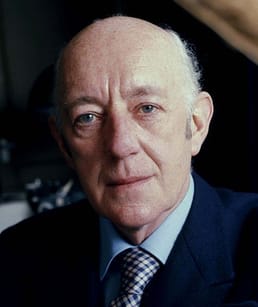

In 1933, Alfred Newman wrote a short orchestral fanfare for 20th Century Fox, the studio where he served as music director [1]. Newman scored more than 200 motion pictures over a career of four decades and won nine Academy Awards from 45 nominations [6]. Of all of it, he is perhaps best known for the music that played under the studio's searchlight logo [6]. The piece ran about twenty seconds, built on snare drums, timpani and brass [1]. It survived the 1935 merger of Fox Film Corporation and Twentieth Century Pictures, and the new company kept the searchlight logo and fanfare in its opening credits [2].
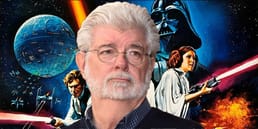
On May 25, 1977, Star Wars opened in a small number of American theaters, produced by Lucasfilm and distributed by Twentieth Century-Fox [7]. George Lucas had taken a particular liking to Newman's fanfare and insisted it be played before his film [1]. The drum roll and roving spotlights of the Fox opener therefore led directly into the movie, and the two pieces of music became fixed in audiences' ears as a single sequence [1].
When Lucas hired John Williams to write the score, one of the composer's first courses of action was writing a main theme in the same key as Newman's fanfare [1]. Williams had been born in Queens on February 8, 1932, and already held Academy Awards for Fiddler on the Roof and Jaws [5]. He would go on to collect 54 Oscar nominations, second only to Walt Disney [5]. Matching the key meant the studio logo and the opening title could run together without a seam.
Williams recorded the Star Wars score across eight sessions at Anvil Studios in Denham, England, on March 5, 8 through 12, 15 and 16, 1977 [4]. The London Symphony Orchestra performed the music, Lucas produced the sessions, and Lionel Newman, head of 20th Century Fox's music department, supervised them [4]. Williams handled orchestration alongside Herbert W. Spencer, Alexander Courage, Angela Morley, Arthur Morton and Albert Woodbury [4].
20th Century Records released the soundtrack as a double LP in June 1977 [4]. The main title reached No. 10 on the Billboard Hot 100, and a disco version of the theme by Meco went to No. 1 in October 1977 [4]. The album itself peaked at No. 2 on the Billboard 200 that September and became the best-selling symphonic album of all time [4].
The fanfare appeared on releases of the Star Wars Special Edition in the late 1990s and on the Ultimate Edition score to 1999's The Phantom Menace [1]. The first six Star Wars films rank among 20th Century's most commercially successful franchises [2]. For moviegoers who grew up on those releases, the Newman march and the Williams main title arrived as one continuous stretch of music.
In December 2015, The Force Awakens reached theaters without the fanfare, three years and two months after Disney bought Lucasfilm for $4 billion [1]. Disney's purchase of most of 21st Century Fox's assets, including 20th Century Fox, closed on March 20, 2019 [2]. The studio took its current name, 20th Century Studios, on January 17, 2020 [2].
The 1977 score entered the Library of Congress National Recording Registry in 2004, and the American Film Institute named it the most memorable score for an American film in 2005 [4]. Williams wrote the music for nine Star Wars feature films and built roughly fifty recurring themes across the franchise [3]. The key he chose in 1977 to sit beside Newman's fanfare is still the key the main title is played in.