You check your watch. You look at your phone. You glance at the digital clock on your microwave. Everything says the same thing: time is moving forward, steady and predictable, one tick after another. We treat time like a fundamental constant, a rigid scaffolding upon which the universe is built. But there is a secret tension brewing between the physics of the very small and the physics of the very large.
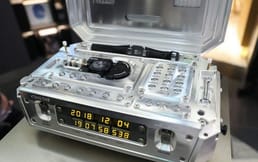
On one side, we have atomic clocks. These are the masters of precision, measuring time by the incredibly stable vibrations of atoms. They are so accurate they won't lose a second for millions of years. On the other side, we have the Earth itself—a massive, wobbling, uneven sphere spinning through space. And here is the problem: the Earth is a terrible timekeeper.
The Earth’s rotation isn't a constant; it is a fickle thing. It speeds up and slows down based on the movement of the oceans, the shifting of tectonic plates, and even the melting of glaciers. It reacts to the weather and responds to geological events. Because the planet's spin is constantly fluctuating, "solar time"—the time based on the Earth's actual position relative to the sun—is constantly drifting away from the perfect, unwavering rhythm of atomic time[1].
The Ghost in the Machine
For most of human history, this didn't matter. We lived by the sun, and the sun was our clock. But in the modern era, we have built a civilization that runs on nanoseconds. Our GPS satellites, global financial markets, and telecommunications networks all rely on Coordinated Universal Time (UTC), which is anchored to those precise atomic clocks[1].
As the decades passed, scientists noticed a growing rift. The "perfect" time kept the clocks running smoothly, but the Earth was falling behind. If we let the gap grow too large, our digital world would eventually lose sync with the physical world. We would be living in a reality where "noon" on our clocks no longer matched the moment the sun reached its highest point in the sky.
To fix this, we don't change the clocks. We change the time itself. We perform a delicate, artificial surgery on the timeline known as a "leap second"[1].
The Second That Shouldn't Exist
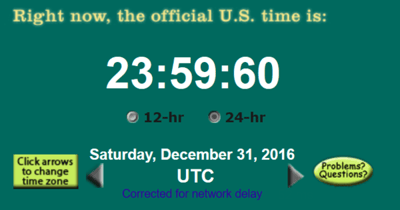
Imagine you are watching a digital clock strike midnight on New Year's Eve. Usually, the sequence is seamless: 23:59:58, 23:59:59, and then—poof—00:00:00. The day has turned. But every so often, the universe demands a pause. A correction.
On December 31, 2016, the world experienced one of these glitches in the matrix. For a single, strange moment, the clock didn't jump from 59 to 00. Instead, it stuttered. It displayed 23:59:60[1]. For one full second, that sixty-first second existed—a temporal hiccup inserted to allow the Earth's rotation to catch up with our atomic precision.
It sounds like a minor technicality, but for the software that runs our world, it is a nightmare. Computers are designed to expect a linear progression of time. When a clock suddenly reports a second that shouldn't be there—or worse, when it repeats a second—it can cause systems to crash, databases to desynchronize, and automated high-frequency trading platforms to stumble[1].
A Fragile Equilibrium
The leap second is a testament to the fact that we are trying to impose perfect mathematical order onto a messy, organic planet. We use atomic time to navigate the stars and manage our data, but we are still tethered to a spinning rock that refuses to keep a consistent beat.
Every time we add a leap second, we are acknowledging a fundamental truth: our most advanced technology is still at the mercy of the Earth's shifting weight and wandering winds. We are living in the gap between the perfection of the atom and the beautiful, unpredictable chaos of the world beneath our feet.