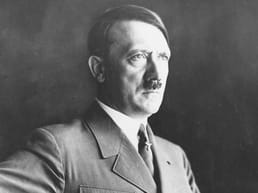
In December 2004, Klaus-Dieter Dubon, a retired Bavarian notary and tax expert, told Reuters that he had found Adolf Hitler's tax records in a Munich archive [5][7]. The BBC reported that the papers came from the Bavarian State Archive, and the story ran from CNN to Gulf News [1][8]. Dubon's conclusion was blunt: "Hitler owed tax but didn't pay it, full stop" [5][8].
The first questions concerned a car. Tax officials asked how Hitler, then imprisoned after his failed 1923 coup in Munich, had found the money for a luxury Mercedes [1][6]. Hitler answered that he had received a bank loan and that the car "is for me just a means to an end" [1][6]. He had been sentenced to five years of fortress confinement for the putsch and served only nine months [3][6]. On his release in December 1924 he declared his possessions to be one desk and two bookshelves [1][6].
Between 1925 and 1932 Hitler challenged tax office rulings on his income "just like a common citizen," Dubon said [5][7]. He tried to write off the Mercedes as a company car and later sought to deduct the cost of a desk, bookshelves, travel, a chauffeur and a private secretary as professional expenses [5][9]. He lodged formal objections, delayed payments and asked to pay in instalments [5][8].
The sums grew sharply once Mein Kampf began selling. Hitler dictated the first volume of the book while in prison, and it became a bestseller in Germany after his rise to power [2][6]. In 1933 he earned 1.232 million Reichsmarks from sales of the book and should have paid tax on 600,000 Reichsmarks of that income, according to Dubon; he paid nothing on it [5][7][8]. Dubon put the figure in perspective by noting that teachers then earned annual salaries of 4,800 marks [1][5].
Hitler's salary as chancellor in 1933 was 44,000 Reichsmarks, and he told the tax office he had donated it to a charity for widows, which he had not done [5][7]. By 1945 his earnings from Mein Kampf had reached 7.6 million Reichsmarks, none of it taxed [1]. The tax records list his profession simply as "author" [5][7].
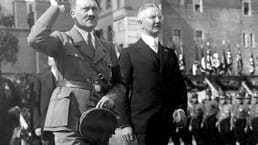
Hitler was appointed chancellor on 30 January 1933, and the Reichstag passed the Enabling Act that March, giving his government power to override constitutional rights and pass laws without parliamentary oversight [2][3]. His dispute with the Munich tax office ended soon after. The office declared him liberated from income tax in 1934 and in 1935 absolved him of arrears of 405,494 Reichsmarks [5][7][9]. Dubon described the outcome as legalised, "more or less" [5][7].
Ludwig Mirre, head of the Munich tax office, excused Hitler from paying only after formally writing to ask his permission; an assistant replied, "Herr Hitler accepts your proposal" [5][7]. Mirre was promoted a month later to head the German tax office with a 41 percent pay rise [5][7]. The BBC reported that the official who absolved Hitler received a monthly tax-free income of 2,000 Reichsmarks [1].
All of the figures are in Reichsmarks, the currency Germany used from 1924 until the end of the Nazi state in 1945, created to replace the Papiermark after the inflation of 1923 [4]. Dubon, who was 71 when he published his findings, said the episode was "all so ridiculous," adding that "in a dictatorship everything the dictator does is correct" [1][5].