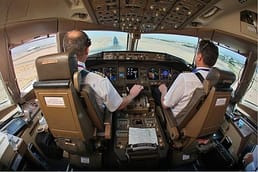
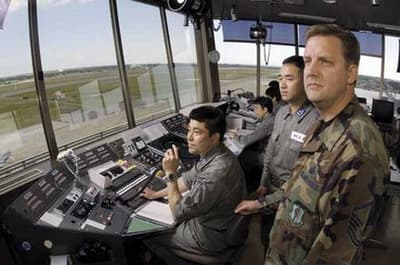
In the photograph, the controller at Zurich International Airport is not running or shouting. He is seated in a tower, surrounded by glass, looking out over a field of aircraft movement that most passengers experience only as a delay, a takeoff roll, or a voice from the cockpit.[1] The work can look almost motionless from the outside. The clock is the part you cannot see.
Air traffic controllers are often limited to about two hours “on position” before a break because prolonged duty can make performance deteriorate rapidly, even when traffic is light.
Inside controlled airspace, an air traffic controller coordinates aircraft from a tower or area control center, monitors movement, and maintains direct communication with pilots.[1] That description sounds clean, almost clerical. In practice, the controller is keeping a live map in mind, one that changes as airplanes climb, descend, turn, wait, cross sectors, and approach runways.
The profession asks for a particular kind of brain. The listed competencies include good short-term memory, situational awareness, attention to detail, communication, multitasking, quick and assertive decision-making, and the ability to perform under stress or pressure.[1] Those are not résumé ornaments. They are the tools that let one person follow several moving aircraft and still speak in short, exact instructions.
The two-hour problem
The striking part of the two-hour rule is not that busy controllers get tired. Anyone can understand how a crowded frequency and a full radar picture might wear a person down. The sharper fact is that performance can deteriorate after more than two hours on position even at low traffic levels.[1]
A quiet sky is not the same as a resting mind. The controller still has to listen, scan, remember, anticipate, and be ready to act without delay. Minutes may pass in routine movement, then one clearance, one missed readback, or one changing altitude can suddenly matter. The job asks for patience and speed in the same chair.
That is why the break is part of the safety system rather than a workplace luxury. A radio frequency, a runway, a radar display, a flight strip, and a rested controller all belong to the same chain. The equipment may keep working perfectly while the person using it loses the sharpness the system depends on.
Stress in a quiet room
Air traffic control is also unusual because its stress is often hidden behind calm voices. Controllers are expected to communicate clearly, make quick decisions, and stay assertive under pressure.[1] The public hears the result as order: a departure cleared, an arrival sequenced, an aircraft told to maintain altitude. The labor underneath is continuous attention.
Modern tools have changed the room, but they have not removed the human center of the work. Controllers still monitor aircraft movement and communicate directly with pilots.[1] Technology can help organize information. Rules can limit how long a person stays in the seat. Neither one eliminates the need for a human being to notice what matters at the right second.
The two-hour break is a small admission built into a high-consequence profession. The person in the tower is not merely sitting still. They are carrying positions, intentions, and possible conflicts until another controller takes over, the headset comes off, and the first one steps away from the frequency.