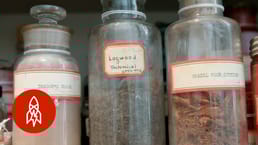
The colour purple used to cost more than gold. For three thousand years, the only way to get a true, lasting purple was to crack open tens of thousands of predatory sea snails — murex shellfish — harvest a tiny mucus gland from each one, and leave the extract to rot in the sun for days.[1] The stench was so legendary that ancient dye works were banished to the outskirts of cities. A single pound of Tyrian purple dye could cost what a labourer earned in a decade. Roman emperors made it illegal for anyone but royalty to wear the colour. Purple wasn't a fashion choice — it was a power statement, enforced by law.
Then, during Easter break in 1856, a teenager in east London blew the whole system apart by accident.
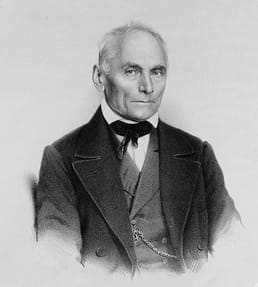
William Henry Perkin was eighteen years old, a student at the Royal College of Chemistry, and obsessed with a problem his professor August Wilhelm von Hofmann had dangled in front of the class: could anyone synthesise quinine, the only effective treatment for malaria?[2] Quinine came from the bark of cinchona trees, grown mostly on plantations in Southeast Asia, and the British Empire was burning through the stuff. Whoever cracked synthetic quinine would save thousands of lives and make a fortune.
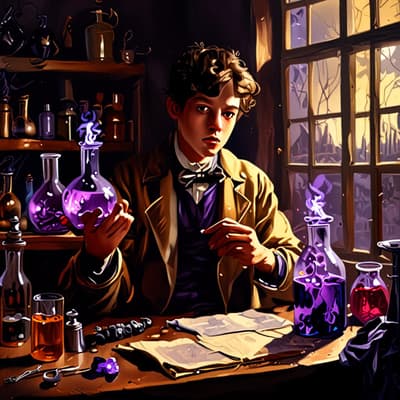
Perkin set up a crude lab on the top floor of his family's house on Cable Street and started experimenting with coal tar — the thick, foul-smelling waste product left over from gaslight production. He was trying to rearrange the atoms of aniline, a coal tar derivative, into the molecular structure of quinine. It didn't work. What he got instead was a reddish-brown sludge.[3]
Most chemists would have washed the flask and moved on. Perkin didn't. He added alcohol to the sludge and watched something extraordinary happen: the mixture dissolved into a vivid, electric purple. Not a muddy approximation. A true, saturated, glowing purple — unlike anything that had ever come out of a laboratory.
Here's where Perkin's story separates from every other accidental discovery: he was eighteen, but he thought like an entrepreneur. He dipped a strip of silk into the purple solution and found the colour held fast through washing and sunlight — a critical test that many natural dyes failed.[2] He sent samples to a Scottish dye works. The reply from Robert Pullar, the company's general manager, was essentially: send more immediately. By August 1856, Perkin had filed a patent. He was still eighteen.[3]
His professor Hofmann thought it was madness — a promising student abandoning pure science for commerce. But Perkin persuaded his father, a successful carpenter, to bankroll a factory at Greenford Green. By 1857, the world's first synthetic dye works was in operation.[2]
Then luck multiplied. Queen Victoria wore a mauve silk gown to her daughter's wedding in 1858. Empress Eugénie of France, wife of Napoleon III, declared the colour her favourite. The crinoline — those enormous hooped skirts that devoured yards of fabric — was at peak fashion.[3] Suddenly everyone wanted purple, and for the first time in human history, everyone could afford it. English satirists coined a diagnosis: "mauve measles."
Perkin called his dye "mauveine." It was cheap. It was brilliant. And it was made from coal tar — an industrial waste product that cities were practically giving away. The economics were absurd: a colour that had bankrupted Roman senators was now accessible to a dressmaker in Manchester.
But the real legacy isn't the colour. Perkin's accidental flask of purple launched the entire synthetic organic chemicals industry.[2] Other aniline dyes followed within years. Factories sprang up across Europe. Germany would eventually dominate the field, building the chemical industry that gave the world pharmaceuticals, explosives, and plastics. The Science History Institute puts it plainly: from Perkin's "modest beginning grew the highly innovative chemical industry of synthetic dyestuffs and its near relative, the pharmaceutical industry."[2]
Perkin sold his business at thirty-six, already wealthy, and spent the rest of his life in pure research — synthesising coumarin (the first artificial perfume ingredient) and pioneering work on molecular structure.[4] He was knighted in 1906, fifty years after his Easter break discovery. He died the following year, leaving an estate worth roughly £8.5 million in today's money.[3]
All because a teenager tried to cure malaria and made a mess instead — and then had the wit to ask what is this? rather than how do I clean this up?