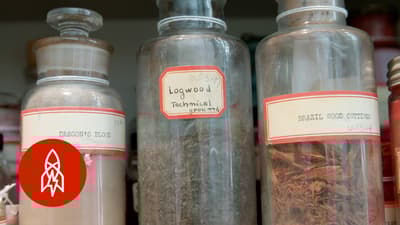
Imagine walking into a room and being confronted by a shade of yellow so vibrant, so impossible, that it feels less like a color and more like a physical presence. It isn't the sunny yellow of a lemon or the pale ochre of a desert. It is something deeper, something stranger. To create it, you wouldn't look to a chemist or a flower; you would look to the diet of a cow.
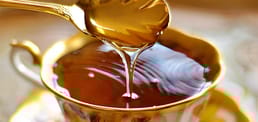
In a specific corner of India, a peculiar process once took place. Cows were fed exclusively on mango leaves, a diet that fundamentally altered their biology. When their urine was collected and dried, it left behind a brilliant, luminous pigment known as Indian Yellow. It was a color born of biology, a hue that captured light in a way nothing else could. But as the world moved toward synthetic dyes and modern industrial standards, this beautiful, slightly grotesque tradition vanished. The cows were gone, and with them, the color.
This is just one of the many ghosts haunting the halls of the Harvard Art Museums in Cambridge, Massachusetts. It is a place where the history of human perception is stored in jars, powders, and dried resins—and it is a place that requires a very specific kind of guardian.
The Alchemy of the Impossible
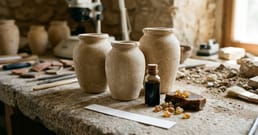
Most people think of art supplies as simple things: tubes of oil paint, sticks of charcoal, jars of pigment. But if you look closer at the Materials Collection at Harvard, you realize you aren't looking at supplies. You are looking at the raw, often dangerous, and frequently bizarre ingredients of human expression[1].
The collection is a graveyard of the extraordinary. There is "Dragon’s Blood," a deep red resin that sounds more like something from a fantasy novel than a laboratory. There is "Mummy Brown," a pigment that—quite literally—was made from ground-up ancient Egyptian mummies, a macabre practice that once sat casually on the palettes of Renaissance masters. There are pigments that are beautiful to look at but lethal to touch, and others so rare they are effectively extinct.
To the uninitiated, it looks like a collection of dust. But to the conservators and researchers who work here, these substances are the DNA of art history. If you want to understand why a 17th-century masterpiece glows the way it does, or why a 19th-century painting is beginning to crack and darken, you have to understand the chemistry of the earth and the animals that provided it.
The Guardian of the Pigments
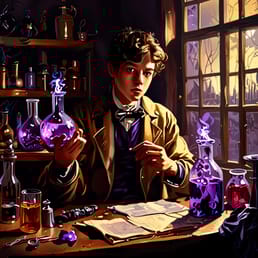
Managing this collection isn't just about dusting jars; it is about managing a volatile library of chemical reactions. Some of these pigments are light-sensitive, meaning they can "die" if exposed to too much sun. Others are chemically unstable, slowly changing color or even eating through the canvas they sit upon.
The man tasked with overseeing this collection acts as a bridge between the ancient world and the modern laboratory. He is a steward of the strange. He must know not only the chemical formula of a pigment but its origin story: where the minerals were mined, how the insects were harvested, and why a certain shade of blue was once more valuable than gold.
In an age of digital perfection, where every color can be replicated with a hex code on a screen, the work of protecting these physical substances feels increasingly vital. These pigments are the tactile remains of human ingenuity. They represent a time when color was not something you simply clicked on, but something you hunted, harvested, and carefully distilled from the world around you.
When we look at a masterpiece, we aren't just seeing an image; we are seeing the result of a thousand tiny, often bizarre, biological and geological miracles. And thanks to the meticulous work in Cambridge, those miracles—no matter how strange—are being preserved for the next generation to wonder at.