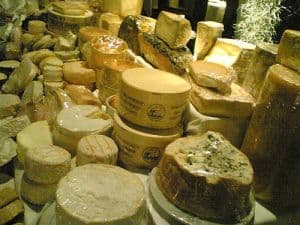
Imagine a high-stakes heist. You expect the cinematic tension of Ocean’s Eleven—lasers, thermal drills, and a vault door swinging open to reveal stacks of gold bullion or mountains of uncut diamonds. But in the world of global retail, the most significant heist isn't happening in a Las Vegas casino. It is happening in the dairy aisle of a local supermarket, and it is much, much quieter.
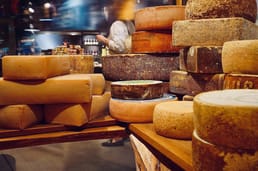
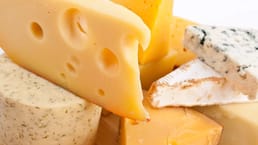
The thief doesn't require a thermal lance; they only need a coat sleeve. They aren't grabbing bars of gold; they are grabbing wedges of Brie, wheels of Manchego, and blocks of aged Cheddar. It sounds like a grocery-store triviality, yet the scale is staggering. According to data from the UK’s Center for Retail Research, cheese has officially claimed the title of the most stolen food in the world[1].
To understand the gravity of this, one must look at the math. This isn't merely a matter of a few stray crackers disappearing from a shelf. Approximately 4 percent of the entire global cheese supply vanishes every single year[1]. This represents a massive, systemic leak in the global food chain—a silent, yellow-tinted drain on the world's economy that retailers struggle to plug.
The Anatomy of "Shrinkage"
In the retail industry, this phenomenon has a clinical name: shrinkage. Shrinkage is the loss of inventory occurring between the point of manufacture and the point of sale. While it can be caused by administrative errors, vendor fraud, or physical damage, the most persistent and difficult-to-track driver is theft.
When we talk about cheese, we are discussing a very specific type of theft. Unlike a stolen television or a designer handbag, cheese is a perishable commodity. It has a shelf life, a distinct scent, and is, by its very nature, difficult to move in large quantities without attracting attention. And yet, it remains the primary target. Why?
The answer lies in a perfect storm of density, value, and volatility. Cheese is a "high-value, low-bulk" item. A single wheel of premium Gorgonzola or a large block of high-end Parmesan occupies minimal space while carrying a significant price tag. For a thief, it is the ultimate prize: easy to conceal, easy to transport, and—crucially—it holds its value remarkably well in the informal economy.
The Economic Engine of the Heist
The patterns of theft are rarely random; they are deeply tied to the fluctuating pulse of the global economy. As the cost of living rises and inflation squeezes household budgets, the incentive for theft shifts. When the price of a luxury cheese climbs, so does the temptation to bypass the register.
Researchers have noted that cheese theft often spikes alongside rising food prices[1]. It becomes a calculated move. For some, it is a matter of survival—a way to secure high-calorie, nutrient-dense food during times of scarcity. For others, it is a micro-business. Stolen cheese can be easily resold in secondary markets, often to consumers also looking to dodge rising grocery costs. This creates a shadow economy of dairy, where profit margins are built directly upon the losses of major retailers.
This creates a vicious cycle. As retailers lose 4 percent of their stock to theft, they do not simply absorb the cost; they bake that loss into the price of the remaining 96 percent. A thief steals a block, the price of cheese rises for everyone else, and that very price hike creates the incentive for the next theft.
The Hierarchy of Stolen Goods
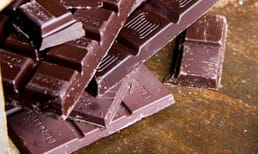
While cheese holds the crown, it is not alone in the underworld of retail loss. The Center for Retail Research identifies a consistent hierarchy of stolen goods—a "most wanted" list for the modern shoplifter. Following closely behind cheese are other high-value, high-demand items: fresh meat, chocolate, alcohol, seafood, and baby formula[1].
A common thread connects these items: they are all "essential luxuries" or high-protein staples. They are goods that people consume frequently, items that are easy to use immediately, and products that carry a high perceived value per gram. While chocolate and alcohol are classic "impulse" thefts, meat and baby formula represent a more desperate, necessity-driven category of shrinkage.
However, cheese remains the outlier. It sits at the intersection of every category: it is a staple, a luxury, a high-value asset, and incredibly easy to slip into a pocket. It is the perfect crime, executed millions of times a day, in aisles that most people walk through without a second thought.
Sources
- Center for Retail Research, Global Food Theft Statistics.