In 2007, at an open-air hospital in northern Ghana, Donald Hopkins watched a health worker ease a Guinea worm out of the leg of Rafia Fusseini, a four-year-old in a blue-and-red print blouse [1]. The girl had swallowed the parasite a year earlier in contaminated drinking water, and the adult female was now working its way out through an ulcer on her leg [1][3]. Health workers wrap an emerging worm around a small stick or gauze and turn it a few centimeters a day; too much tension breaks the worm inside the wound and causes severe pain and swelling [3].
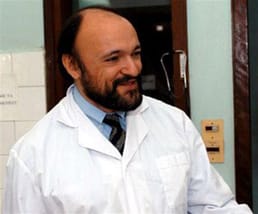
Hopkins was born on September 25, 1941, and studied at Morehouse College, the University of Chicago and the Harvard School of Public Health [2]. He directed the Smallpox Eradication/Measles Control Program in Sierra Leone and served as deputy director of the Centers for Disease Control and Prevention from 1984 to 1987, acting as its director in 1985 [2][6]. His book Princes and Peasants: Smallpox in History was nominated for a Pulitzer Prize in 1983 and reissued in 2002 as The Greatest Killer [2][6].
The Carter Center, founded in 1982 by Jimmy and Rosalynn Carter in partnership with Emory University, brought Hopkins aboard in 1987 as senior consultant for health programs [5][6]. He built the Guinea worm campaign from that post, work that earned him a MacArthur Fellowship in 1995 [2][6]. He now serves as the center's special advisor for Guinea worm eradication [6].
Dracunculiasis infected an estimated 3.5 million people in 1986 across 20 endemic countries in Asia and Africa [4]. No vaccine and no medication exist for it; prevention rests on filtering drinking water to remove the copepods that carry the larvae and on persuading people not to soak painful limbs in drinking sources [3]. A female worm can grow up to three feet long inside a person and disables its host for the three to ten weeks it takes to emerge [3][7].
Reported cases fell below 100,000 in 1997, below 10,000 in 2007, below 1,000 in 2012 and below 100 in 2015 [3]. Twenty-seven cases remained worldwide in 2020 [8], 13 in 2022 [9], and 10 in 2025 [3][7]. Sixteen countries have eliminated transmission since 1986 [3].
Chad, Ethiopia and South Sudan are the only countries where the parasite remains endemic, and Angola, Mali and Sudan await certification as free of transmission [3]. Cameroon, certified free of internal transmission in 2007, has recorded three cases since 2019 along its border with Chad [3]. In the mid-2010s, researchers confirmed that dogs, cats and baboons can also carry D. medinensis, which forced the campaign to widen its surveillance beyond human patients [3][4].
Jimmy Carter said in 2015, while being treated for melanoma that had spread to his brain, that his last wish was to outlive the last Guinea worm; he died in 2024 without seeing it [4]. The World Health Organization set 2027 as its eradication target in 2020, and its goal as of 2024 is 2030, after earlier targets of 1991, 2009, 2015 and 2020 passed unmet [3][4]. If the campaign finishes, Guinea worm will become the second human disease eradicated, after smallpox in 1977 [3].
Carter Center teams hand out filter straws in remote communities and conflict zones so people can drink without swallowing larvae [7]. Hopkins, who lives in Chicago, has said the measure that matters is how many fewer people suffer from the disease than did four decades ago [9]. The Harvard T.H. Chan School of Public Health, where he earned a master of public health in 1970, screened a documentary about the campaign, The President and the Dragon, in March 2026 [7][8].