
Most hostage standoffs follow a grimly familiar script. Police surround a building. Negotiators settle in. Demands come through the phone line. Food, money, transport, maybe safe passage. The details vary, but the genre is usually bleak and predictable.
Then there was Marshall Ledbetter.
In the early morning of June 14, 1991, Ledbetter, a Florida State University student, broke into the Florida State Capitol in Tallahassee and barricaded himself inside the office of Wayne Todd, the Sergeant at Arms of the Florida Senate.[1] Police were unsure whether he was armed or whether he might be holding a hostage. So what began as a break-in quickly became a full police standoff.
And then the demands started coming in.
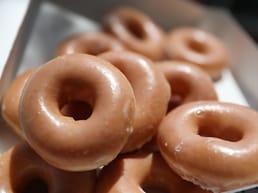
They included pizza. Beer. Cigarettes. Chinese food. Marijuana. Six hundred and sixty-six doughnuts for the police. And phone calls with Ice Cube, Timothy Leary, and Lemmy from Motörhead.[1]
No one gave him any of it.
And somehow, the whole thing still ended peacefully.[1]
The Capitol Break-In That Refused to Behave Like One
There is something almost novelistic about the scene. A state capitol building before dawn. A young man inside a government office. Police outside, not sure what exactly they are dealing with. And instead of the cold, transactional demands people expect in a siege, a list that sounds less like criminal leverage and more like someone trying to force an absurdist variety show into reality.
That contrast is what makes the story stick. On one level, this was a real and potentially dangerous police incident. Law enforcement did not know whether Ledbetter had a weapon or another person inside with him.[1] On another, it immediately drifted into the bizarre, the comic, and the deeply specific.
Six hundred and sixty-six doughnuts for the cops is not the sort of detail a story invents well. It is too weird in exactly the right way. Which is often how reality gives itself away.
Marshall Ledbetter Was Already the Kind of Person This Story Happens To
Ledbetter was not a standard political activist, and he was not remembered as an ordinary public eccentric either. He was a photographer, a psychedelics enthusiast, and an unconventional protester, a figure who moved through Florida counterculture with the kind of energy that tends to produce stories people repeat for years afterward.[1]
That matters, because the Capitol standoff did not emerge from nowhere. It fits a certain type of American character, part prankster, part provocateur, part genuine dissenter, the kind of person who does not simply oppose authority but insists on doing so in a style authority has no good way to process.
Police know how to respond to danger. Bureaucracies know how to respond to demands. What they are less prepared for is theatrical chaos with its own internal sense of humour.
The Demand List Was Its Own Performance
Look at the list again and its shape starts to emerge. Some demands belong to the standard category of siege comforts, food, drink, cigarettes. Others veer into countercultural wish fulfilment, marijuana, Timothy Leary, Lemmy. Ice Cube adds another layer, more pop-cultural than philosophical, more contemporary and mischievous. Then there are the 666 doughnuts for the police, which feel less like negotiation than like stage direction.[1]
What makes the list memorable is not just that the demands were odd. It is that they seem curated. They create a mood. They tell you something about the man inside before you ever meet him. Not simply unstable, not simply rebellious, but committed to turning a confrontation with the state into a weirdly comic piece of anti-establishment theatre.
That does not make the situation harmless. But it does make it strangely legible. Ledbetter was not asking to escape in a helicopter. He was, in his own fashion, trying to force the machinery of official power to participate in his worldview.
Why None of the Demands Had to Be Met
One of the sharpest details in the story is that none of the demands were granted.[1] No pizza. No beer. No celebrity phone calls. No satanically themed pastry delivery for law enforcement. And yet the standoff still ended peacefully.
That is the detail that keeps this from becoming just a colourful anecdote. It reminds you that the demand list, outrageous as it was, may never have been the real point. In many standoffs, demands are instruments. Here they also seem to have been expression, performance, delay, identity, maybe even a way of controlling the emotional temperature of the situation by refusing to let it become conventionally grim.
In other words, the list may have been less about getting what he wanted than about defining the event itself.
The State Versus the Absurd
Government buildings are designed to project seriousness. That is one of their main functions. They are architecture as authority. Floors, corridors, offices, hearing rooms, all of it says the same thing: order lives here.
So there is something especially jarring about a state capitol becoming the setting for a barricade incident centred on requests for junk food, intoxicants, and rock-star phone calls. The symbolism flips. The building still represents state power. But inside it, for a few hours, the dominant energy is not procedure. It is absurdity.
That may be part of why the episode endured. It was not just a standoff. It was a standoff that briefly made the seat of government look vulnerable to nonsense, and there are few things bureaucracy hates more than being forced to take nonsense seriously.
Why the Story Survived
Plenty of bizarre local news stories vanish. This one did not. It survived because it strikes a rare balance: high stakes, comic details, a real institution, recognisable cultural names, and, crucially, a peaceful ending.[1] If the standoff had ended in blood, the jokes would curdle. If nothing strange had happened, no one would remember it. Instead, it landed in that narrow zone where danger and absurdity coexist long enough to become folklore.
It also survived because it captures a specific early-1990s American texture. Timothy Leary. Ice Cube. Lemmy. Weed. Doughnuts with a devilish number attached. It feels like a collage assembled from late-20th-century rebellion, where politics, drugs, music, and prankster spectacle all blur together.
And in the middle of that collage stands a young man in a state office, forcing police and politicians to deal, however briefly, with a reality that ran on completely different logic from theirs.
A Peaceful Ending Is the Strangest Part
The strangest thing about the whole story may not be the demands. It may be the ending. For all its volatility, for all the uncertainty about weapons and hostages, the standoff concluded peacefully.[1]
That matters. It changes the emotional key of the story. It lets the absurdity remain absurdity rather than becoming only a prelude to tragedy. It means the event can be remembered not as a catastrophe with weird footnotes, but as a bizarre collision between one man’s eccentric protest impulse and the full symbolic weight of state authority.
And maybe that is why the story still gets told. Not because Marshall Ledbetter won anything that morning. He did not. Not because the state capitol gave in. It did not. But because for one strange stretch of June 1991, the Florida State Capitol was forced to revolve around the demands of a barricaded student who wanted pizza, pot, rock stars, and 666 doughnuts for the cops, and the whole episode somehow ended without anyone having to die.