Honda wanted the Super Cub to be a motorcycle a soba delivery worker could ride while carrying noodles in one hand. That requirement left its engineers with a problem at the other end of the handlebar: changing gears normally meant operating a clutch lever with the left hand. The new bike would have to let that hand stay occupied.[1][2]
Soichiro Honda and his business partner Takeo Fujisawa had returned from a 1956 trip to Europe with ideas for a small motorcycle suited to everyday life in Japan. They wanted women to feel comfortable riding it, and they wanted enough power for rough roads. Designer Jozaburo Kimura later recalled a demand for at least four horsepower, when Honda's earlier 50cc Cub F bicycle engine had produced one. Removing a lever was part of a fairly demanding assignment.[2]
Getting rid of the clutch lever
As transmission designer Akira Akima remembered it, developing a centrifugal clutch was manageable; making it work properly with starting and gear changes was the difficult part. The clutch had to disengage when the motorcycle stopped, yet engage for starting. Soichiro kept dropping into the design room each morning to ask how the work was going.[2]
One day, Akima suggested using a screw to turn the kick starter's rotation into movement along an axis, then worried aloud that parts might rotate together. He was still considering whether the clutch's resistance would solve that problem when Soichiro came back with the same thought. In Akima's recollection, they laughed at having arrived at the answer together. Kimura credited him with developing eight designs along the way.[2]
With the finished arrangement, the rider could change gears using the left foot while controlling the throttle with the right hand. A low frame helped people step aboard, and a large plastic leg shield reduced splashes and wind around their legs. The first Super Cub C100 entered mass production in August 1958 with a four-stroke engine and no clutch lever for the rider to squeeze.[2][3]
From noodle deliveries to American holidays
When Honda began exporting the Super Cub to the United States in 1959, buyers found another use for a motorcycle designed around ordinary errands. Alongside its practical work in Japan, the little bike became recreational transport in America. Customers carried it in pickups and RVs to ride at their destination, and Honda sold through fishing tackle and sporting goods shops as well as motorcycle dealers.[1][3]
Honda reported 100 million Super Cubs produced worldwide by October 2017, a figure covering the series rather than an unchanged run of the original C100. Its definition included motorcycles with small four-stroke single-cylinder engines, low-floor backbone frames and other shared features. Production had spread beyond Japan, beginning with assembly in Taiwan in 1961 using Japanese component sets.[3]
Back in Japan, a newspaper-delivery version of the C100 had appeared at a motor show that same year. American customers got the CA100T Trail 50 for off-road riding. The bike that had been designed with a noodle worker's hands in mind was acquiring different jobs, including a ride out into the dirt.[1]
Sources
- The World’s Best-Selling Motorcycle: The Scoot of the Super Cub
- The Birth of the Super Cub: Designer Recollections
- Honda’s October 2017 Super Cub Production Announcement
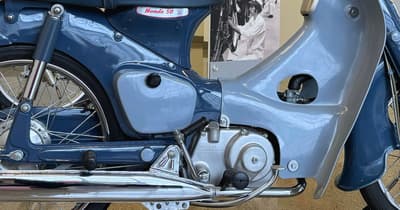
Hero image: Detail of a Honda C100 Super Cub at the Honda Heritage Museum in Marysville, Ohio. Photograph by Nheyob, Wikimedia Commons, CC0. Cropped and resized.