For most of human history, yellow fever looked like the kind of disease that turns cities into superstition. It arrived fast. It killed brutally. It seemed to spread with a terrifying logic no one could fully see. People blamed filth, clothing, bedding, bad air, direct contact, ships, strangers. They burned belongings. They quarantined the sick. And still the fever kept moving.[1]
The strange part is that one of the most important breakthroughs in stopping it did not begin with a cure. It began with a question so simple it almost sounded insulting: what if people were getting yellow fever not from each other, but from an insect?
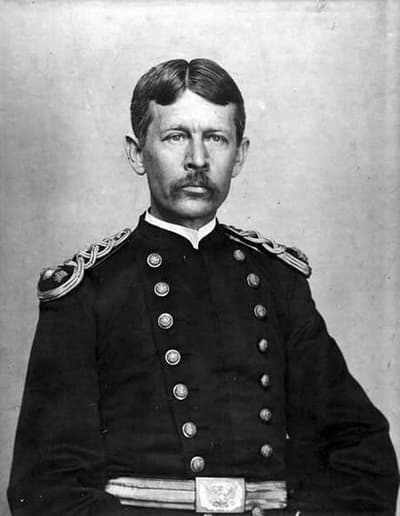
That question would eventually define the work of Major Walter Reed, the U.S. Army physician for whom Walter Reed Medical Center was later named. In 1900 and 1901, Reed led the team that confirmed Cuban physician Carlos Finlay’s controversial theory that yellow fever was transmitted by a particular mosquito rather than by direct contact with infected patients and their belongings.[1] It was the kind of discovery that changes medicine twice, first in theory and then in infrastructure. It helped propel the new fields of epidemiology and biomedicine, and it made possible one of the most ambitious engineering projects on Earth: the completion of the Panama Canal.[1]
The Disease That Defied Common Sense
Yellow fever was not just deadly. It was confusing. Victims developed fever, pain, vomiting, and in severe cases jaundice and bleeding. Epidemics could tear through military camps and port cities, then disappear, then return.[1] That pattern invited bad explanations, and bad explanations are dangerous precisely because they often feel intuitive. If the sick are surrounded by contaminated clothes and bedding, surely the danger must be in the fabric. If outbreaks flourish in hot, dirty places, surely the poison must be in the air.
Carlos Finlay had proposed something radically different in the 1880s: that Aedes aegypti mosquitoes carried the disease from person to person.[1] It was an elegant theory, but elegance is not proof. For years, much of the medical establishment remained unconvinced.
Walter Reed entered this story as a career Army doctor, not as a lone genius descending from nowhere. Born in Virginia in 1851, he became one of the youngest graduates of the University of Virginia’s medical school, later earned another medical degree at Bellevue Hospital Medical College, and spent years serving as an Army surgeon on the American frontier and in military medicine.[1] He was methodical, disciplined, and by the time yellow fever demanded answers, well positioned to pursue them.
The Commission in Cuba
After the Spanish-American War, yellow fever became an urgent military problem in Cuba. American troops were getting sick. The United States needed answers quickly, and Army Surgeon General George Miller Sternberg appointed the Yellow Fever Commission. Reed led it, working with James Carroll, Aristides Agramonte, and Jesse William Lazear.[1]
That team deserves emphasis, because Reed’s story is often told as if one man solved the mystery alone. He did not. He led a group of researchers working under dangerous conditions, building on Finlay’s earlier insight and turning theory into evidence.[1] Science, especially under pressure, is often less like a lightning strike and more like a relay race. One person proposes. Another doubts. Another tests. Another risks enough to make certainty possible.
The risks here were not abstract. Members of the commission and volunteer subjects exposed themselves to yellow fever in controlled experiments. Jesse Lazear himself contracted the disease and died in 1900, likely after being bitten by an infected mosquito.[1] James Carroll also contracted yellow fever and survived a severe case.[1] The work was scientifically important and ethically unsettling, a reminder that early medical breakthroughs were often pursued in ways that make modern readers wince.
The Experiment That Broke the Old Theory
The crucial insight did not come from one dramatic flourish, but from comparative testing. Reed’s team designed experiments to separate the mosquito theory from the old “fomite” theory, the belief that yellow fever spread through contaminated clothing, bedding, and other objects used by the sick.[1]
Volunteers slept in rooms filled with soiled linens and materials from yellow fever patients and did not get sick. Other volunteers, exposed to mosquitoes that had fed on yellow fever patients, did.[1] That contrast was devastating in the best scientific sense. It did not merely suggest the old theory was wrong. It made it much harder to keep pretending it might still be right.
In 1901, the commission confirmed that yellow fever was transmitted by mosquitoes, specifically validating Finlay’s central idea.[1] Reed’s role was not just administrative. He helped shape, interpret, and publicize the work in a way that turned an embattled hypothesis into accepted medical reality.[1]
Why This Changed Everything
Once you know a disease moves through mosquitoes, the problem changes shape. You are no longer fighting mysterious contagion in blankets and breath. You are fighting breeding grounds, standing water, window screens, exposure, timing. In other words, you can build policy around the answer.
That is exactly what happened. Anti-mosquito sanitation campaigns became possible. Yellow fever control improved dramatically. And one of the most immediate consequences appeared in Panama, where earlier canal efforts had been devastated by mosquito-borne disease, especially yellow fever and malaria. With mosquito control measures in place, the United States was able to resume and complete the Panama Canal between 1904 and 1914.[1]
That is the part people often miss when they hear Reed’s name. This was not only a medical milestone. It was also a civilizational one. A finding made in Cuban experiments altered global trade routes, military logistics, and the physical map of modern power.
The Name That Endured
Walter Reed did not live long enough to enjoy old age or a long victory lap. He died in 1902, just a year after the commission’s yellow fever findings were confirmed, of peritonitis after surgery for appendicitis.[1] He was only 51.[1]
And yet his name endured. Hospitals, institutions, and eventually Walter Reed Medical Center carried it forward, not because he personally eradicated yellow fever, but because he stood at the center of one of medicine’s most consequential confirmations.[1] He represented a shift from panic to mechanism, from folklore to transmission science.
That may be the real reason his story still matters. Reed’s team did not make yellow fever less horrifying. They made it legible. They showed that even a disease wrapped in fear and bad assumptions could be broken down into vector, host, exposure, evidence. Once you can do that, you are no longer merely enduring an epidemic. You are starting to outthink it.
The Deeper Lesson
There is a temptation to tell this as a clean story of heroic discovery. But the truth is more interesting than that. Walter Reed’s achievement depended on earlier insight from Carlos Finlay, on the work of fellow commission members, on risky human experimentation, and on the Army’s urgent need to solve a practical problem.[1] It was not the triumph of a lone man over ignorance. It was the triumph of disciplined evidence over a theory that had felt plausible for too long.
That is a more useful kind of heroism anyway. Reed helped prove that the most powerful medical breakthroughs are often not the ones that invent something new from nothing, but the ones that identify the hidden system underneath apparent chaos. Yellow fever looked like random terror. Reed’s commission showed it had a route.
And once you know the route, you can start closing the road.