Victorian London did something most cities do only in panic. It tried to bury its crisis.
The Thames had become a moving reservoir of human waste. Cesspits were being closed, household drains were being routed into sewers, and those sewers emptied straight into the river. The city drank from that same system. Cholera tore through London in waves. In 1849, more than 14,000 Londoners died. In 1853, more than 10,000 more followed.[1]
Then came the summer of 1858, when the smell itself became a political event.
The heat intensified the stench of the Thames so badly that Parliament could barely function. History remembers it as the Great Stink, a phrase that sounds almost comic until you remember what it meant: a capital so overwhelmed by its own waste that the river running through it had become both humiliation and threat.[1]
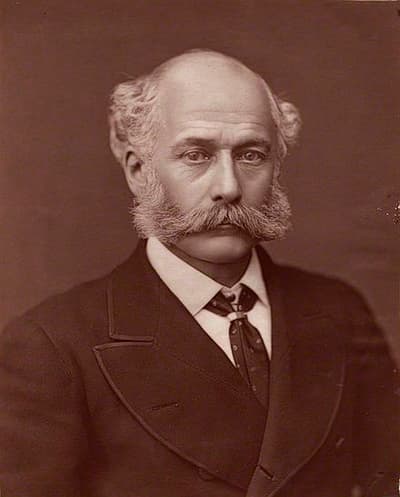
That was Joseph Bazalgette’s moment. Not because anyone had suddenly learned to admire sewers. Quite the opposite. London had finally become desperate enough to build the thing it had avoided for decades.
The Engineer Who Had to Think Bigger Than London
Bazalgette was a civil engineer, not a physician, and that matters. Doctors were still arguing over what caused cholera. Many believed in miasma, the theory that foul air spread disease. John Snow had already pointed to contaminated water, and history would prove him right, but in the 1850s his view was still not the dominant one.[1]
So Bazalgette was asked to solve a problem under a partly mistaken theory. London believed it needed to get rid of the smell. What it actually needed was to get sewage out of the water supply.
The remarkable thing is that the engineering solution worked either way.
As chief engineer of the Metropolitan Board of Works, Bazalgette proposed something enormous: 82 miles of enclosed underground brick main sewers, plus about 1,100 miles of street sewers feeding into them.[1] The idea was not merely to carry waste away from houses. It was to intercept it before it reached central London’s stretch of the Thames, then drive it farther downstream through a coordinated system of tunnels, embankments, and pumping stations.[1]
This was not glamorous work. It was systems work, city-scale plumbing on an imperial scale. And it required the kind of imagination most people reserve for cathedrals, not drains.
The Genius Was Not Just Building It, But Overbuilding It
Here is the part that makes Bazalgette feel modern. He did not design for the London he had. He designed for the London that was coming.
The system he built was vast, expensive, and, by Victorian standards, unapologetically ambitious. It included major pumping stations at Deptford, Crossness, Abbey Mills, and Chelsea Embankment.[1] It relied on huge underground brick tunnels and extensive use of Portland cement, which helped keep the works in remarkably good condition more than a century later.[1]
And with only minor modifications, Bazalgette’s achievement still underpins London’s sewerage system today.[1] That is the real story hiding inside the anecdote about oversized pipes. Great infrastructure often looks excessive when it is new. Then population grows, demand rises, and what once seemed extravagant starts to look like foresight.
Most engineers are punished for underestimating the future. Bazalgette was one of the rare ones who seems to have feared that mistake more than present-day overspending.
The Strange Triumph of a Wrong Theory
There is a sharp irony at the heart of all this. The project was justified in large part by a bad medical theory. London wanted enclosed sewers because it thought bad smells caused cholera. That part was wrong.[1]
But once the new sewer network separated human waste from the city’s water, cholera largely disappeared from the areas it served. Typhus and typhoid also declined.[1] London had tried to solve a problem of air and accidentally solved a problem of water.
That is one reason Bazalgette’s story endures. It is not just a tale of engineering brilliance. It is a tale of practical intelligence outrunning theory. He did not need to win the scientific argument to save the city. He needed to move the sewage.
And he did.
A City Hidden Under a City
The network began construction in 1859. It was opened in 1865 by the Prince of Wales, though the full project took another decade to complete.[1] By then, London had acquired something most people would never see but millions would depend on: a second city beneath the first.
That may be Bazalgette’s deepest legacy. The greatest urban achievements are often invisible. People admire bridges because they can point to them. They admire skylines because they can photograph them. Sewers get no such romance. If they are doing their job, nobody wants to think about them at all.
And yet modern cities are built on that kind of invisibility. On clean water. On drainage. On systems that remove danger before it becomes visible. Bazalgette’s work did not just help clean the Thames. It changed what it meant for a city to be habitable.[1]
Why This Story Still Feels Contemporary
Bazalgette’s sewers remain a rebuke to short-term thinking. They remind us that infrastructure is one of the few places where pessimism about the future can be an act of optimism. Assume growth. Assume strain. Assume the unforeseen. Build accordingly.
London did this once, under pressure, after disease and stench made delay impossible. The result was a Victorian public works project so durable that it remained foundational long after the people who paid for it were gone.[1]
That is why Joseph Bazalgette still matters. He was not simply the man who built London’s sewers. He was the man who understood that when a city finally decides to solve the unglamorous problem underneath everything else, it had better solve it for longer than one generation.