Before Windscale caught fire, the filters looked ridiculous.
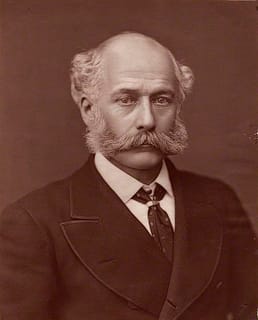
They sat on top of the reactor chimneys like an admission of fear, an expensive concession to a disaster that many of the men in charge preferred not to imagine. John Cockcroft insisted on them anyway.[1] The filters added cost. They slowed the project. And because they seemed unnecessary, they picked up a nickname with the sneer built in: Cockcroft’s Folly.[1]
Then, in October 1957, Pile No. 1 caught fire.
And the folly stopped looking foolish.
The Reactor Britain Built In A Hurry
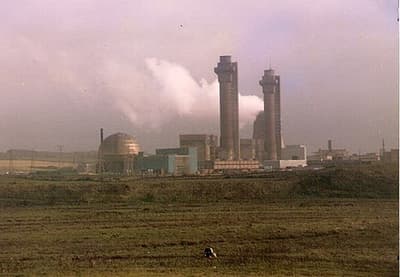
The Windscale piles were built on the northwest coast of England as part of Britain’s postwar atomic bomb programme.[1] These were graphite-moderated reactors, known at the time as “piles,” and their purpose was not abstract scientific prestige. They were built to produce plutonium for weapons in a Britain that had decided nuclear status mattered urgently, strategically, almost existentially.[1]
Pile No. 1 began operating in October 1950. Pile No. 2 followed in June 1951.[1] They were products of speed and pressure, the kind of national-security machinery that gets built quickly because the people building it believe delay itself is a danger.
That mindset has a habit of treating caution as weakness.
The Precaution Everyone Mocked
Cockcroft, one of Britain’s most distinguished physicists, pushed for high-performance filters to be fitted to the tops of the Windscale chimney stacks.[1] This was not the glamorous side of atomic ambition. Filters do not symbolize power. They symbolize the possibility that power might go wrong.
And that was exactly why some people hated them.
The filters were mocked as needless overengineering, a costly concession to an imagined catastrophe.[1] The joke implied that Cockcroft was worrying about the impossible. Britain was building the future. Why burden it with a safeguard for a nightmare that would never arrive?
Because sometimes the least fashionable person in the room is the only one thinking past the ribbon cutting.
When The Core Turned Into A Fire
On 10 October 1957, that nightmare arrived.[1] During an attempt to release stored energy in the reactor’s graphite, operators triggered conditions that led to overheating inside Windscale Pile No. 1.[1] Fuel cartridges ruptured. Uranium caught fire. And now Britain had the kind of nuclear accident it had never really wanted to picture in public: a burning reactor core.[1]
The fire burned for three days.[1] Radioactive material was released into the environment and spread across the UK and into Europe.[1] Among the most worrying isotopes was iodine-131, because of what it could do once it entered the food chain.[1]
This was, and remains, the worst nuclear accident in British history. On the International Nuclear Event Scale, it was rated Level 5 out of 7.[1]
The Moment Cockcroft Was Proven Right
The crucial detail is not simply that the fire happened. It is what stood between that fire and a much worse release.
Those chimney filters, the ones people had derided as Cockcroft’s Folly, trapped a substantial share of the radioactive contamination that would otherwise have gone straight into the atmosphere.[1] In the aftermath, they were widely credited with dramatically reducing the scale of the disaster.[1]
This is the part that lingers. The mocked precaution did not prevent the accident. It did something more interesting, and in some ways more important. It acknowledged in advance that human systems fail, machinery fails, judgment fails, and when they do, whatever looked excessive the day before may turn out to be the only reason the damage stops where it does.
It is one thing to design for success. It is another to design for failure.
The Fallout That Still Escaped
Even with the filters, the Windscale fire was severe. Radioactive fallout spread well beyond the site.[1] Milk from surrounding farms had to be destroyed because of iodine contamination, and the controls imposed in response became one of the clearest public signs that this was not a contained industrial mishap but a regional environmental emergency.[1]
This matters because it keeps the story honest. The filters did not make the event harmless. They did not erase the release. They did not turn a nuclear fire into a footnote. What they did was narrow the catastrophe.
And narrowing a catastrophe is sometimes the difference between a disaster and something even history struggles to name.
The Real Lesson Of Cockcroft’s Folly
The arc of this story sounds almost too neat: cautious scientist mocked, reactor burns, caution vindicated. But that neatness is exactly what makes it powerful. The culture around high-risk systems so often treats visible precautions as signs of timidity, wasted money, or lack of confidence. Cockcroft understood the opposite. The people most serious about dangerous technologies should be the ones most willing to look silly while preparing for unlikely failures.
That is why the filters matter beyond nuclear history. They are a case study in a recurring human error: we ridicule safeguards most aggressively when nothing has happened yet. Once something does, those same safeguards suddenly look like the only adults in the room.
Windscale became a warning about reactor design, operational pressure, secrecy, and the cost of pushing complex systems too hard.[1] But it also became a tribute to one unfashionable decision made early enough to matter.
John Cockcroft did not stop the fire. He did something quieter. He made sure Britain faced it with at least one layer of humility bolted into the stack.