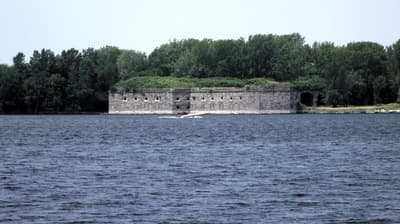
, , , , The United States went to war in 1812 for various reasons, including Britain’s interference with its trade and the impressment of its seamen, Americans’ aspirations to conquer Canada, and end British influence in North America. Did you know what happened during the war, called Fort Blunder? To defend against Canadian invasions, the United States began constructing a fort near the New York-Quebec border in 1818. After two years of construction, they discovered the fort was on the Canadian side. They gave up and renamed it Fort Blunder. Work on a modern, heavy fortification at the northern end of Lake Champlain began in 1818. During the American Revolution and the War of 1812, the British launched massive invasions of the United States via the lake. As a result, some of the most intense fighting in the region occurred during both wars. Repeatedly mighty armies and massive naval flotillas had traversed the narrow reaches of the river between what is now known as New York and Vermont. The small islands to the north, Hospital Island, Ash Island, and Isle aux Noix, had been the scene of frantic military activity and unspeakable suffering as these powerful forces drove north and south along the river. President James Madison ordered the fort to be built to prevent this from happening again. The state of New York assisted by transferring a small spit of land known as Island Point to the federal government. In addition, the state gave up 400 acres for a military reservation. Later , ... (some text) Actually: "Later, Chief Engineer of the United States, Joseph Totten, The octagonal, 30-foot-tall tower was built under the supervision of the Army. It would have 125 cannons and open fire on British ships passing by."
We need to translate that.
Continue:
Surveyors discovered a problem two years and $275,000 later: the fort was being built on the wrong side of the border. The 45th parallel was designated as the border between New York and Quebec in the Treaty of Paris. As a result, the fort built to protect the United States from Canada was located in Canada. The fort’s construction was halted, and the previously unnamed citadel was given the moniker Fort Blunder. The problem was solved not by moving the fort but by moving the boundary line. Daniel Webster negotiated the Webster-Ashburton Treaty in 1842, following the bloodless and farcical Aroostook War in Maine. The treaty shifted the border northward. The US then began constructing another fort named after American revolutionary hero Gen. Richard Montgomery. , etc. The style attribute remains same.
We need to keep the HTML exactly same structure, just replace text.
Let's reconstruct final HTML.
First with nested spans and i.
Original:
The United States went to war in 1812 for various reasons, including Britain’s interference with its trade and the impressment of its seamen, Americans’ aspirations to conquer Canada, and end British influence in North America. Did you know what happened during the war, called Fort Blunder? Os Estados Unidos entraram em guerra em 1812 por várias razões, incluindo a interferência da Grã-Bretanha no seu comércio e o alistamento forçado de seus marinheiros, as aspirações dos americanos de conquistar o Canadá e acabar com a influência britânica na América do Norte. Você sabia o que aconteceu durante a guerra, chamada Fort Blunder? To defend against Canadian invasions, the United States began constructing a fort near the New York-Quebec border in 1818. After two years of construction, they discovered the fort was on the Canadian side. They gave up and renamed it Fort Blunder. Para defender-se de invasões canadenses, os Estados Unidos começaram a construir um forte próximo à fronteira entre Nova York e Quebec em 1818. Após dois anos de construção, descobriram que o forte ficava do lado canadense. Eles desistiram e o renomearam para Fort Blunder. Work on a modern, heavy fortification at the northern end of Lake Champlain began in 1818. During the American Revolution and the War of 1812, the British launched massive invasions of the United States via the lake. As a result, some of the most intense fighting in the region occurred during both wars. A obra de uma fortificação moderna e pesada na extremidade norte do Lago Champlain começou em 1818. Durante a Revolução Americana e a Guerra de 1812, os britânicos lançaram invasões maciças dos Estados Unidos pelo lago. Como resultado, alguns dos combates mais intensos da região ocorreram em ambas as guerras. Repeatedly mighty armies and massive naval flotillas had traversed the narrow reaches of the river between what is now known as New York and Vermont. The small islands to the north, Hospital Island, Ash Island, and Isle aux Noix, had been the scene of frantic military activity and unspeakable suffering as these powerful forces drove north and south along the river. Repetidamente, exércitos poderosos e enormes flotilhas navais atravessaram os estreitos trechos do rio entre o que hoje é conhecido como Nova York e Vermont. As pequenas ilhas ao norte, Ilha do Hospital, Ilha Ash e Ilha aux Noix, foram palco de frenética atividade militar e sofrimento indescritível enquanto essas forças poderosas avançavam para o norte e para o sul ao longo do rio. President James Madison ordered the fort to be built to prevent this from happening again. The state of New York assisted by transferring a small spit of land known as Island Point to the federal government. In addition, the state gave up 400 acres for a military reservation. O presidente James Madison ordenou que o forte fosse construído para evitar que isso acontecesse novamente. O estado de Nova York ajudou transferindo uma pequena faixa de terra conhecida como Island Point para o governo federal. Além disso, o estado cedeu 400 acres para uma reserva militar. Later, Chief Engineer of the United States, Joseph Totten, The octagonal, 30-foot-tall tower was built under the supervision of the Army. It would have 125 cannons and open fire on British ships passing by. Mais tarde, o Engenheiro Chefe dos Estados Unidos, Joseph Totten, a torre octogonal de 30 pés de altura foi construída sob a supervisão do Exército. Ela teria 125 canhões e abriria fogo contra navios britânicos que passassem. Surveyors discovered a problem two years and $275,000 later: the fort was being built on the wrong side of the border. The 45th parallel was designated as the border between New York and Quebec in the Treaty of Paris. As a result, the fort built to protect the United States from Canada was located in Canada. Os topógrafos descobriram um problema dois anos e US$ 275.000 depois: o forte estava sendo construído do lado errado da fronteira. O paralelo 45 foi designado como a fronteira entre Nova York e Quebec no Tratado de Paris. Como resultado, o forte construído para proteger os Estados Unidos do Canadá estava localizado no Canadá. The fort’s construction was halted, and the previously unnamed citadel was given the moniker Fort Blunder. The problem was solved not by moving the fort but by moving the boundary line. A construção do forte foi interrompida, e a cidadela antes sem nome recebeu o apelido de Fort Blunder. O problema foi resolvido não movendo o forte, mas movendo a linha de fronteira. Daniel Webster negotiated the Webster-Ashburton Treaty in 1842, following the bloodless and farcical Aroostook War in Maine. The treaty shifted the border northward. The US then began constructing another fort named after American revolutionary hero Gen. Richard Montgomery. Daniel Webster negociou o Tratado Webster-Ashburton em 1842, após a guerra sem sangue e farsesca de Aroostook, no Maine. O tratado deslocou a fronteira para o norte. Os EUA então começaram a construir outro forte nomeado em homenagem ao herói revolucionário americano Gen. Richard Montgomery. Ao contrário de Fort Blunder, Fort Montgomery estava realmente armado e guarnecido pelo exército. Teria sido uma fortificação vital se a Grã‑Bretanha tivesse entrado na Guerra Civil. (Fonte: New England Historical Society) Os Estados Unidos leiloadoraram Fort Montgomery na década de 1920. Victor Podd, um magnata dos transportes marítimos de Montreal, comprou‑o em 1983. Ele ofereceu uma parte da propriedade ao Estado de Nova York como sítio histórico, mas Nova York recusou. Os filhos de Podd herdaram Fort Montgomery após sua morte em 1999. Eles tentaram vendê‑lo no eBay e receberam uma oferta de US$ 5 milhões, mas o negócio não se concretizou. (Fonte: New England Historical Society),
, . Also attributes like style remain unchanged. Also class attributes remain unchanged. Also need to translate the content inside tags, including the text inside inside h2. Also need to translate the quote and citation.
Check the original HTML:
The Story Behind Fort Blunder
The Story Behind Fort Blunder
Translate:
A História por Trás do Fort Blunder
Fourth paragraph:
Translate:
Next paragraph:
O Fort Montgomery está à venda?
We need to translate the HTML content from English to Portuguese, preserving tags. Return only the translated HTML. Ensure all text is translated, including alt text? There's no alt. Keep tags like